How to have herbs that stay bushy all season long, and cook with them without wearing them out, even if yours run to flower in three weeks.
Because going easy on a herb plant is what kills it: cutting is what makes it grow again. The right cut, at the right place on the stem, plant by plant.
Nothing to install, no equipment to buy: a PDF book, to read next to your herbs, and your first cut on your herbs this very evening.
The digital book "Cut It, It Grows Back", to read tonight and to use at your next harvest.
Keep reading if your basil never lasts a month
Here is what you are going to understand on this page, and above all in the book that goes with it:
- Where to put the scissors, exactly, and why the same cut two centimeters (about ¾ in) higher gives nothing at all.
- The three plant shapes, which decide the cut far more than the species does: a herb you do not know can still be harvested correctly.
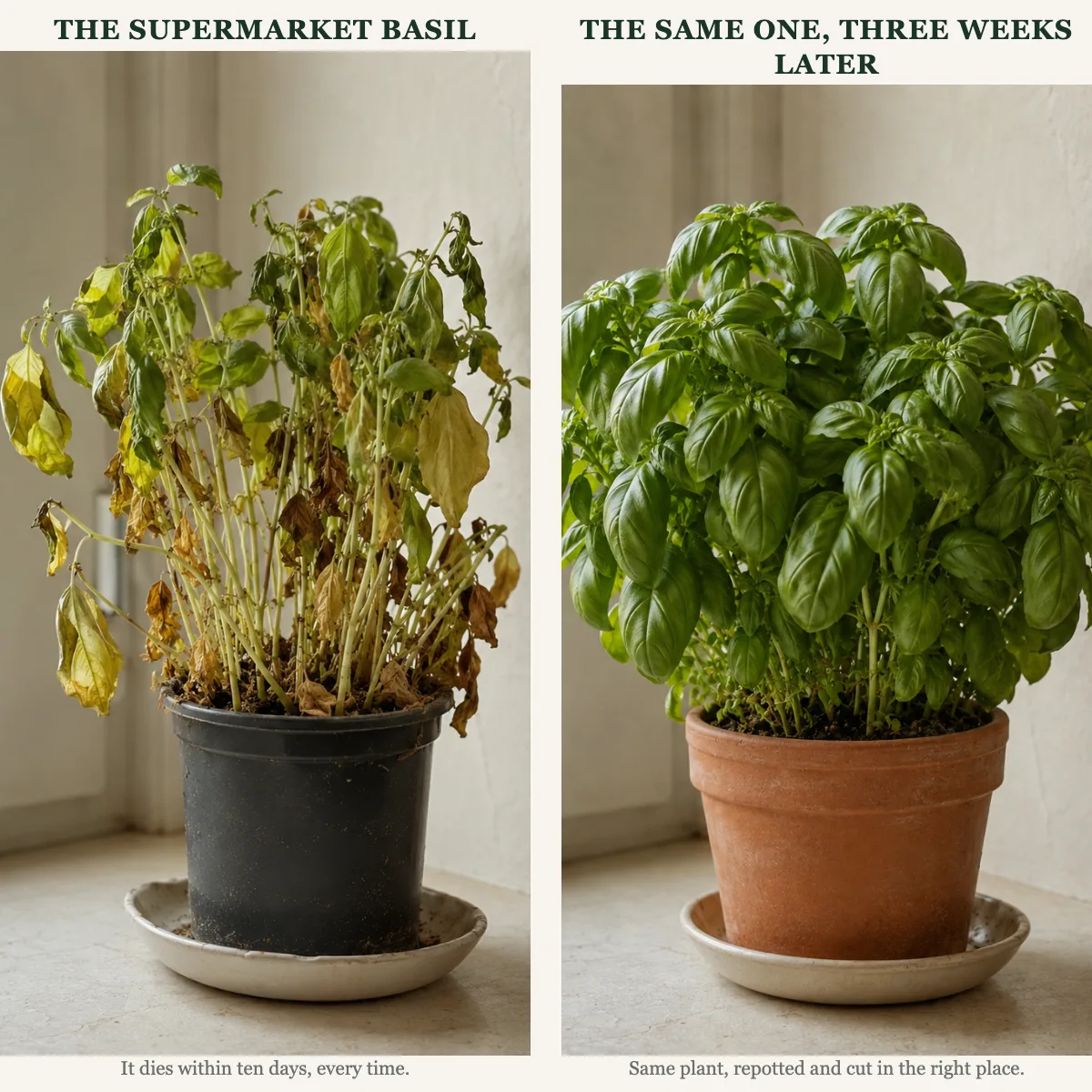
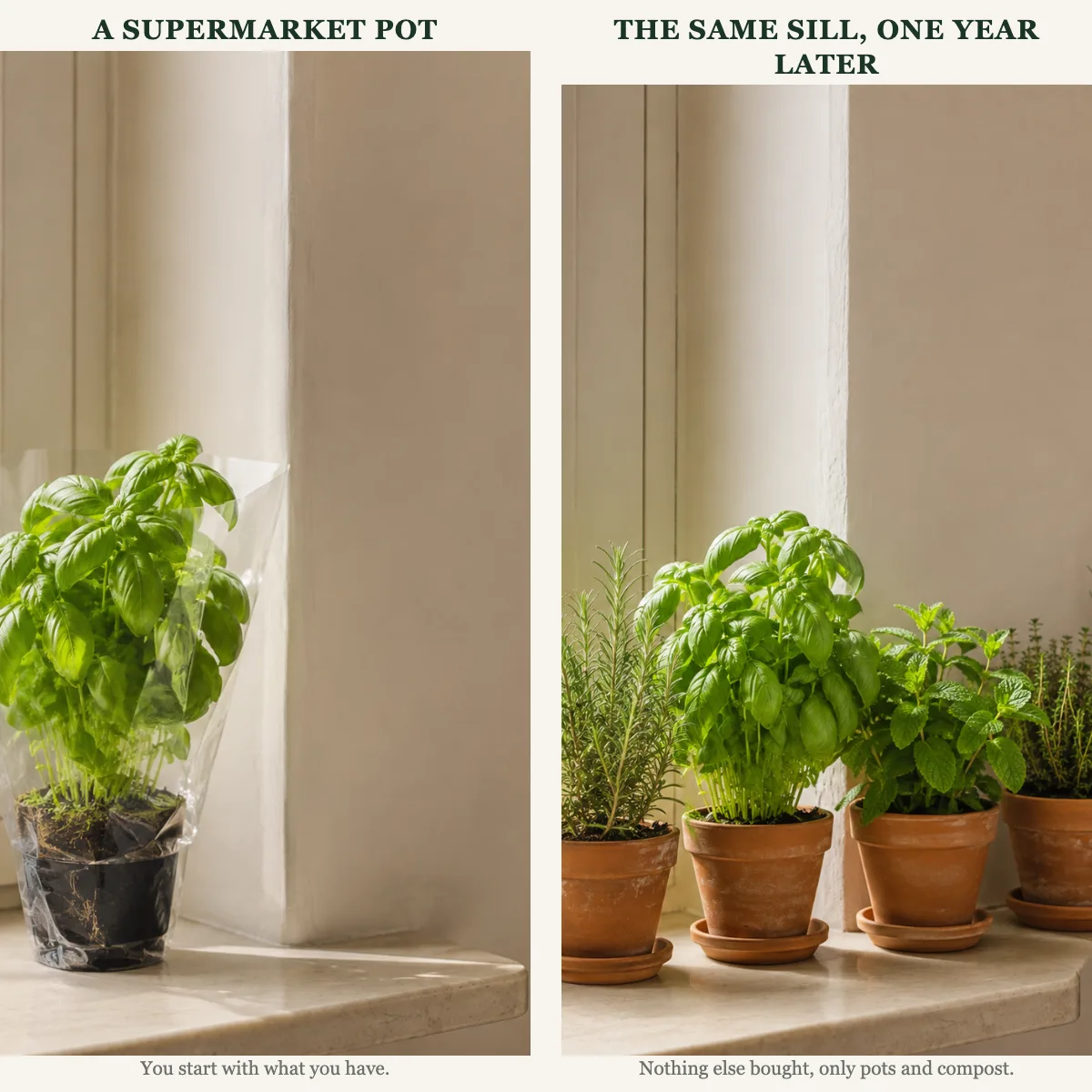
- Why a supermarket pot collapses in ten days, and the five-minute job that turns it into two or three plants.
- The five reasons why yours died, in order of frequency. The first two explain almost everything.
From: Élise Marchand, for The Pot Method
Place: in front of a pot of basil bought three weeks ago
Dear reader,
You probably bought that pot to cook with, not to look at. And you ended up picking less and less from it, afraid of damaging it, until it ran to flower and became unusable.
That is the opposite of what you should have done, and nobody says it clearly in the shop. A plant you cut comes back fuller; a plant you spare wears itself out. You were not heavy-handed: you were led to believe you had to be careful.
You buy a pot of basil. It is beautiful, dense, green, and it smells wonderful the moment you brush past it. You put it on the windowsill, you water it properly, and you take three leaves from it now and then, carefully, because you do not want to damage it.
Three weeks later, it has grown tall, the stems are bare at the bottom, a cluster of white flowers has appeared at the top, and the taste has turned bitter. A month after you bought it, it is finished.
You did nothing wrong, except one thing: you spared it.
The reversal
A herb is not an ornamental plant you look at. It is a plant you harvest, and harvesting is part of looking after it.
When you cut a stem in the right place, the plant answers by making TWO stems from the cut. When you do not cut, it carries straight on, wears itself out growing tall, runs to flower, and its job is over.
That is true of basil, mint, oregano, savory, thyme and rosemary. It is not a trick: it is the way these plants are built.
The node, and why it governs everything
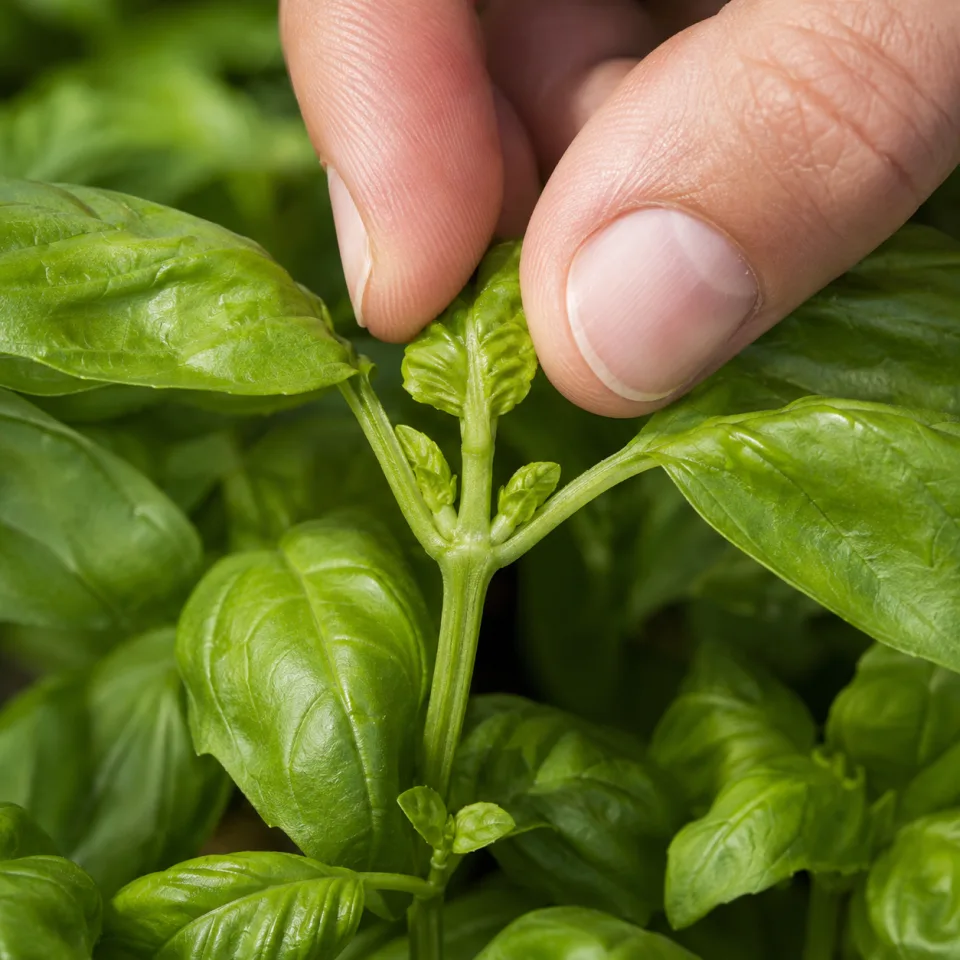
Look closely at a stem of basil or mint. It is not smooth: here and there it carries a slight swelling from which two opposite leaves grow. That is a node.
In the angle of each of those two leaves sleeps a tiny bud. As long as the stem is growing upwards, the tip sends them a signal that keeps them dormant. Cut the tip, and the signal stops: the two buds wake up, and each one grows into a new stem.
That is the whole mechanism. On its own it explains why a plant that is cut becomes dense and why a plant that is spared becomes long and bare. The whole book follows from it: where to cut, how often, and what changes with the shape of the plant.
The supermarket pot is not one plant
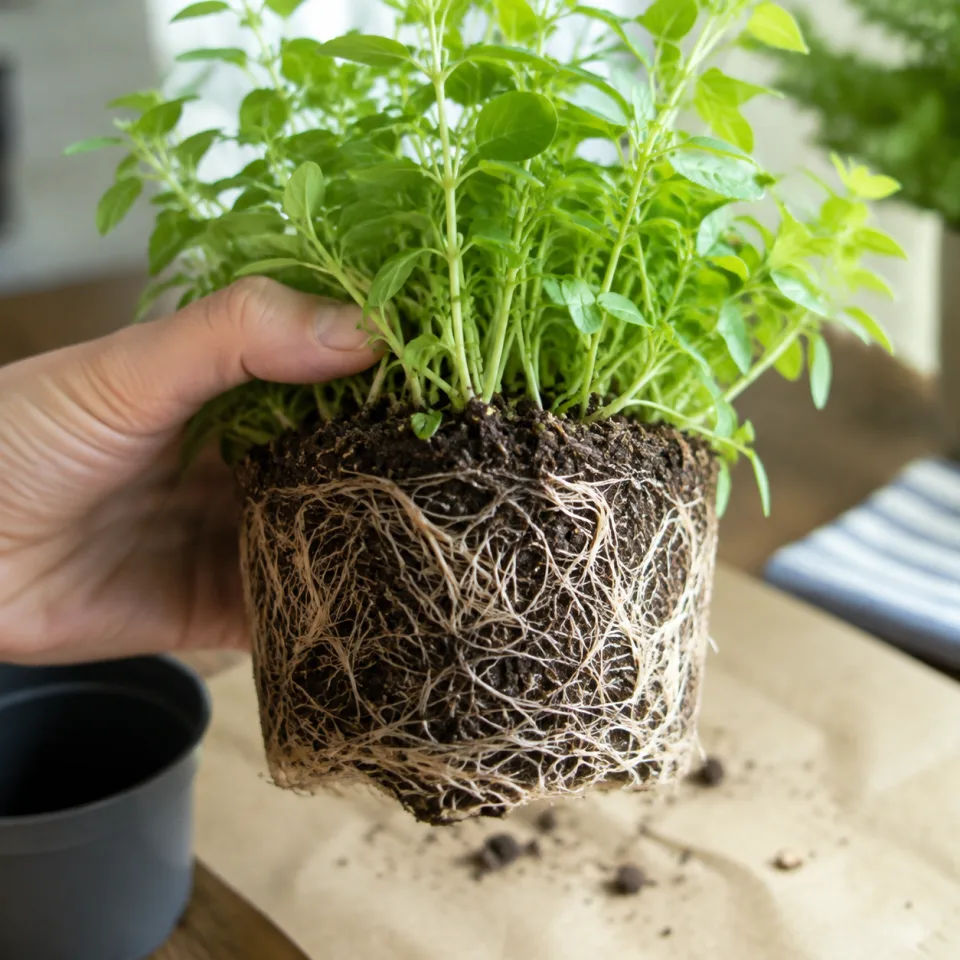
That is the second cause of death, and it has nothing to do with you. A supermarket herb pot is fifteen to thirty seedlings crammed into a nine-centimeter pot, forced in a greenhouse to look good on the day of sale.
Those seedlings compete for a ridiculous volume of soil, no root has room to settle in, and going from the greenhouse to your kitchen is a shock. It is beautiful on the shelf and it collapses in eight to ten days.
The job that fixes this takes five minutes on the day you buy the pot, it is shown step by step in photos in the book, and it turns a doomed pot into two or three plants that will last for months.
Why so few books say this
Because the herb shelf is full of books that tell you what to plant, and almost none that tell you where to put the scissors. The cut is the whole subject, and it is the part that gets skipped.
The format that works is easy to name: a fixed number of plants, to know, to grow and to use. That is exactly the shape of this book, written for what you actually find in a pot.
At this point, you have two options
Sparing a herb plant is what wears it out.
The second option takes one reading and one cut tonight. The first costs one pot a month, replaced at the supermarket, and the most unfair part is that you do not even know you are getting it wrong.
Just imagine for a moment
- Imagine a dense, low basil plant that lasts five months, instead of a stem that shoots up and turns bitter in three weeks.
- Imagine knowing where to put the scissors on a plant you have never seen, because you recognize its shape.
- Imagine never buying mint, thyme or rosemary again: one stem in a glass of water, and you have five plants.
- Imagine never again throwing out a pot of a perennial in November thinking it is dead, when it is only dormant and will come back in April.
What you will be able to do when you close it
- Cut in the right place, on any herb, including one you have never seen before.
- Keep a basil plant going five months instead of one, with something that takes ten seconds every two weeks.
- Save a supermarket pot on the day you buy it, and turn it into two or three plants.
- Know, standing in front of a plant that is doing badly, which of the five causes is yours, in three looks.
- Never buy again a perennial: one stem in a glass of water, or a clump divided with a knife.
- Know what to dry and what to freeze, and stop ruining a harvest by drying it for nothing.
The appendices included in the book
Is this really for you?
And you?
You can close this page, and in three weeks buy another pot of basil that will end up like the last one. Or you can, tonight, find a node on a stem and cut just above it. The book is there for all the rest.
Make the first cut, on a single plant tonight, before you decide anything at all. If you find a plant running to flower because it was never cut, you will know the problem was not your patience or your memory: it was that nobody had ever shown you where to look. The book is there for all the rest, in order, without you having to choose between two opposite opinions.
"Cut It, It Grows Back"
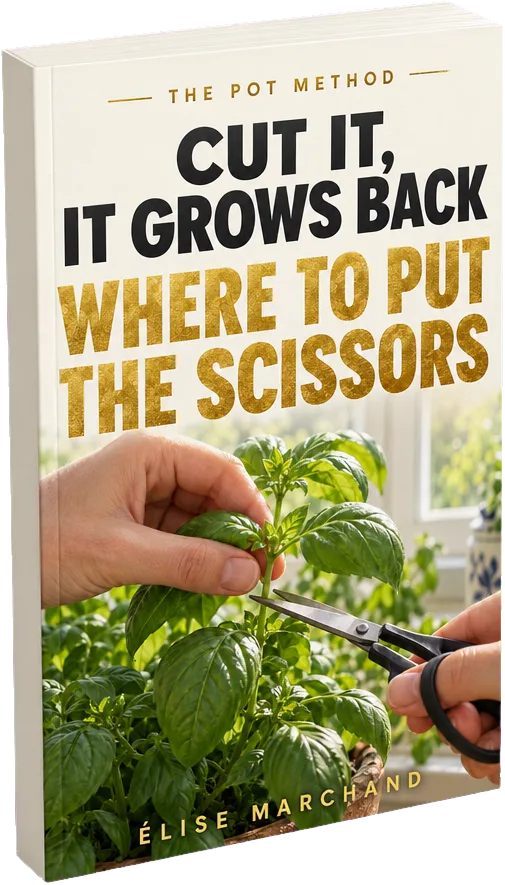
A digital book in PDF format, to read on your phone in front of the pot, on your computer, or printed out if you prefer paper. It is a book of practical moves, not of botany: where to put the scissors, at what moment, how often, and what happens if you do not.
Twelve plants, the ones you actually find at the garden center and the supermarket, each with its cut, its rhythm and its classic mistake. And everything written here is about flavor, smell and cooking: this book says nothing else about these plants, and that is not an oversight.
What you will find inside, part by part
Start with part 1: the whole book is in that chapter, and the rest is only its application, plant by plant.
Where to cut, exactly
You will recognize the node at a glance and put the blade in the right place, so the stem doubles instead of drying out.
- The node, that swelling where two opposite leaves grow out, and the two sleeping buds it hides.
- The cut in one sentence, and the three details that make all the difference between a stem that doubles and a stem that dries out.
- Pinching, pruning, harvesting: three words for one single action. If you harvest properly, you never need to prune.
- The three plant shapes, and the cut each one needs. It is not the species that decides where to cut, it is the shape.
- The rule of a third, and the only seasonal exception in the book.
- The node, and why it governs everything.
- The cut, in one sentence.
- The three shapes, and the cut each one needs.
Annual or perennial, the distinction that decides everything
Standing in front of any pot, you will know whether the plant will finish with its flowering or come back next year, and you will treat it accordingly.
- What flowering means in each case: the end for an annual, just a moment in the year for a perennial.
- Why a basil pinched every two weeks lasts five months, and the same plant, never pinched, six weeks.
- What winter does to each of the twelve plants, in one table you learn once.
- Why a pot that looks empty in November is not empty, and what you must not do with it.
- What is worth buying as a young plant, and what you sow because it only lasts one season.
- Two plants, two contracts.
- What winter does to them.
- The table, to learn once.
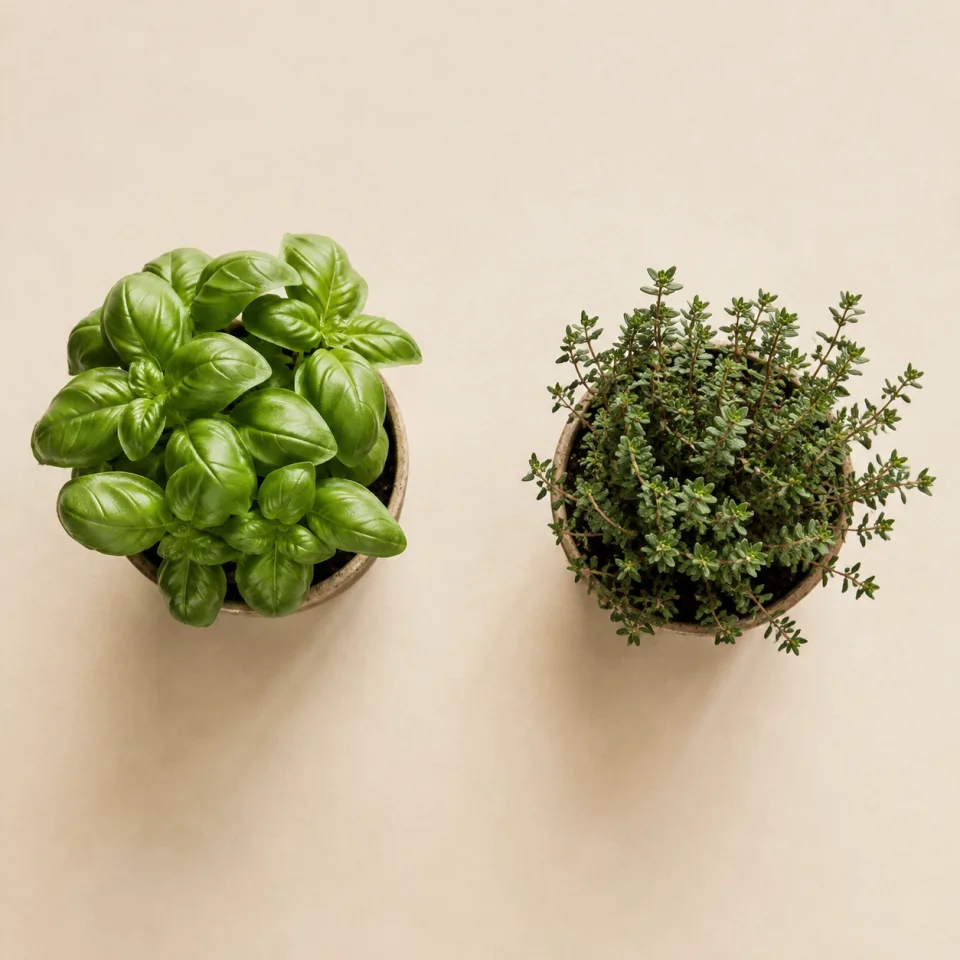
The twelve that really last
You will know how to choose herbs that live in your home for months, and which ones must never be planted in the same window box.
- Twelve herbs in photos, each with its shape, its light, how often to cut it and its classic mistake.
- The absolute rule about mint, the one that explains why ready-made window boxes end up as a pot of mint.
- The oregano exception: its scent is at its strongest at the START of flowering, not before.
- How to tell French tarragon from Russian tarragon, which grows better and has almost no flavor.
- The one point where you must be certain of the plant's identity before you use it, and why.
- Basil.
- Chives.
- Parsley.
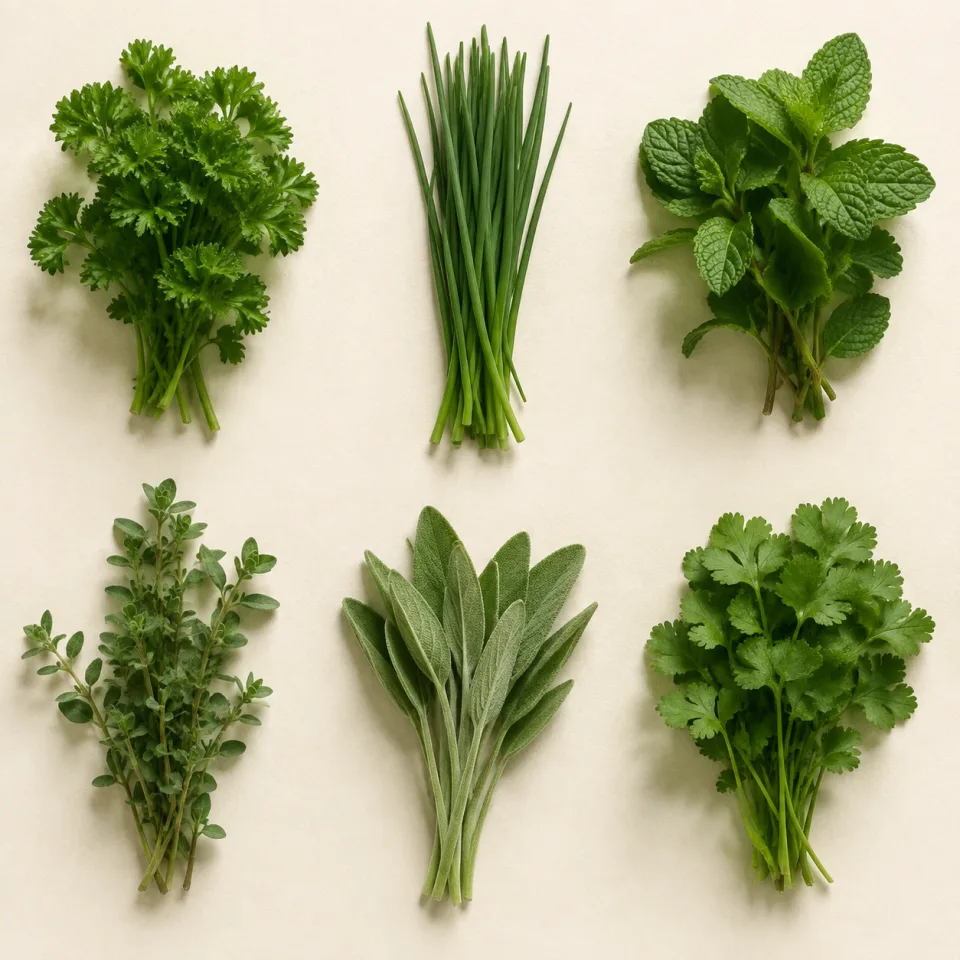
Why yours dies
You will be able to name the real cause just by looking at the pot, and turn a supermarket tray into two or three plants that last.
- The five real causes, in order of frequency. The first two explain the great majority of pots that get thrown out.
- The supermarket pot: what is really inside it, and the five-minute job that turns it into two or three plants.
- Too much water: why it comes far ahead of too little, and why watering a wilted plant can finish it off.
- What lasts indoors all year, and what will never survive behind a window in winter.
- The checking order on one page, in front of a plant that is doing badly.
- First cause: it was never cut.
- Second cause: the supermarket pot.
- Third cause: too much water.
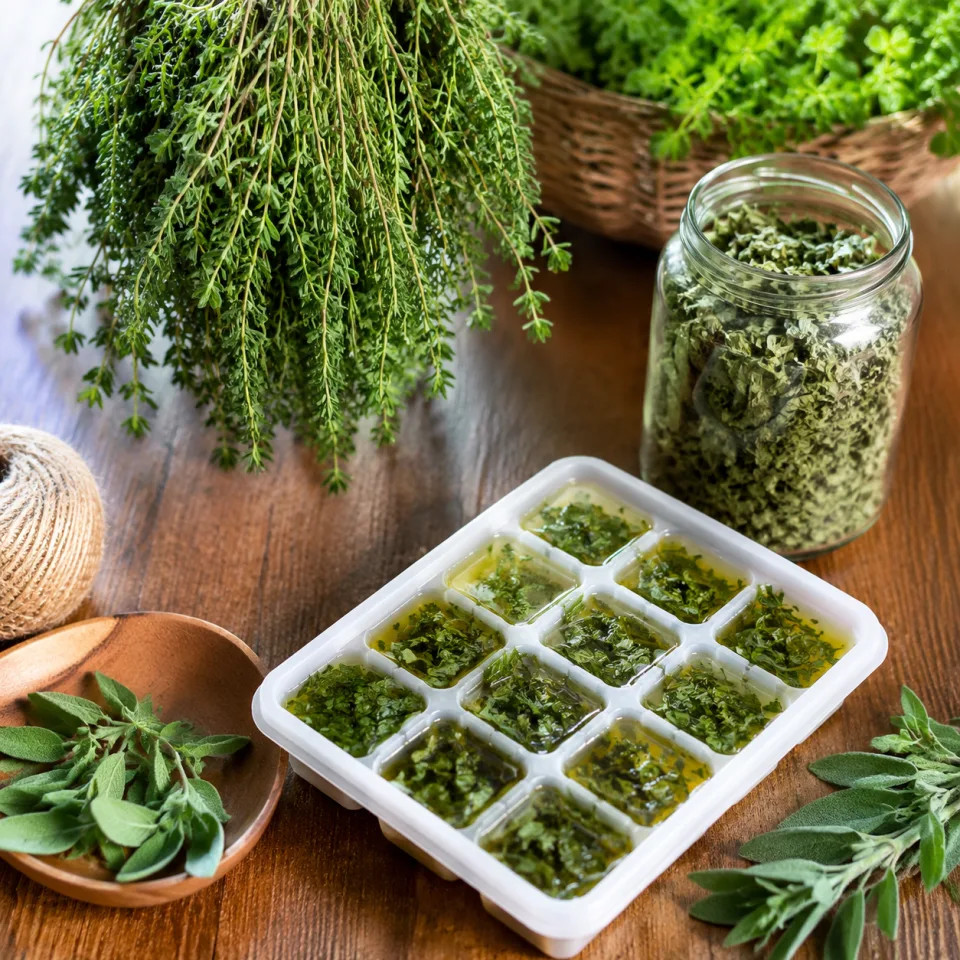
Storing the harvest, and the year after
You will know what to do with the harvest depending on the herb, and how to start again the following year without buying the same pots.
- What dries well and what loses almost everything in drying: the list, and the physical reason behind it.
- The two freezing methods, and the one that does not work despite what you read.
- The cutting in a glass of water: a supermarket tray becomes five or six plants for the price of one.
- Dividing clumps, every two or three years, and why it is not optional.
- The calendar for the year, month by month, including the months when you do nothing.
- What dries well, and what does not.
- What freezes well, and how.
- Cuttings, or how to stop buying plants again.
What you actually have in your hands
32 pages
"Cut It, It Grows Back" runs to 32 pages, with its photos and diagrams, plus the 15-page workbook if you add it. This is not a blog post stretched out: it is the whole book, as a PDF, yours to keep for life.
Everything can be checked before you even pay: you can see the full contents above, part by part, and each part matches a real chapter of the book.
What you receive today
This is everything in "Cut It, It Grows Back", gathered into a single file, to keep open next to your herbs while you work. Here is exactly what you receive:
- The book "Cut It, It Grows Back", twenty figures and photosvalue $47
- The three shapes, and the cut each one needs, in diagramsincluded
- The part "Why yours dies": the five causes, in orderincluded
- The cutting calendar, plant by plant, on one pageincluded
- The index by problem, written in your own wordsincluded
- Price$47
This is the price of the book, with no countdown and no timer. You keep it, with the updates.
Digital book in PDF, sent by email: nothing is posted, nothing arrives at your door.
30-day guarantee, no conditions
Read the book. Find a node. Cut just above it. If within 30 days you feel it brings you nothing, write to us at contact@thepotmethod.com and you are refunded in full.
No form, no explanation to give, no questions. And you keep the book: I would not know how to take it back from you anyway.
In other words: either this book changes something for you, or it costs you nothing. I prefer that simple rule to a long list of conditions in small print. The only risk left is closing this page and starting again tomorrow, looking for an answer in two articles that contradict each other.
P.S. If you are skimming this page, here is the summary. For $47, you receive "Cut It, It Grows Back": exactly where to put the scissors, the three shapes that decide the cut, twelve herbs in photos with their rhythm and their classic mistake, the five reasons yours died, and how to never buy a perennial again. If it is of no use to you, you are refunded within 30 days and you keep the book.
P.P.S. Do one thing tonight, even if you do not order. Look closely at a stem on one of your herbs and find a node, that swelling where two opposite leaves grow out. Cut just above it, a few millimeters higher, leaving two pairs of leaves below. In ten days you will have two stems where there was only one, and you will have got that without paying anything.
The Pot Method publishes practical gardening guides. This book is about growing, harvesting and the flavor of herbs, and nothing in it is medical or nutritional advice.