How to keep your bonsai alive and see it come back, even if you have already lost one.
Because a bonsai is not a living room plant: it is a miniature outdoor tree. Three settings, water, light and rest, before any question of shape.
Nothing to install, no equipment to buy: a PDF book, to read next to your bonsai, and the water and light check on your bonsai this very evening.
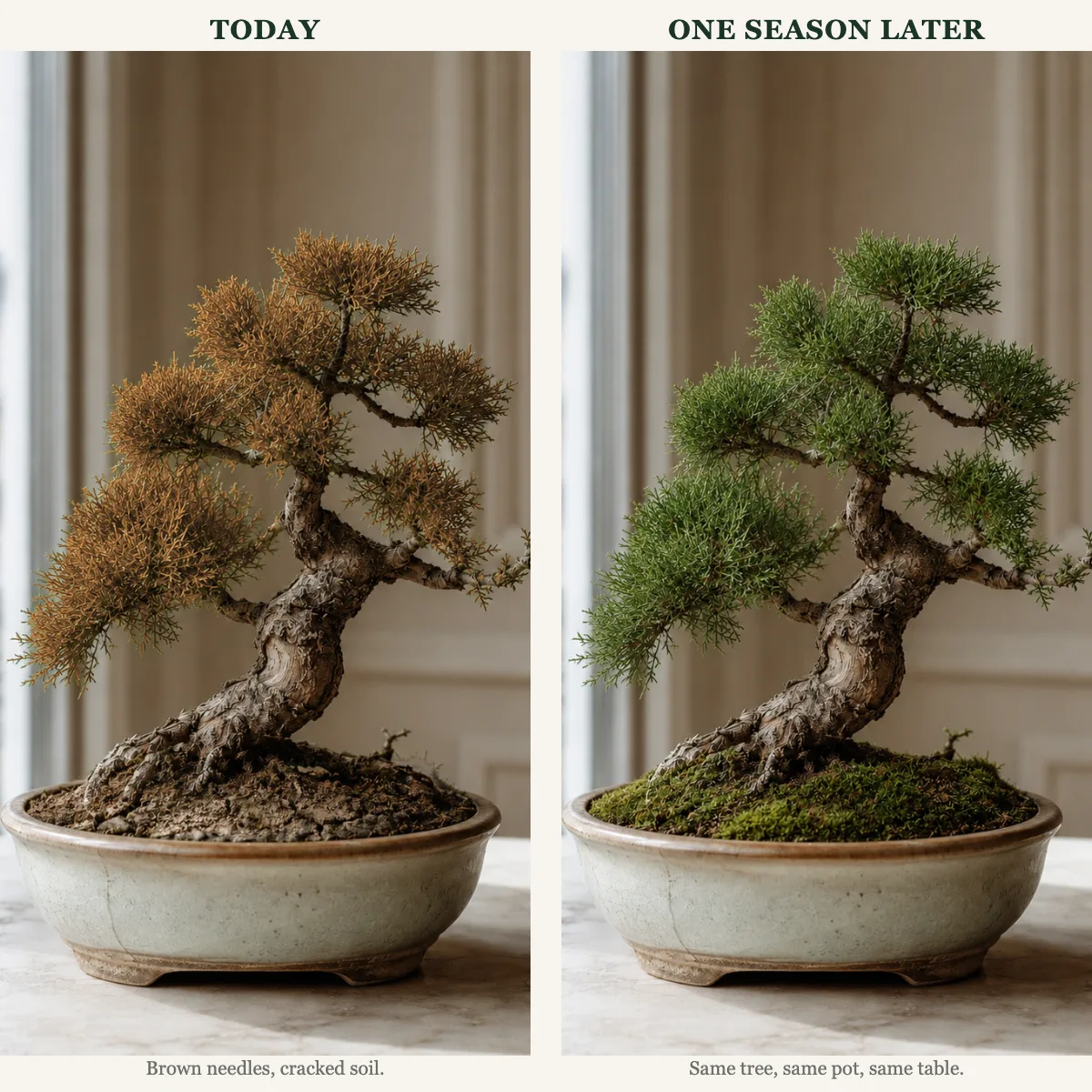
The digital book "My Bonsai Stops Dying", to read tonight and to use from tomorrow morning, by moving your tree one meter (about 3 ft).
Keep reading if you have already lost a bonsai without understanding why
Here is what you are going to understand on this page, and above all in the book that goes with it:
- Why there is no such thing as an "indoor" tree, and how to recognize yours in ten seconds.
- Why a tree standing three meters (about 10 ft) from a window, in a room you find bright, receives almost nothing.
- Why yellow leaves that fall far more often mean too much water than thirst.
- The seven myths you read everywhere on this subject, and what they really do to your tree.
From: Élise Marchand, for The Pot Method
Place: in front of a ficus set too far from the window
Dear reader,
You almost certainly do not want a collector's item. You want that particular tree, the one you were given or the one you chose, to hold on and gain character over the years.
And for now it is the opposite: it is dropping its leaves, you do not know whether that is serious, and every piece of advice you find online starts with a word you never use. The difficulty is not the art of bonsai. It lies in three very ordinary settings that nobody has explained to you in order.
When a bonsai drops its leaves, the reaction is almost always the same: you water more, you mist it, you move it closer to the radiator to keep it warm, you buy a special fertilizer. All four go in the same direction, and it is the wrong one.
In the vast majority of cases, the cause is elsewhere, and it comes down to three points.
You may already have replaced a tree after losing a first one, telling yourself it was not for you. Many people stop there, convinced it takes a particular talent.
It takes none. You need to know where to put it, how to check the water, and when to do nothing at all. The rest, the shape, the pruning, the wire, comes much later, and only if the tree is doing well.
Three decisions, and not one of them costs anything
The species you have. Under the word "bonsai", the trees sold in garden centres have nothing in common with each other: some spend their whole lives outdoors and need a cold winter, others come from warm regions and live very well indoors. Putting the first kind in a living room condemns it within a season, whatever care you give it. That one point avoids a large share of the failures.
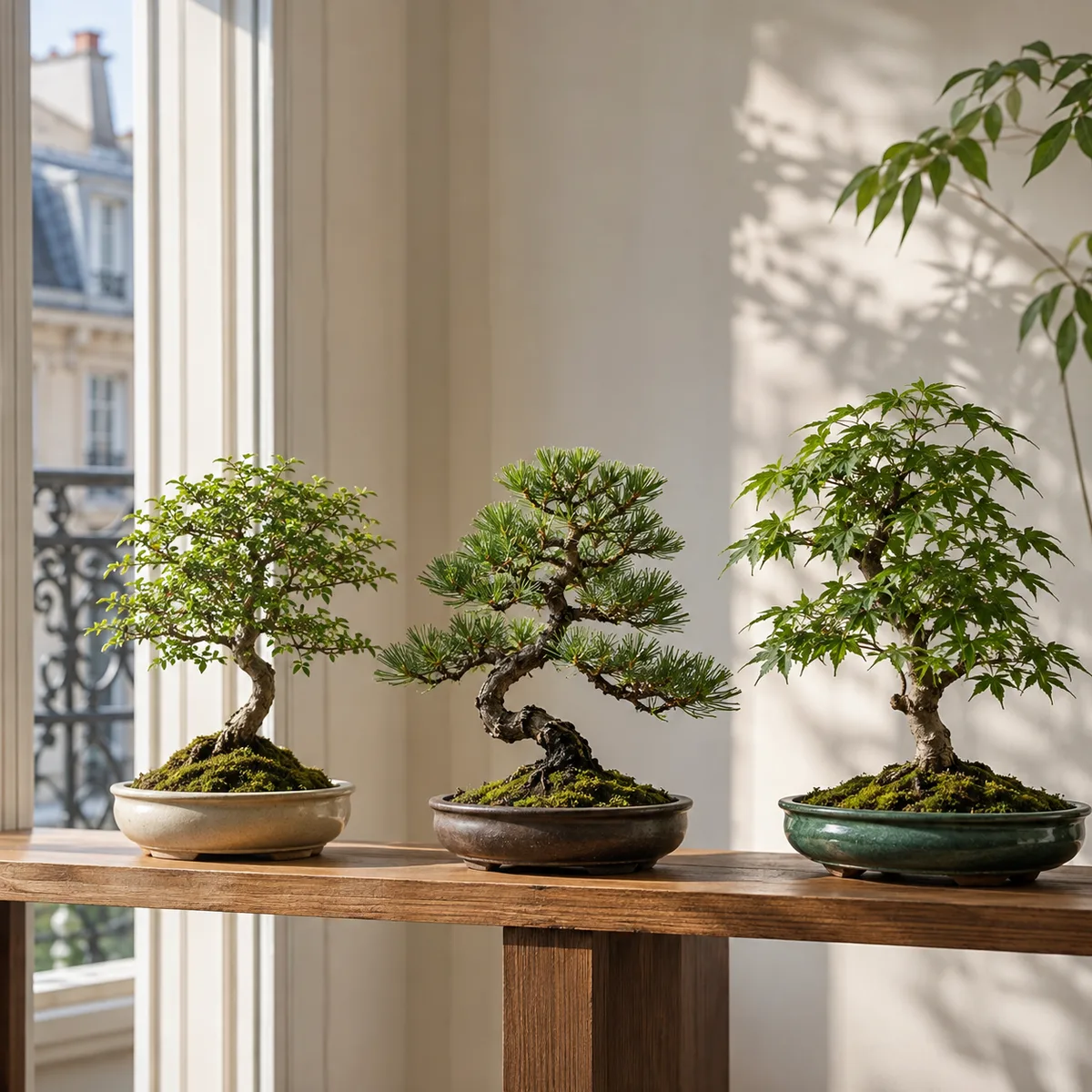
The place where it stands. The light available behind a window is already far lower than outdoors, even when the room looks bright to us. Three meters (about 10 ft) from the glass, almost nothing is left. Moving the tree one meter (about 3 ft) changes more than all the rest of the book.
The water, and the way it is given. A bonsai lives in a tiny volume, often less than a liter, and in a growing medium made to drain very fast. It is not watered like a houseplant, nor on a schedule. It is checked in five seconds, every time.
The rest comes afterwards. The growing medium, the pruning and the wiring really do matter, and each has its own part in this book. But you do not shape a tree that is not first alive and stable.
This book also says what does not work
It is the gardening subject where the most useless practices circulate, and several are frankly harmful: the saucer kept permanently full, the plastic cloche, misting the leaves, the pebbles glued to the surface, the radiator.
A whole part is devoted to it, and it treats each myth in the same way: what is promised, what really happens, and what works instead. One example: misting the leaves works for a few minutes, as long as the droplets take to evaporate. What really changes something is a tray of clay pebbles with the water level kept below the bottom of the pot.
You will probably find one or two things in it that you already do, and that serve no purpose.
And the point almost nobody makes
Too much care kills far more bonsai than neglect does.
A saucer left full slowly drowns the roots. The tree then shows soft leaves, then yellow ones, then leaves that fall, which is to say exactly the signs of a lack of water. The owner waters more. That is the cycle that kills the most bonsai in apartments.
The book gives you the test that settles between the two in five seconds, and it repeats it on every sheet, because that is where almost everything is decided.
What you will not find in it
No Japanese words used on their own, no history of the art of bonsai, no "way" and no mysterious patience. You have a tree, it is in a small pot, and you want it to be alive next year.
Nor does it claim to make you a shaper of trees: serious shaping takes years. What it gives you is what you need to keep the tree alive, healthy and well proportioned, which is exactly where almost everyone fails.
At this point, you have two options
A bonsai is not a living room plant: it is a miniature outdoor tree.
The second option takes one reading and one job tonight. The first costs one tree a year, replaced without ever understanding, and the most unfair part is that you do not even know you are getting it wrong.
Just imagine for a moment
- Imagine knowing, by looking at the foliage, whether your tree should live indoors or outdoors.
- Imagine a tree that gets through the winter without you wondering every morning whether it needs water.
- Imagine understanding in five seconds, with your finger in the growing medium, what its leaves are trying to tell you.
- Imagine pruning without being afraid of doing damage, because you will know what grows back and what does not.
What you will be able to do when you close it
- Recognize your tree in ten seconds and know whether it lives indoors or outdoors.
- Give it the one spot that suits it, and know what to keep it away from.
- Decide whether to water in five seconds, with no schedule, and water properly when it does need it.
- Recognize too much water where everyone else sees thirst.
- Repot at the right moment, in the right growing medium, removing the right share of roots.
- Do maintenance pruning without fear, wire the tree, and remove the wire before it bites in.
The appendices included in the book
Is this really for you?
And you?
You can close this page, and hope this one holds on. Or you can, within five minutes, go and look at the foliage of your tree and finally know whether it should live indoors or outdoors. The book is there for all the rest.
Do the water and light check on your bonsai tonight, before you decide anything at all. If you find a tree that has been standing far from the window for months, you will know the problem was not your patience or your memory: it was that nobody had ever shown you where to look. The book is there for all the rest, in order, without you having to choose between two opposite opinions.
"My Bonsai Stops Dying"
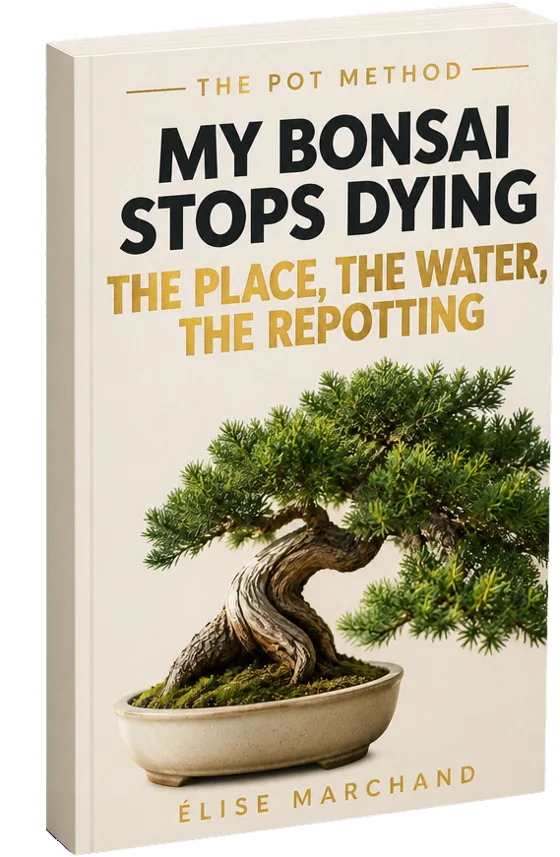
A digital book in PDF format, to read on your phone next to the tree, on your computer, or printed out if you prefer paper. It is built around one reversal: your tree is not dying from a lack of skill, it is dying from the wrong spot and from too much care, and both can be put right today.
It gives you the six species you actually find in garden centres and how to recognize them, the spot that matters more than anything, water and the way to give it, the growing medium and repotting step by step, pruning and wiring in detail, and seven myths put to the test.
What you will find inside, part by part
Start with part 1 and identify your tree. Ten seconds, free, and on its own it avoids a large share of the failures.
Know what you have
You will be able to name your tree in ten seconds, and know what its species demands that nobody told you when they sold it.
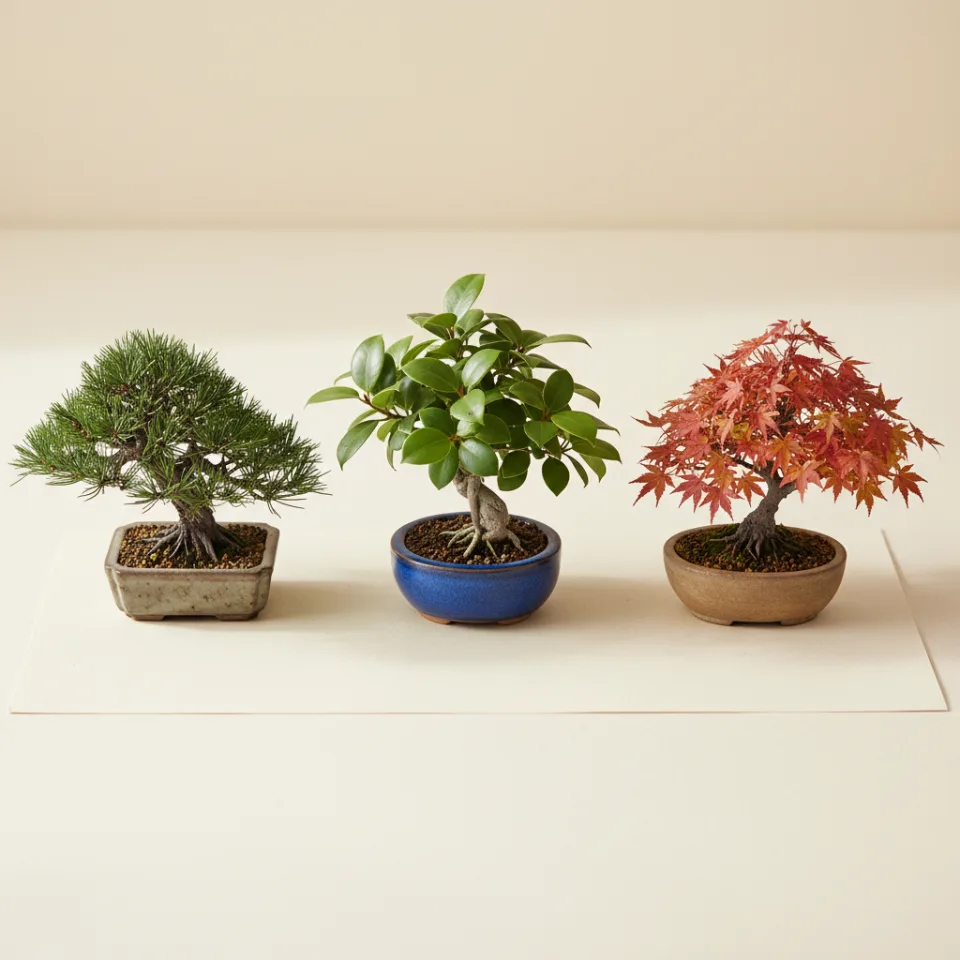
- The six species you actually find in garden centres, with a photograph of each and the detail that identifies it in ten seconds.
- Why there is no such thing as an "indoor" tree, and what the winter rest really changes.
- The three checks to make on the day you buy, before you pay, one of them with your fingernail.
- The first four weeks: what you must not do, and why a few leaves falling is normal.
- The spot, which matters more than all the rest put together, and what happens one meter (about 3 ft) and then three meters (about 10 ft) from the glass.
- Indoors or outdoors: the question that kills.
- Reading the tree on the day you buy it.
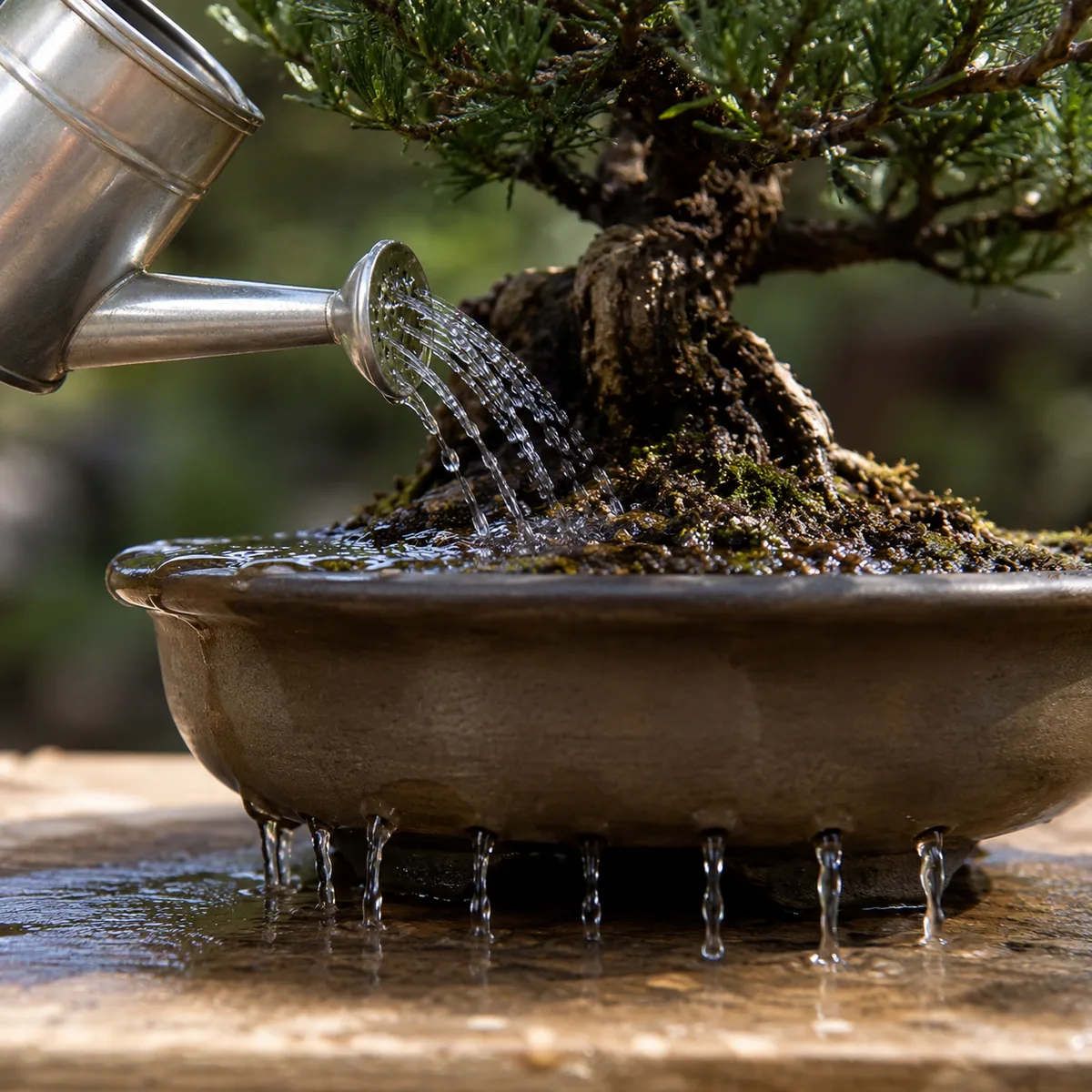
Water
You will decide whether to water on two reliable tests, instead of a fixed rhythm that drowns or dries out.
- Why a bonsai is not watered like a potted plant, nor on a schedule.
- The two reliable tests, the finger and the weight, and the false signal that has you watering for nothing.
- How to do it: how far, with what, at what moment, and why you go over it a second time.
- The saucer: the way it kills slowly, and the only right way to use it.
- The soak, very useful but badly used, and the dry air of winter, which is not fixed by misting.
- Why it is not watered like a potted plant.
- The test, and it takes five seconds.
- The saucer and the soak.
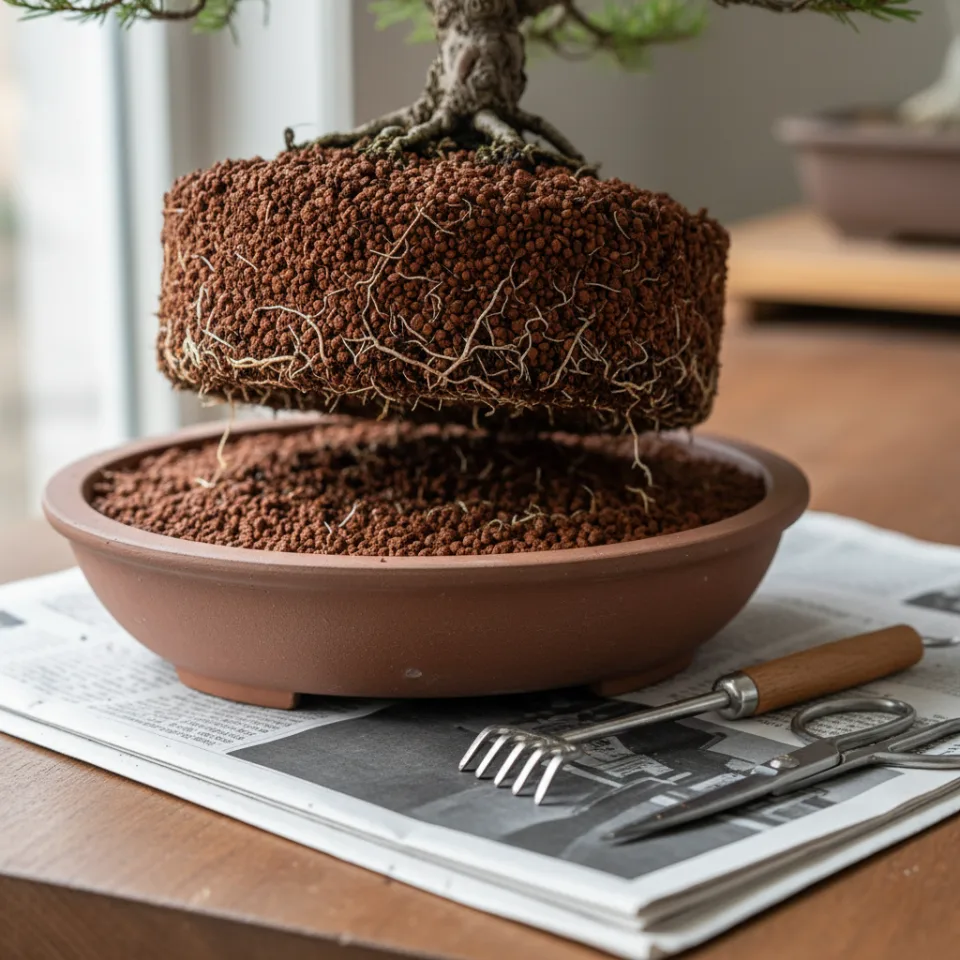
The growing medium and repotting
You will recognize the growing medium that kills slowly, and repot at the right moment without setting the tree back.
- Why the potting soil used for trees in big stores is the silent cause of a two-year decline.
- What a good growing medium contains, and why the size of the particles matters as much as the composition.
- When to repot: the season, how often it is really needed, and the two signs that decide for you.
- The job in six steps, with the largest share of roots you may remove, and even less on a conifer.
- The three weeks that follow: what is normal, what is not, and the mistake that makes the cut roots rot.
- Why the potting soil from the shop is a problem.
- What a good growing medium contains.
- The job, step by step.
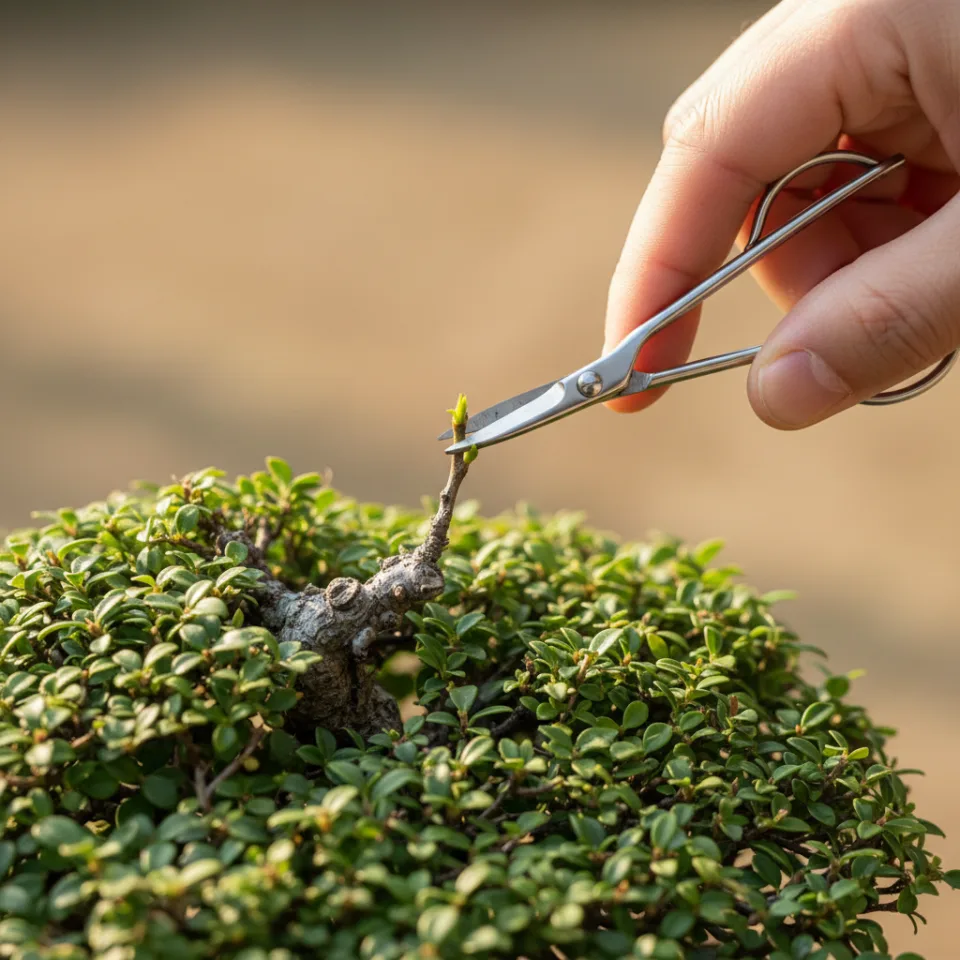
Pruning and shape
You will know which pruning is done in which season, and which one cannot be undone, before you cut.
- Two kinds of pruning that have nothing in common: what they cut, in which season, and which one is irreversible.
- The two-pair rule, which builds dense branching instead of long bare branches.
- Exactly where to cut, and which leaf to keep last to decide the direction of the next shoot.
- Wiring: the right wire diameter, how to put it on, the season, and THE step everyone forgets.
- The four things not to do in the first year, one of which can never be undone.
- Maintenance pruning, in practice.
- Pinching, and who it is for.
- Wiring, what it really does.
Symptoms and myths
You will tell too much water from too little in five seconds, and you will stop the routines that are repeated with no effect.
- The three symptoms that keep coming back, and the five-second test that settles between too much and too little water.
- Daily misting, the cloche, the full saucer: what is promised, what happens, what works instead.
- The pebbles glued to the surface, and how to remove them without damaging the roots.
- "Special bonsai" fertilizer: what really matters, and the two moments when it makes everything worse.
- The radiator, and why it is the most counterproductive move in the house.
- Reading the three symptoms that keep coming back.
- "You have to mist it every day".
- "A saucer always full, that way it never goes short".
What you actually have in your hands
28 pages
"My Bonsai Stops Dying" runs to 28 pages, with its photos and diagrams, plus the 15-page workbook if you add it. This is not a blog post stretched out: it is the whole book, as a PDF, yours to keep for life.
Everything can be checked before you even pay: you can see the full contents above, part by part, and each part matches a real chapter of the book.
What you receive today
This is everything in "My Bonsai Stops Dying", gathered into a single file, to keep open beside your bonsai while you work. Here is exactly what you receive:
- The book "My Bonsai Stops Dying", nineteen figures and photosvalue $47
- The six species sold in garden centres, with a photo of eachincluded
- The part "The myths": seven beliefs, with the reasonincluded
- The calendar for the year, month by month, on one pageincluded
- The index by symptom, written in your own wordsincluded
- Price$47
This is the price of the book, with no countdown and no timer. You keep it, with the updates.
Digital book in PDF, sent by email: nothing is posted, nothing arrives at your door.
30-day guarantee, no conditions
Read the book. Identify your tree. Move it near the window. If within 30 days you feel it brings you nothing, write to us at contact@thepotmethod.com and you are refunded in full.
No form, no explanation to give, no questions. And you keep the book: I would not know how to take it back from you anyway.
In other words: either this book changes something for you, or it costs you nothing. I prefer that simple rule to a long list of conditions in small print. The only risk left is closing this page and starting again tomorrow, looking for an answer in two articles that contradict each other.
P.S. If you are skimming this page, here is the summary. For $47, you receive "My Bonsai Stops Dying": the six species sold in garden centres with a photo of each, the spot that matters more than everything else, how to decide whether to water in five seconds, the growing medium and repotting step by step, pruning and wiring in detail, and seven myths put to the test. If it is of no use to you, you are refunded within 30 days and you keep the book.
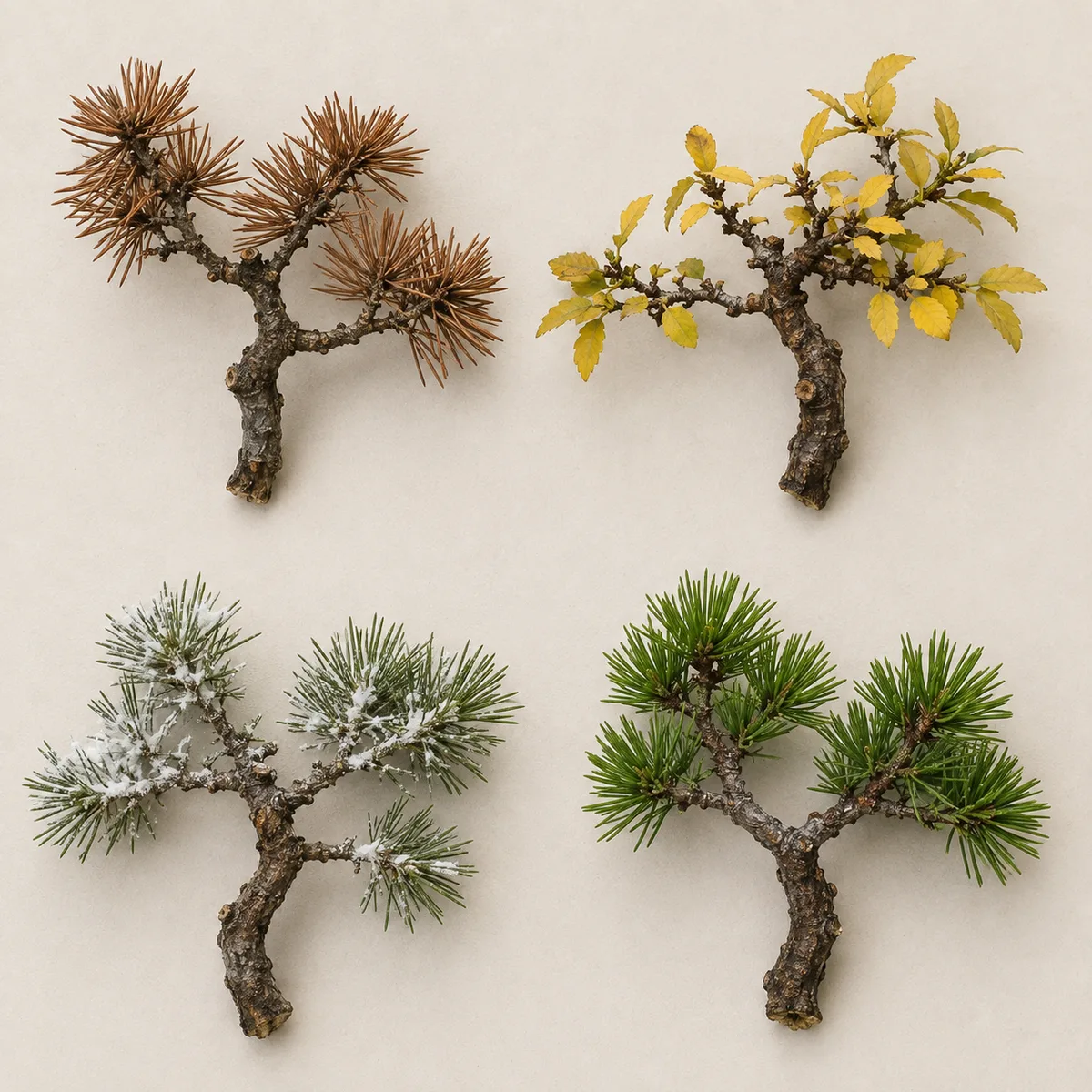
P.P.S. Do one thing today, even if you do not order. Go and look at your tree, and look at its foliage. Needles in clusters or scales: it is an outdoor tree, it must live outside all year round, winter included, with the pot protected from frost. Thick, glossy leaves, or small leaves speckled with white: it is a tree from a warm region, its place is on the windowsill, not three meters (about 10 ft) away. You have just made the decision that matters most, and it cost you nothing.
The Pot Method publishes practical gardening guides. This book is about looking after a tree in a pot, and nothing in it is medical or nutritional advice.