How to prune and look after your fruit trees at the right moment, month after month, even if you have never dared pick up the pruners.
Because a tree is not trained on instinct: it is trained with a calendar. The job of the month, the reason for it, and what to do when you have missed the window.
The digital book "The Right Job, The Right Month", to read tonight and to use at the next pruning window.
Keep reading if you finally want to know when to prune, and whether you risk damaging the tree
Here is what you are going to understand on this page, and above all in the book that goes with it:
- Why a badly pruned tree does not die, and what really happens, mistake by mistake, when you get it wrong.
- Which month for which tree, and the one sentence to remember if you remember only one: pip fruit in winter, stone fruit after the harvest.
- Where to put the blade, exactly, and why a large branch is cut in three stages and never in one go.
- How to rescue a tree that has not been pruned for ten years, or that was pruned too hard last year.
From: Élise Marchand, for The Pot Method
Place: in front of an apple tree that had not been pruned for twelve years
Dear reader,
You have a tree. An apple tree, a fig tree, a cherry tree, perhaps inherited with the house. It has been there for years, it produces little, or badly, and you know it ought to be pruned.
And you do not do it.
You watched three videos. The first said to cut back hard, the second said not to touch it at all, the third talked about spurs and darts without explaining what they were. You closed the page, and the tree is still there, one year older.
So let us say it straight away, since nobody writes it down plainly: a badly pruned fruit tree does not die.
It produces less well for a season or two, it starts again, and the following year you correct it. This is not surgery. It is a conversation spread over years with a plant that has far more resources than you think.
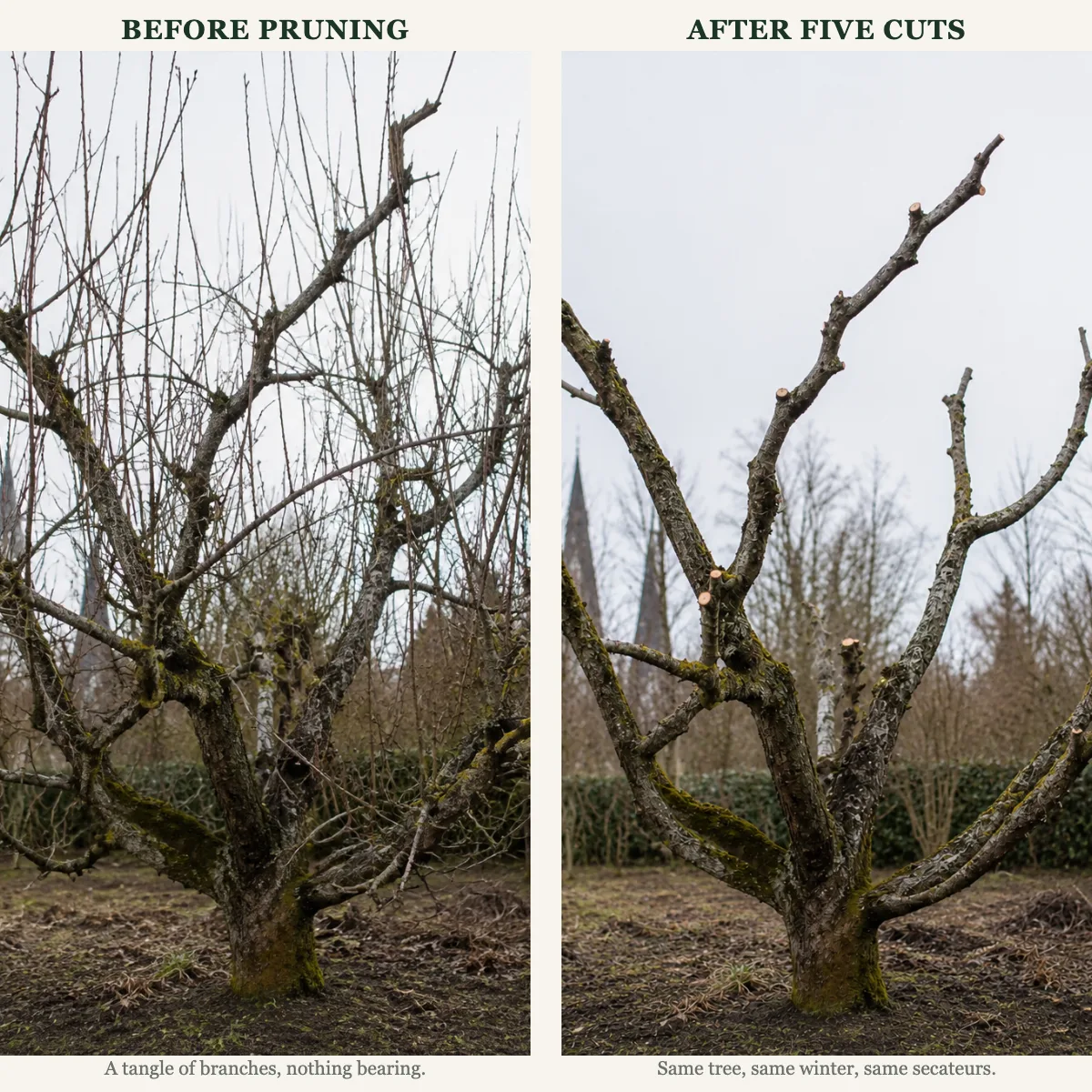
What really damages a tree is not a clumsy cut. It is doing nothing for ten years. A tree that has never been pruned ends up producing only at its tips, right at the top, out of reach. Its branches cross, shade each other, and the heart of the tree goes out. That can be repaired. But it is repaired because you touch it, not because you left it alone.
The other question, the one everybody asks
If fear is the first obstacle, the second comes down to one word: when.
That sentence says everything about the irritation of someone who has watched a whole video without getting the one piece of information they were looking for. On this subject, questions asked publicly very often go unanswered.
So the answer comes on page three of the book, before any explanation: a one-page table, tree by tree, with the month and the reason for that month. And one sentence that is enough if you remember nothing else: pip fruit trees are pruned in winter, stone fruit trees after the harvest.
Why this particular book
It starts from what people really ask about pruning, and from the answers they are given. What is striking is not the lack of information: there are plenty of videos. It is that almost none of them says where to put the blade, at which centimeter, or what happens if you get it wrong.
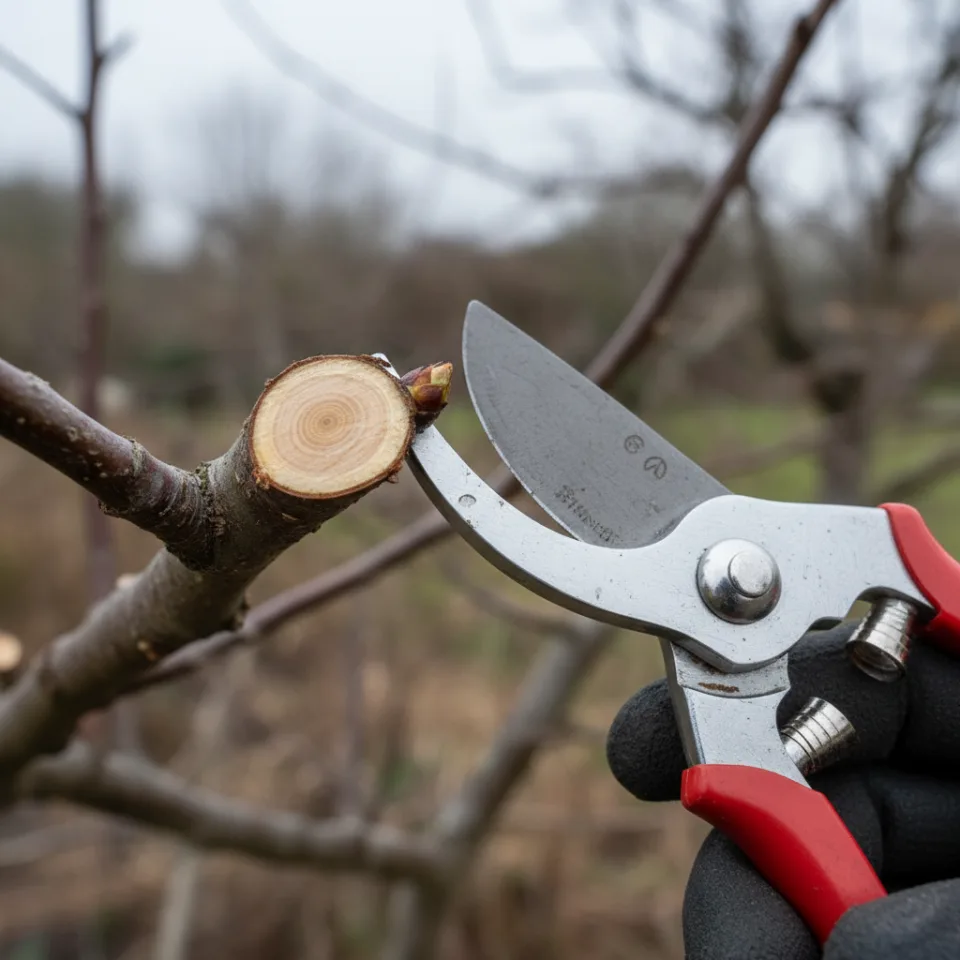
One example among others, and it is the mistake that really counts: if you cut three centimeters (about 1 in) above the bud instead of one, the stub that sticks out dies. That dead wood never closes over and opens a door into the inside of the branch. Nobody told you, and it is the only one of the five pruning mistakes that leaves a lasting mark.
That is the book you would want in front of a first apple tree: the one that shows the cut, gives the date, and says what happens when you get it wrong.
This book came out of that unease: the one you feel standing in front of a tree, pruners in hand, knowing you are about to cut something that took years to grow. Instead of asking "how do I prune" in general, it takes the question month by month: what the tree needs at that point in the year, and what is better left undone.
In the end, what is left is not a list of tips but a calendar, with one cut for each month, the reason behind it, and a line telling you what to do if you missed the window. That calendar is what you receive.
At this point, you have two options
The cut is not the hard part. The date is.
The second option asks for one reading and one cut tonight. The first costs you a year of fruit every time you prune at the wrong moment, and the cruellest part is that you never even know you are getting it wrong.
Just imagine for a moment
- Imagine going out in February with your pruners, without hesitating, because you know which tree is pruned this month and which one waits until July.
- Imagine looking at a branch and seeing straight away what will carry fruit and what will only make wood, simply from the shape of the bud.
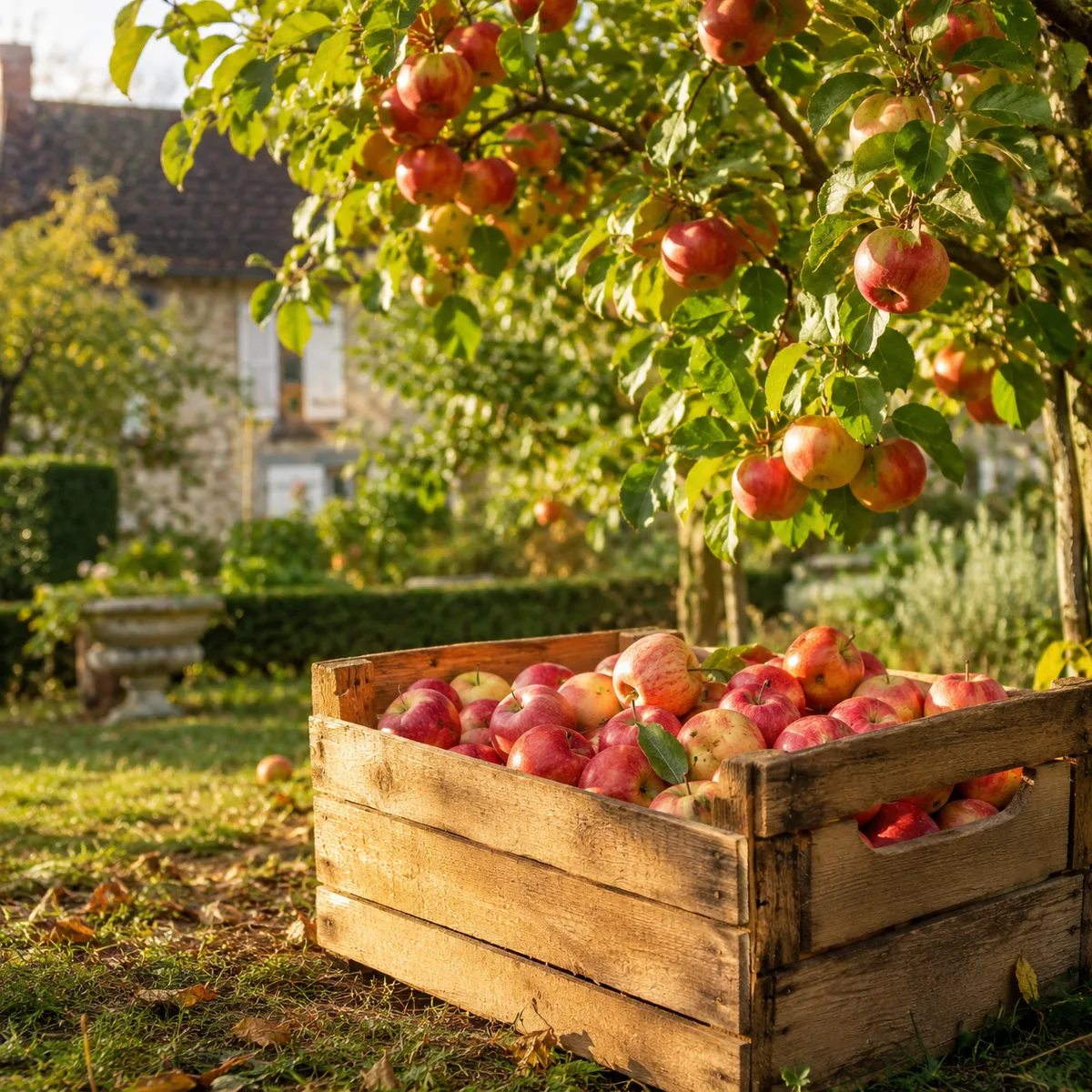
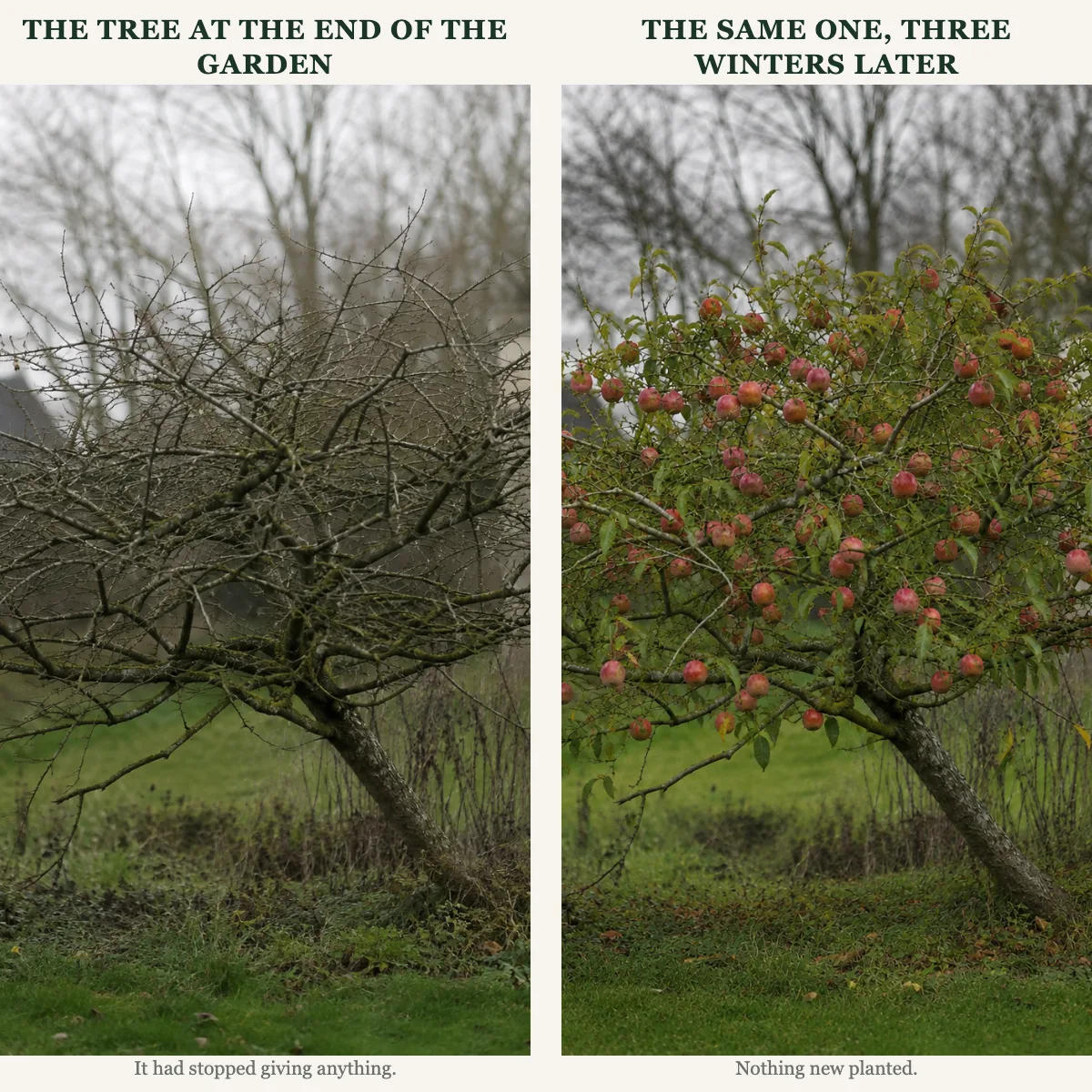
- Imagine taking back the tree at the bottom of the garden, the one nobody has touched in ten years, and seeing it fruit at arm's height in three years.
- Imagine grafting your favourite variety onto an old tree that gives poor fruit, and eating those apples in two years.
What you will be able to do when you close it
- Know which month to step in on your tree, without ever looking elsewhere.
- Identify your tree without a label, and see whether it is young, mature, or long neglected.
- Make the five basic cuts correctly, in the right place, with the right tool.
- Tell at a glance a fruit bud from a wood bud, and stop cutting off next year's harvest.
- Bring back a tree that has not been pruned in ten years, without brutalising it.
- Know what pruners cannot fix, and what to do instead.
- Graft a variety you love onto a tree that gives poor fruit.
The appendices included in the book
Is this really for you?
And you?
You can close this page, and find the same tree again next winter, one more year without having dared. Or you can go outside for ten minutes, look at your tree without cutting anything, and start with the dead wood. The book is there for everything else.
Do this month's cut, on a single tree tonight, before deciding anything at all. If you find one branch you were about to cut at the wrong moment, you will know the problem was never your patience or your memory: it was that nobody had ever shown you where to look. The book is there for everything else, in order, without leaving you to choose between two opposing opinions.
"The Right Job, The Right Month"
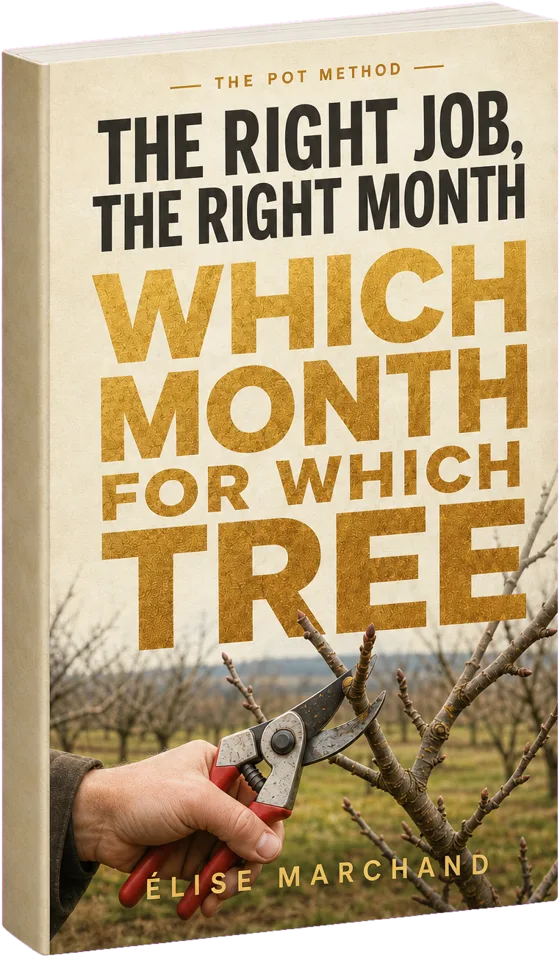
A digital book in PDF format, to read on your phone at the foot of the tree, on your computer, or printed if you prefer paper. It is built around one simple rule: a cut is never shown from a distance. Every cut is drawn at the exact spot where you place the blade, and every tree has its photo so you can identify it without a label.
It is written for someone who is not a gardener, in plain language with no nurseryman's jargon. When a technical word is needed, because you will read it elsewhere, it appears once, in brackets, after the plain word. You need nothing more than a pair of pruners that cut.
What you will find inside, part by part
You can read it in order, or go straight to your tree using the index at the back.
You are not going to kill it
You will know what a clumsy cut really costs, and you will pick up the pruners without the fear that puts everything off until next year.
- The five real pruning mistakes, and what each one actually costs. Only one leaves a lasting mark, and it is not the one you think.
- Why doing nothing for ten years damages a tree far more surely than a clumsy cut.
- The full calendar on one page, on the third page of the book, before any explanation.
Which tree do you have?
You will be able to identify your tree without a label, and know at once which season it is pruned in.
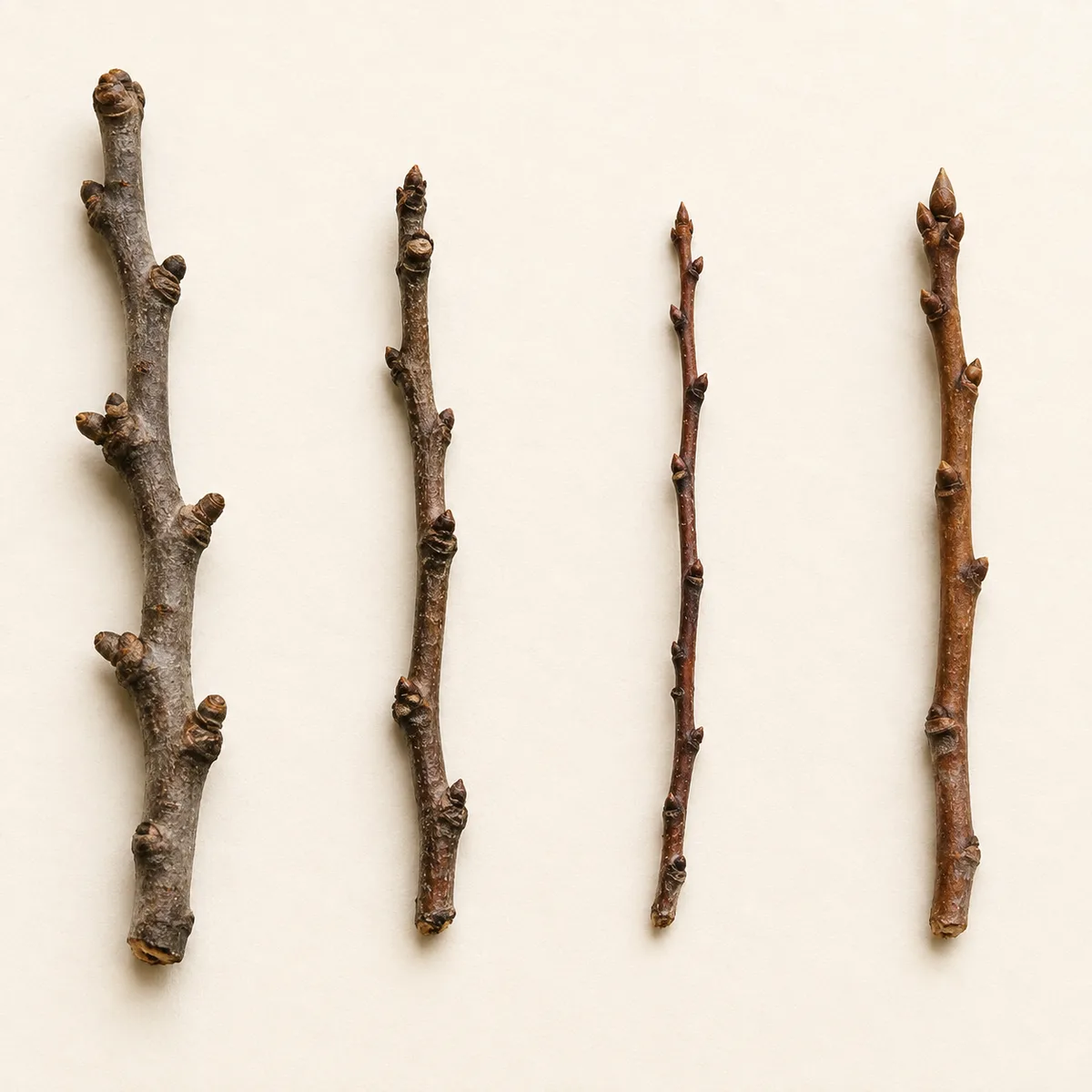
- Twelve trees you can recognize without a label, each with its photo: apple, pear, cherry, plum, apricot, peach, fig, olive, grapevine, kiwi, currant, raspberry.
- The horizontal banded bark that identifies a cherry tree at first glance, and tells you in the same breath never to prune it in winter.
- The two buds on the same branch: the round downy one will give a fruit, the flat pointed one will give wood. That is the whole difference between pruning well and pruning at random.
Which month, for which tree
You will be able to set the right date yourself, even on the day your case is not in the table.
- The only three reasons that set a date, so you can decide on your own the day your case is not in the table.
- Why cherry and plum trees are pruned in summer, and what happens if you prune them in February.
- Winter pruning STIMULATES, summer pruning CALMS. In practice that comes down to ten minutes per tree, in June, and almost nobody takes them.

The cut, in five moves
You will know where to place the blade, at what angle and at what distance, and how to remove a large branch without tearing the bark.
- Where to place the blade: one centimetre (about ½ in) above an outward facing bud, on a slant. With the diagram of the right cut and the wrong one, side by side.
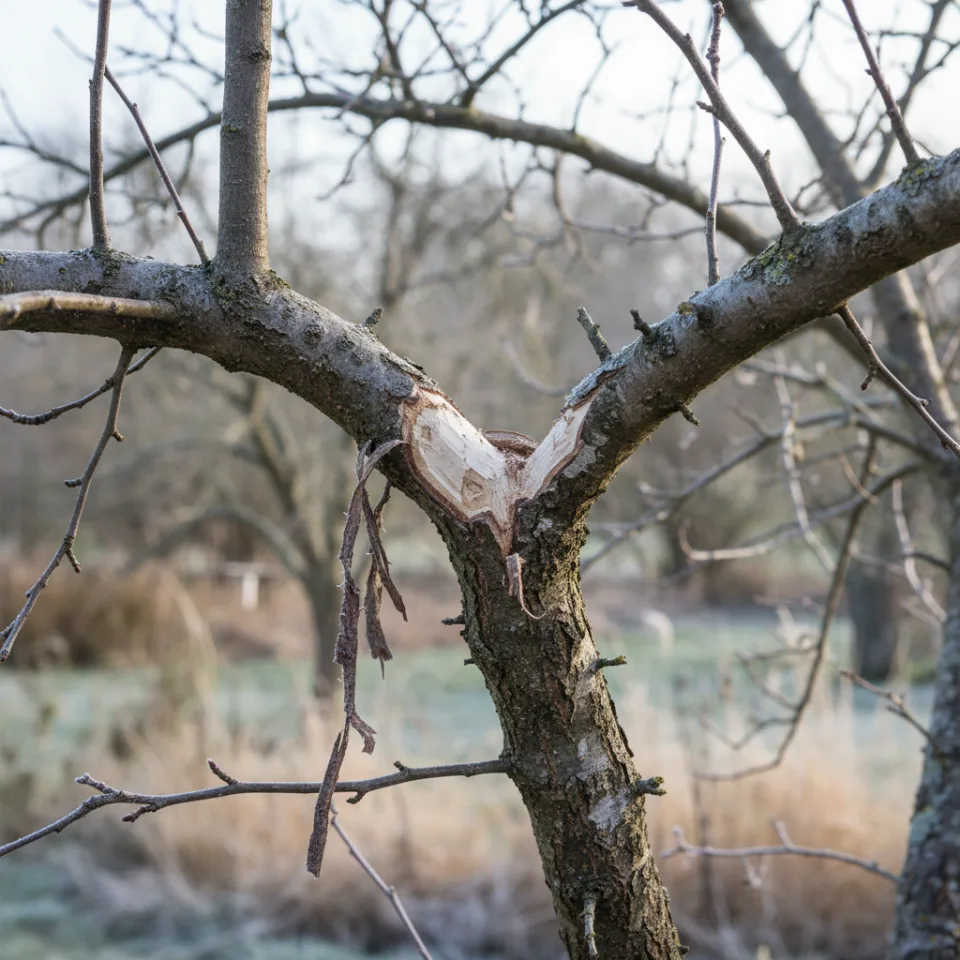
- The three step cut on a large branch, and the fifty centimetre (about 20 in) bark tear it prevents.
- The collar at the base of a branch: why a cut flush with the trunk never heals over.
- The five cuts in order. After the first four, there is usually nothing left to do.
Bringing a tree back
You will know how to restore a tree neglected for ten years, or pruned too hard, with a plan spread over three years.
- The tree that has never been pruned: the three year plan, year by year, never removing more than a quarter of the volume.
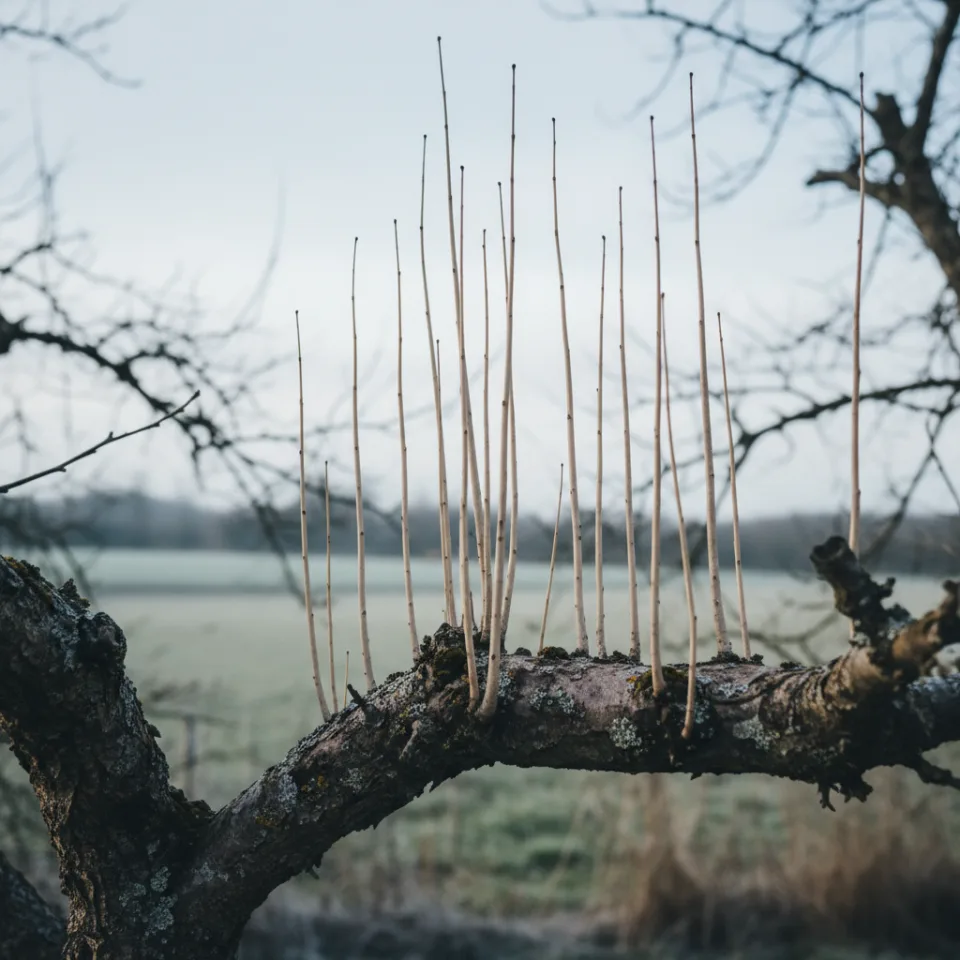
- The tree that has been pruned too hard, covered in straight barren shoots: why you must not cut them back, and what to do instead.
- The tree that has stopped producing: four causes, and only one of them is solved with pruners. What separates them is the length of this year's shoots.
- The broken branch, and the tree that is too tall: the honest answer, including when it is not the one you were hoping for.
Getting more fruit
You will know how to trigger fruiting with a piece of string, and how to get bigger fruit by removing some.
- Bending a branch down to horizontal: the least known move in the orchard, the most effective, and it costs a piece of string.
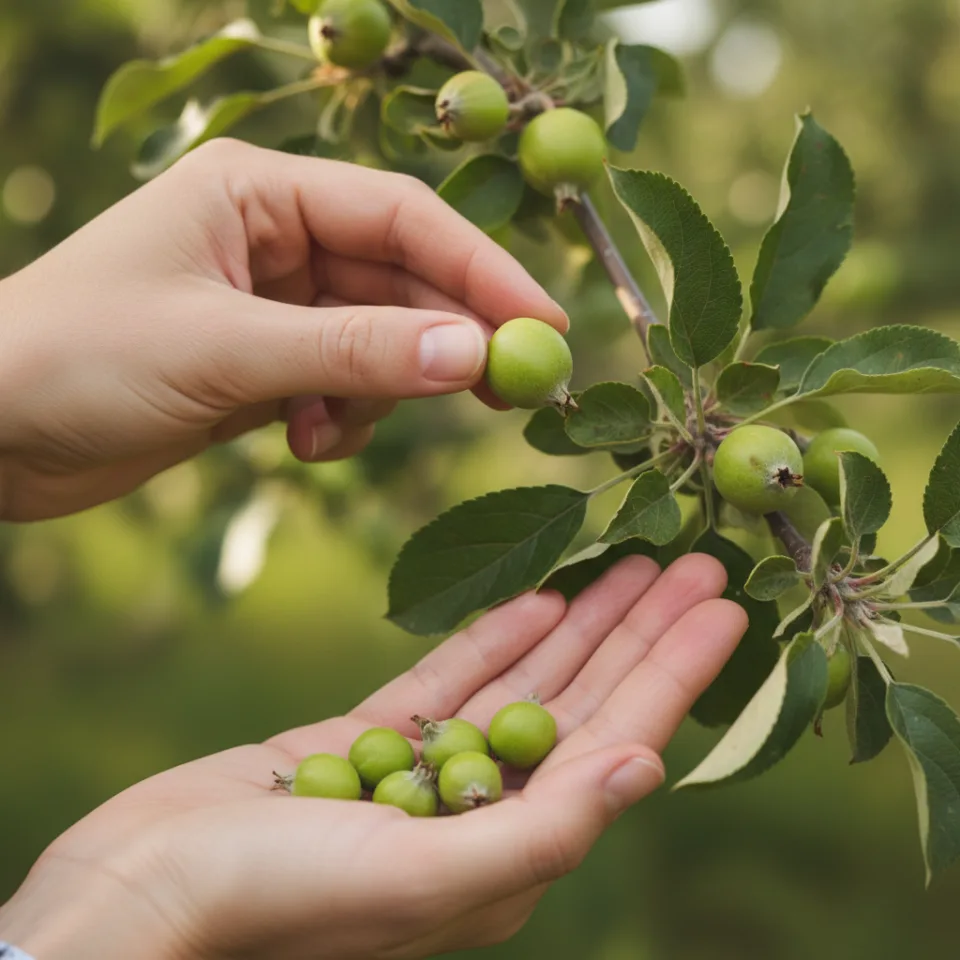
- Thinning the fruit in June, or why removing some gives you more, and bigger, and a harvest the following year.
- Plenty of blossom and no fruit: that is pollination, never pruning. What to do about it.
Grafting, explained to someone who has never grafted
You will know what has to line up for a graft to take, and you will try one without professional equipment.
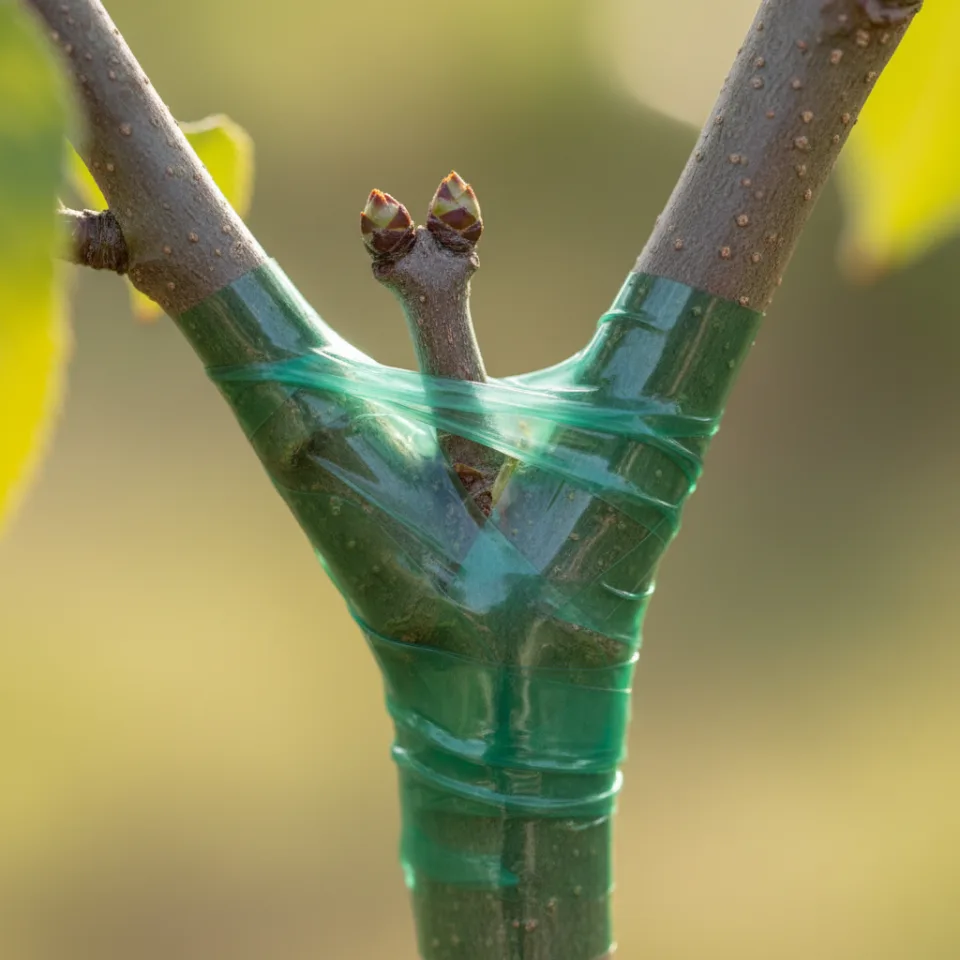
- What a graft is, in one image: a fruit tree is almost always two plants joined together.
- The only thing that has to be right, and why you LINE UP ONE SIDE instead of centring the scion.
- Cleft grafting, bud grafting and crown grafting, step by step, with the month for each one.
- The three causes of failure, always the same: they were not touching, it moved, it dried out.
What you actually have in your hands
43 pages
"The Right Job, The Right Month" runs to 43 pages, with its photos and diagrams, plus the 15 page notebook if you add it. This is not a stretched out blog article: it is the whole book, in PDF, yours for life.
Everything can be checked before you even pay: you can see the full contents above, part by part, and each part matches a real chapter of the book.
What you receive today
That is everything in "The Right Job, The Right Month", gathered into a single file, to keep open next to your fruit trees while you work. Here is exactly what you receive:
- The book "The Right Job, The Right Month", in photos and diagramsvalue $47
- The "Bringing a tree back" section: the tree never pruned, the one pruned too hard, the one that no longer producesincluded
- The orchard calendar, month by month, on one page to pin upincluded
- The grafting section: cleft, bud and crown grafting, step by stepincluded
- The index by tree and by problem, written in your wordsincluded
- Price$47
This is the price of the book, with no countdown and no timer. You keep it, with the updates.
Digital book in PDF, sent by email: nothing is posted, nothing arrives at your door.
30-day guarantee, no conditions
Read the book. Go out and look at your tree. Make the first cut, the dead wood one. If within 30 days you feel it brings you nothing, write to us at contact@thepotmethod.com and you are refunded in full.
No form, no explanation to give, no questions. And you keep the book: I would not know how to take it back from you anyway.
In other words: either this book changes something for you, or it costs you nothing. I prefer that simple rule to a long list of conditions in small print. The only risk left is closing this page and starting again tomorrow, looking for an answer in two articles that contradict each other.
P.S. If you are skimming this page, here is the summary. For $47, you receive "The Right Job, The Right Month": the twelve trees in photos, the five cuts in diagrams, the orchard calendar, the section on bringing a neglected tree back, and grafting explained step by step. If it is of no use to you, you are refunded within 30 days and you keep the book.
P.P.S. Do one thing this weekend, even if you do not order. Go and scratch the bark of one branch on your tree with your fingernail. If it is green underneath, the branch is alive. If it is brown, it is dead, and you can cut it today, in any season, with no risk at all. You will have made the first of the five cuts, for free.
The Pot Method publishes practical gardening guides. This book is about pruning and training fruit trees, and nothing in it is medical or nutritional advice.