How to tell in five seconds what each plant needs, and stop losing them, even if you think you have no green fingers.
Because keeping a plant alive is not a gift: it comes down to a few simple steps in the right order, the T.E.R.R.E. method, that nobody ever showed you. A finger in the soil, a window, and nothing else.
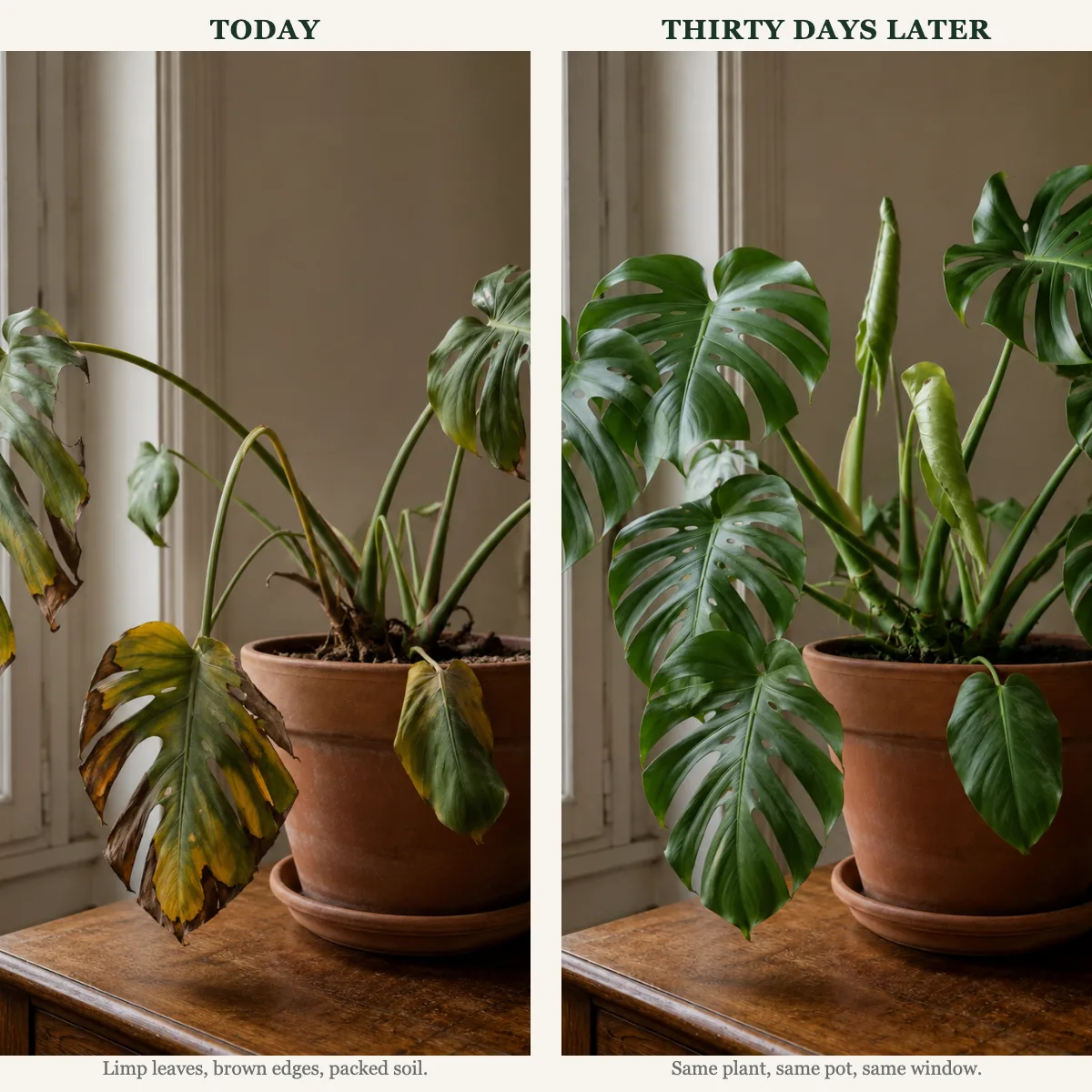
The digital book "My Plants Stop Dying", to read and to apply from tonight.
Keep reading if you finally want to know what to do, without searching for two hours
Here is what you are going to understand on this page, and above all in the book that goes with it:
- Why the surface of the soil lies, and the five second test that replaces every watering calendar.
- Why your plant turns yellow even though you look after it well, and what you need to stop doing before adding anything at all.
- How to settle between two opposing pieces of advice found online, instead of picking at random and hoping.
- What you do each month, and above all what you do not do between October and February.
From: Élise Marchand, for The Pot Method
Place: a flat
Dear reader,
You love your plants. You look at them every day. And yet one of them, right now, is not doing well.
You did what everyone does: you typed the name of the plant and "yellow leaves" into a search engine. And here is exactly what you got.
So you chose. At random, or with the best intentions in the world: you watered. Because when a plant is struggling, you want to look after it. That is human.
And it is almost always the wrong answer.
Here is what nobody has told you plainly: in a flat, you almost never lose a plant through neglect. You lose it through too much care. Too much water, too much repotting, too much feed, too much moving around, too many hands in the pot. The plant does not need attention every day. It needs to be left alone between two well judged actions.
I did not make this up. It is what the people who know say over and over on gardening forums. "Too much care does harm." "Leave it alone." "Stop touching it." It is the advice you will hear again and again from people who answer, and almost never put into words by those who ask. There is a gap between the two, and you fell into it. So did I.
How you stop killing your plants
One very common case: no garden, no balcony worth the name, a north facing window in the living room, and another one facing due south in a bedroom you never set foot in.
I started the way almost everyone does: by buying a plant because it looked lovely in the shop. Then a second one. Then, when the first started turning yellow, a third to replace it. I lost them all. Not all at once: slowly, watching it happen, without understanding. One leaf, then another. And that terrible feeling of watching something die in your hands while you are trying to do the right thing.
I looked things up, of course. And the more I read, the less I knew. One site said to let the soil dry between waterings, the next said to keep it damp at all times. One said to repot as soon as you buy, the next said never. I ended up telling myself what a lot of people end up telling themselves: I have no green fingers. It is simpler. It is not true, but it is simpler.
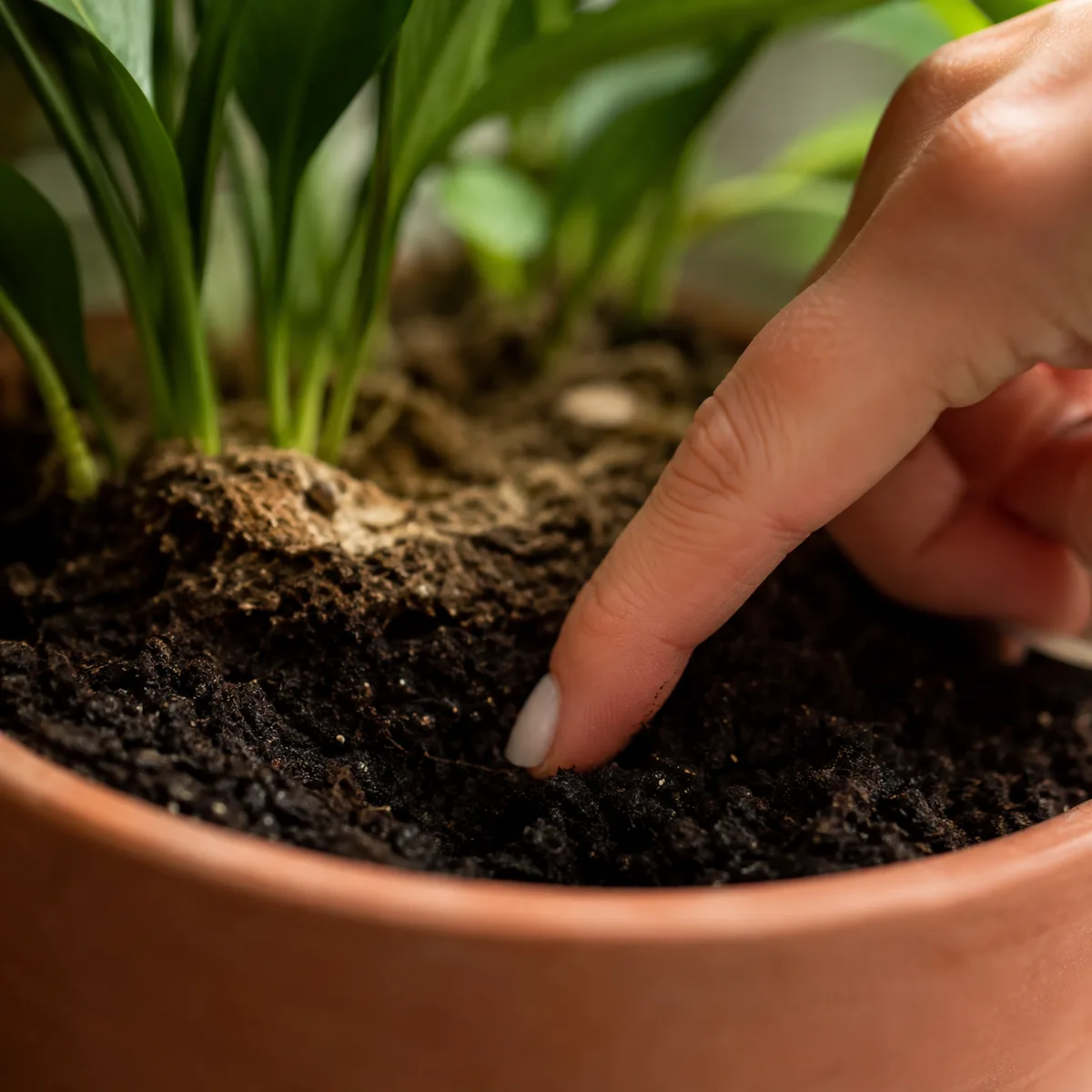
What changed was not a product. It was a remark, read one evening, written by someone answering a stranger on a forum. It fitted in one line: push your finger into the soil. Not the surface. Your finger, up to the second knuckle. If it comes out damp and sticky, you do not water. If dry soil clings to your finger, you water, and you water properly.
I thought it was ridiculous. I did it anyway, on every plant I had, that same evening. And I discovered that several of my pots were soaking wet two centimeters (about ¾ in) under a perfectly dry surface. I had been drowning them for months while believing I was saving them. The surface had been lying to me all that time, and nobody had told me to look underneath.
I found that same test everywhere afterwards, once I knew what to look for. It is taught far less often than it should be, and it is the kind of gap you cannot see while you are inside it.
From then on, I stopped collecting tips and started writing things down: what I did, on what day, and how the plant answered. My failures always came back to the same five places, and I ended up putting them in an order that, for me, changed everything.
That order is what I call the T.E.R.R.E. method. There is nothing clever about it. Its one strength: it decides. When two pieces of advice contradict each other, it says which one is wrong and why both camps exist. That is exactly what I was looking for and never found.
Five letters, in this order, and no other
The T comes first because watering is what kills the most plants. The E for light comes straight after because it is the one nobody ever suspects.
And then there is the other half of the problem, the half nobody talks about. After hearing "too much water kills" so often, a lot of people have swung to the opposite extreme and no longer dare water at all. It is there in black and white, everywhere: "I am very afraid of watering too much and I think I am not watering enough." An honest book has to answer both, and give you a test of your own, in your own home, rather than a rule that is supposed to hold for everyone.
That is why I wrote this book.
At this point, you have two options
Carry on guessing
- Watering by the calendar, or whenever it crosses your mind
- Moving the plant when it turns yellow
- Buying the same plant again, thinking it was a fragile one
- Concluding that you have no green fingers
One more plant lost, and the same question the next time.
Read what the plant is saying
- A finger in the soil before every watering
- The right position for the way your window faces
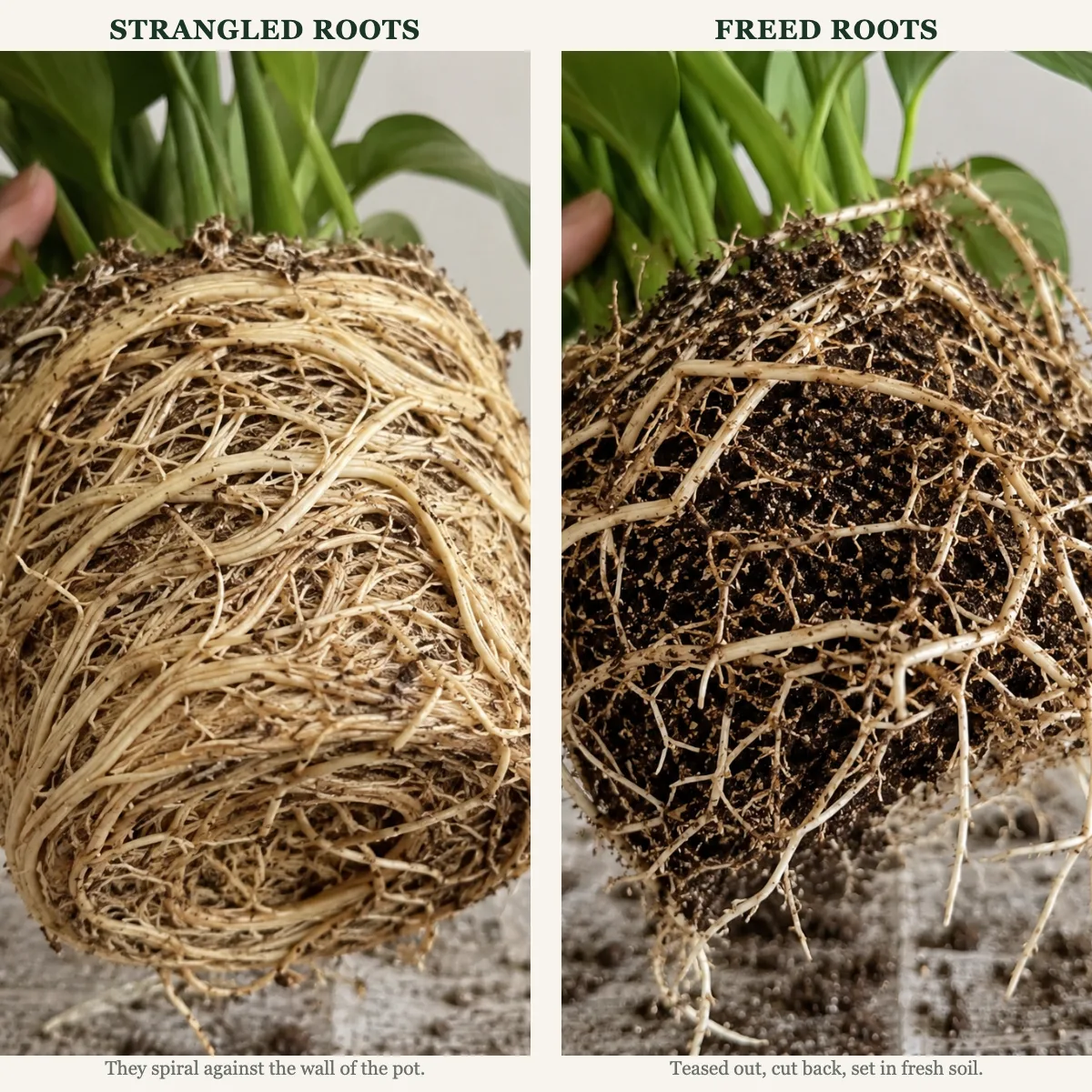
- Repotting when the roots circle, not at random
- Recognising the symptom on the leaf
The same plant, kept, and the next one too.
You do not water a calendar, you water soil you have touched.
The second option asks for one reading and one action tonight. The first costs you one more plant every time you get it wrong, and the cruellest part is that you never even know you are getting it wrong.
Just imagine for a moment
- Imagine walking past your plants in the morning without that small worry, because you know exactly which one needs something today, and that the others need nothing at all.
- Imagine seeing a leaf turn yellow and, instead of searching for two hours, opening one page, recognizing the symptom in a photo, and knowing within a minute whether it is serious or normal.
- Imagine coming home from holiday and finding your plants alive, because you did the right thing before leaving rather than giving them a big glass of water the night before.
- Imagine being told, one day, that you have green fingers. And know that it was never a question of fingers.
What you will be able to do when you close it
- Decide in five seconds, without hesitating, whether you water today or not.
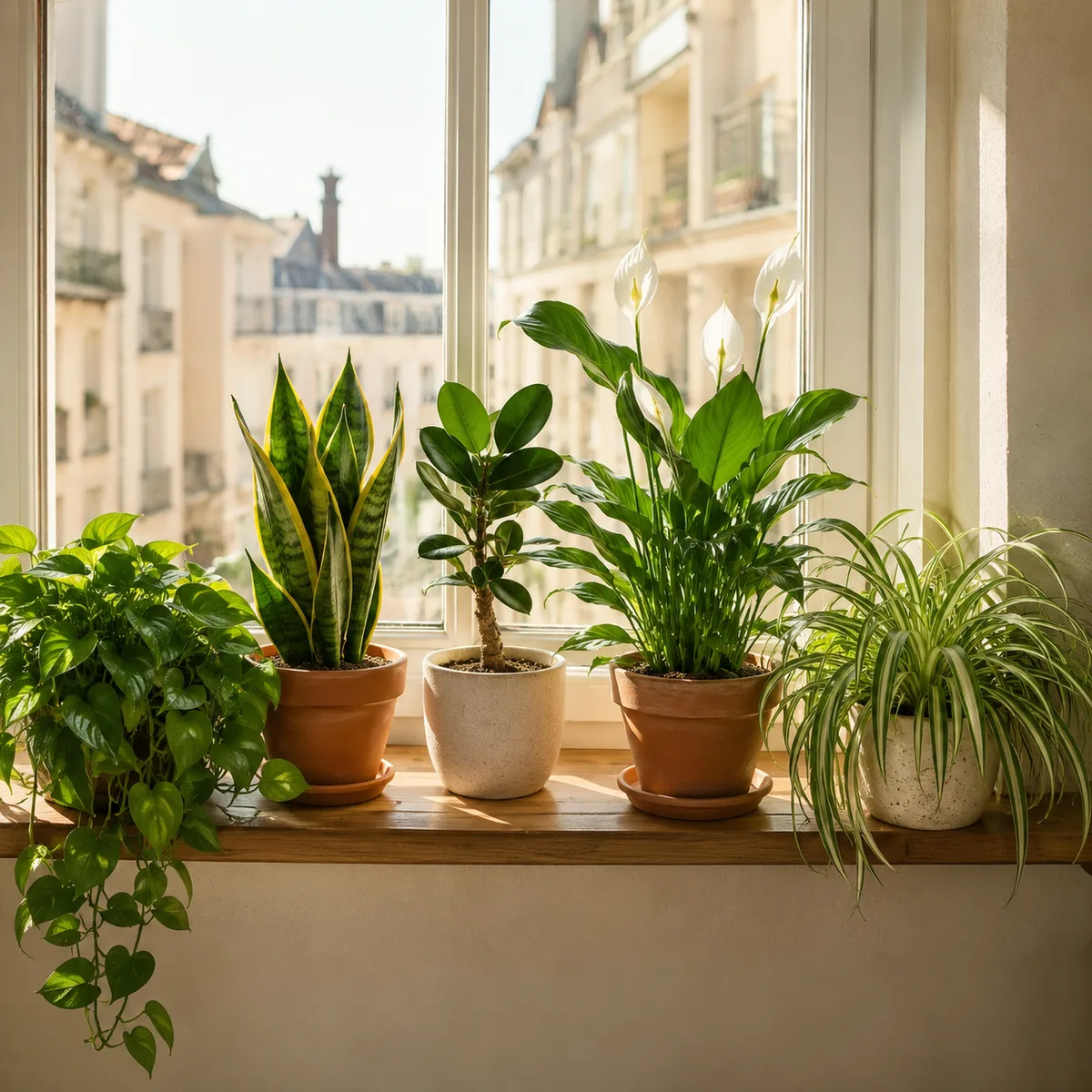
- Place each plant at the right window and the right distance, in your home, with your own windows.
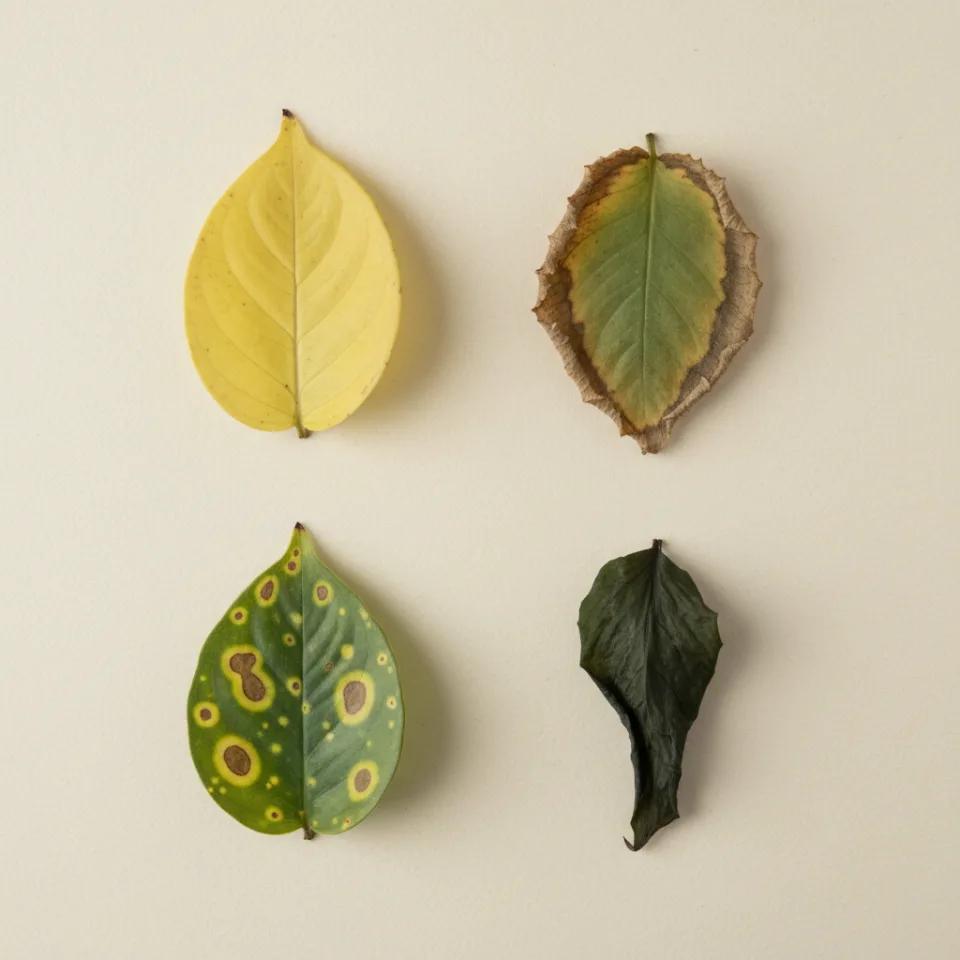
- Look at a yellow leaf and know whether it is water, light, the pot or simply age.
- Repot at the right moment, in the right pot, and know when not to repot at all.
- Know what you do not do between November and February, when a large share of the damage happens.
- Bring back a drowned or dried out plant before it is beyond saving.
- Choose a plant in the shop already knowing whether it will last in your home, and which one to leave on the shelf.
The appendices included in the book
Is this really for you?
And you?
You can close this page, and find the same plant tomorrow morning, a little yellower. Or you can do the finger test tonight, on every pot you have, and discover in five minutes what you had never seen. The book is there for everything else.
Do the finger test, on every pot you have tonight, before deciding anything at all. If you find a plant you were about to water that did not need it, you will know the problem was never your patience or your memory: it was that nobody had ever shown you where to look. The book is there for everything else, in order, without leaving you to choose between two opposing opinions.
"My Plants Stop Dying"
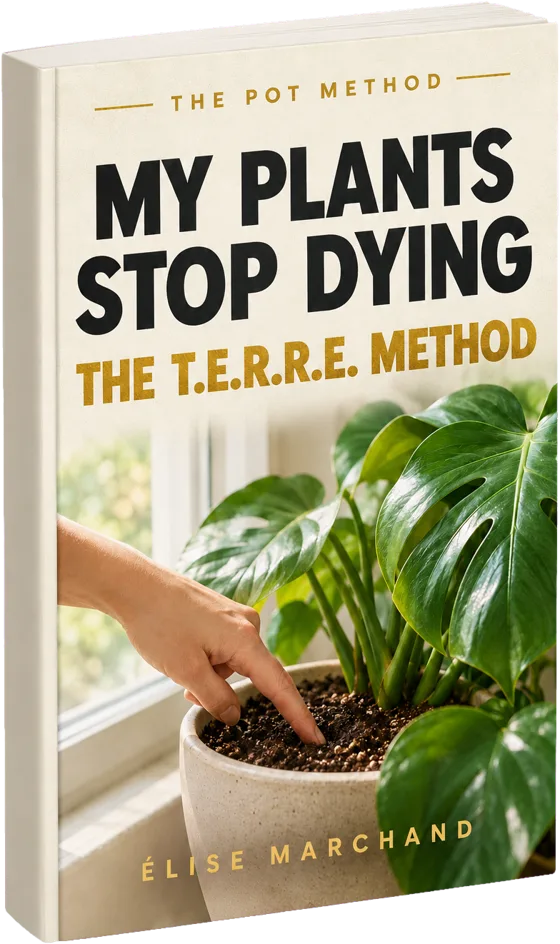
A digital book in PDF format, to read on your phone next to the pot, on your computer, or printed if you prefer paper. It is built around one simple rule I set myself: photographs and step-by-step plates, plant by plant and symptom by symptom. Not a text with a few pictures for decoration. You must be able to compare what you see at home with what is on the page.
It is written for someone starting out, in plain language with no expert's jargon. No jargon, no formula to memorise. You need nothing more than a finger and a window.
What you will find inside, part by part
You can read it in order, or go straight to the part that matches what is happening at home tonight.
Before you start: what nobody tells you
You will know why two opposing pieces of advice are true at the same time, and which of the two applies to you tonight.
- Why the same search gives "not enough water" and "too much water" in equal measure: both answers are true, but not for the same plant.
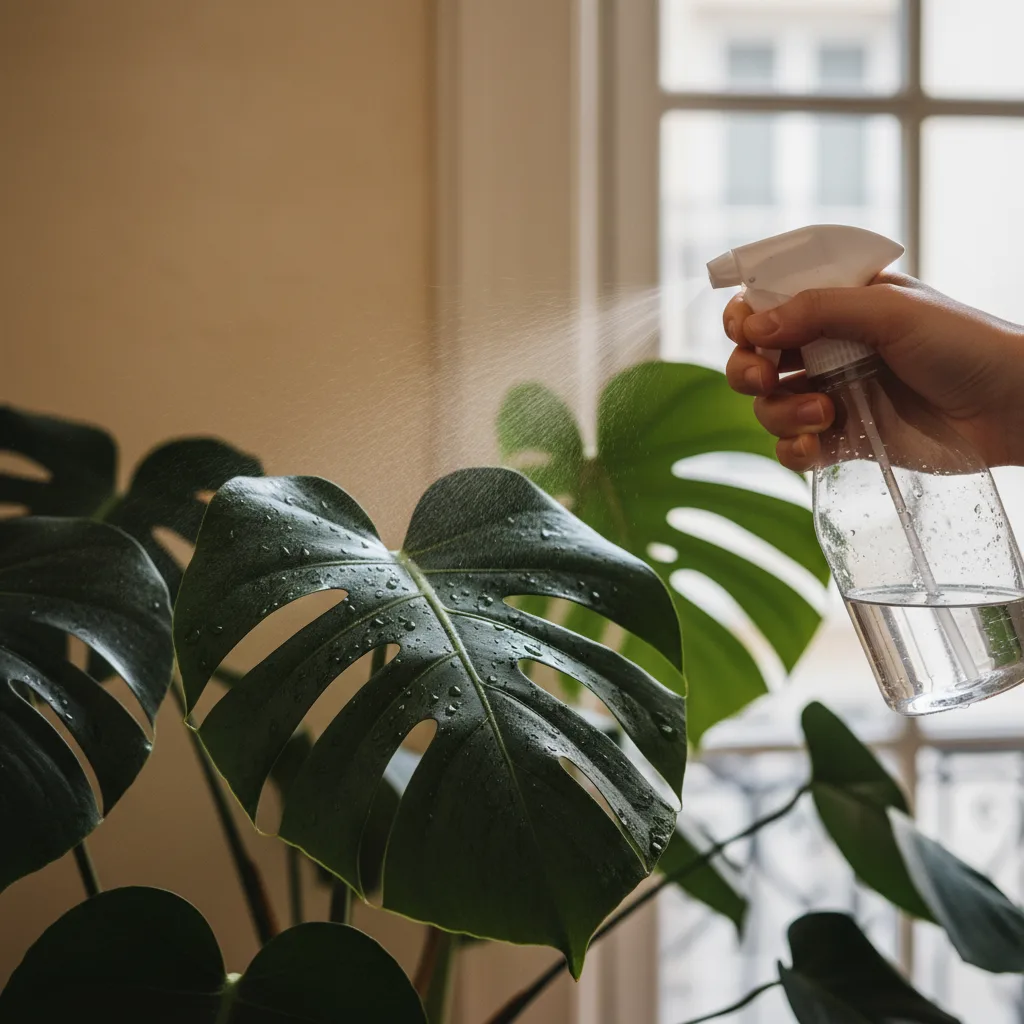
- The five things you believe are helpful and that do harm: misting, watering a little every day, repotting as soon as you buy, feeding a plant that is struggling, moving a plant that is sulking.
- The finger pushed in up to the second knuckle, described to the millimetre. And why the wooden stick gets it wrong far more often than people think.

T for Touch: water
You will know, in five seconds and with no equipment, whether that plant is thirsty or already drowned.
- A drowned plant looks exactly like a thirsty one: limp, drooping leaves. It is the most expensive confusion of all, and the test that separates them takes five seconds.
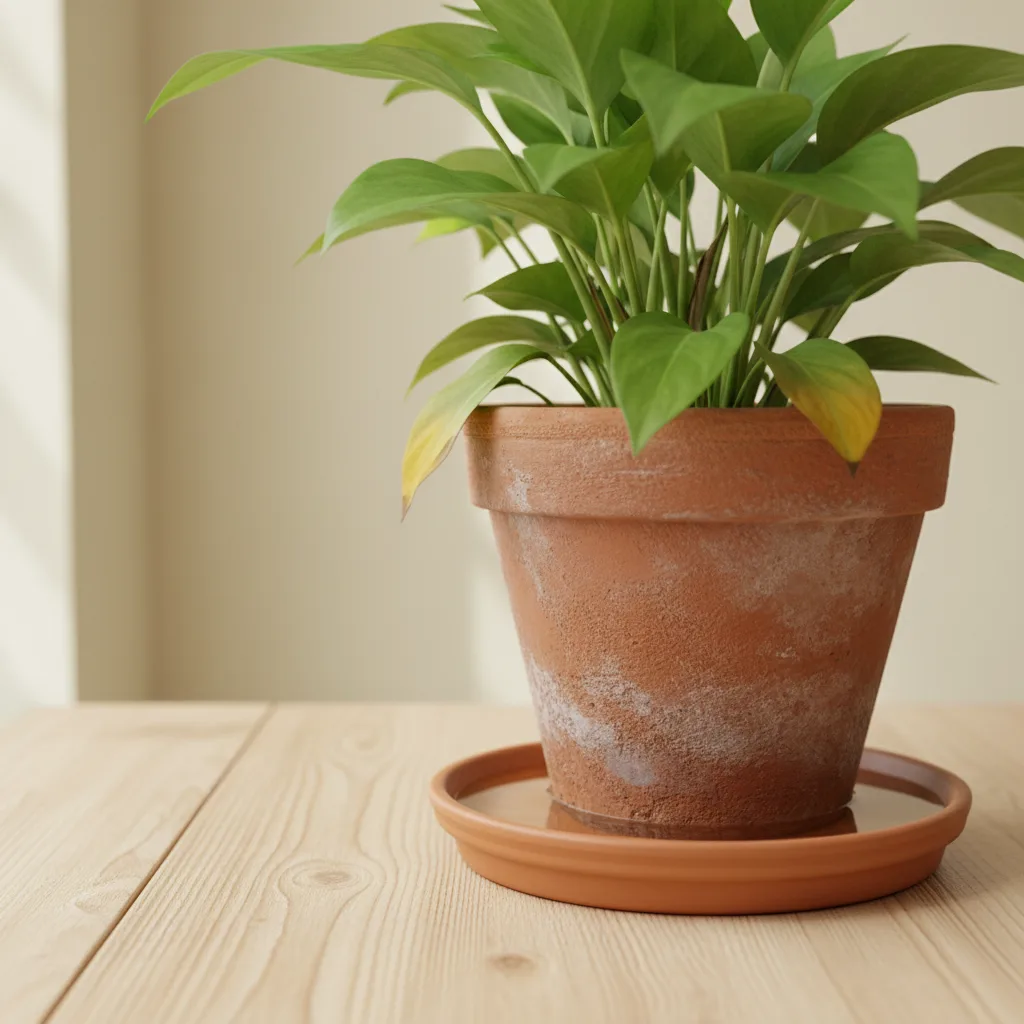
- The twenty minute rule for the saucer and the outer pot, the mistake that kills the most plants indoors.
- The six watering families: the table that replaces thirty fact sheets, with the monstera, the pothos, the spider plant, the snake plant, the aloe, the fern and the orchid already sorted into it.
E for Expose: light
You will know how to find the right spot in YOUR flat, instead of moving the plant around by guesswork.
- The hand shadow test: how sharp the edge of the shadow is at midday tells you the real light level, without buying any device.
- The north facing window, unfairly written off: it is the best position for three of the most widely grown houseplants.
- Light collapses within a few tens of centimeters. The plant on the table and the same plant on the windowsill do not live in the same world.
- The radiator under the window, a very common case, and the two solutions that work, one of which costs nothing.
R for Repot
You will know when a plant needs repotting, and above all when it would be a mistake.
- The two centimetre (about ¾ in) rule, and what physically happens in a pot that is too big: the soil stays wet where there are no roots yet.
- Terracotta or plastic, the debate settled. It is not a matter of taste, it is a matter of how fast the soil dries.
- Top dressing, the ten minute job you will find almost nowhere, for large plants that are too heavy to lift out.
R for Rhythm: the month by month calendar
You will know why the plant that was fine all summer dies in November, and how to prevent it.
- January: the month when a plant can die of thirst next to a radiator while standing in water.
- October: the turning point, and the three settings to change when the light drops in autumn, and to put back when it returns.
- Feed: why the dose written on the bottle is designed for a greenhouse plant, not for your living room.
- The bathtub method for holidays, explained in detail, with the mistake that turns it into a trap.
E for Examine: reading the symptoms, leaf by leaf
You will know how to name the cause by looking at the leaf, instead of searching for two hours and trying things at random.
The part you will open most often. You are not looking up the name of your plant: you are looking up what you can see.
- The three questions to ask before touching anything: where on the plant, since when, and how many leaves. A yellow leaf at the bottom and a yellow leaf at the top almost never have the same cause.
- The ficus, champion of leaf drop, and why it sheds everything after being moved two meters (about 7 ft).
- Fungus gnats: why killing the ones that fly achieves absolutely nothing, and the three part routine that makes them disappear.
- The plant that is nearly lost: the four step assessment that tells you within ten minutes whether it can come back, and why most people throw them out too soon.
What you actually have in your hands
155 pages
"My Plants Stop Dying" runs to 155 pages, with its photos and diagrams, plus the 33 page notebook if you add it. This is not a stretched out blog article: it is the whole book, in PDF, yours for life.
Everything can be checked before you even pay: you can see the full contents above, part by part, and each part matches a real chapter of the book.
What you receive today
That is everything in "My Plants Stop Dying", gathered into a single file, to keep open next to your houseplants while you work. Here is exactly what you receive:
- The book "My Plants Stop Dying", the T.E.R.R.E. method in photosvalue $47
- The "Examine" section: recognising the symptom from a photo and knowing what to doincluded
- The month by month calendar for houseplantsincluded
- The verdicts appendix: twenty five contradictory pieces of advice, settledincluded
- A quick-reference table of thirty houseplantsincluded
- Price$47
This is the price of the book, with no countdown and no timer. You keep it, with the updates.
Digital book in PDF, sent by email: nothing is posted, nothing arrives at your door.
30-day guarantee, no conditions
Read the book. Do the finger test on all your plants. Follow the calendar for the current month. If within 30 days you feel it brings you nothing, write to us at contact@thepotmethod.com and you are refunded in full.
No form, no explanation to give, no questions. And you keep the book: I would not know how to take it back from you anyway.
In other words: either this book changes something for you, or it costs you nothing. I prefer that simple rule to a long list of conditions in small print. The only risk left is closing this page and starting again tomorrow, looking for an answer in two articles that contradict each other.
P.S. If you are skimming this page, here is the summary. For $47, you receive "My Plants Stop Dying": the T.E.R.R.E. method in photos, how to read the symptoms, the month by month calendar, the verdicts appendix and the table of thirty plants. If it is of no use to you, you are refunded within 30 days and you keep the book.
P.P.S. Do one thing tonight, even if you do not order. Push your finger into the soil of each of your pots, up to the second knuckle. If it comes out damp and sticky on a plant you were about to water, you have just understood, for free, the heart of this book.
The Pot Method publishes practical indoor gardening guides. Nothing in this book is medical or dietary advice, and no plant in it is presented as edible.