How to prepare in March a garden that holds through summer without chasing after the watering can, even if yours scorches every year.
Because summer is not won in August, with shade cloth and evening watering: it is decided five months earlier, and it costs nothing.
Nothing to install, no equipment to buy: a PDF book, to read next to your garden, and the March jobs that decide your summer, starting tonight.
The digital book "The Garden That Holds", to read tonight and to apply with your next load of compost.
Keep reading if you spend your summers with a watering can in your hand
Here is what you are going to understand on this page, and above all in the book that goes with it:
- Why not all the water in a soil is available, and how to increase the share that really is.
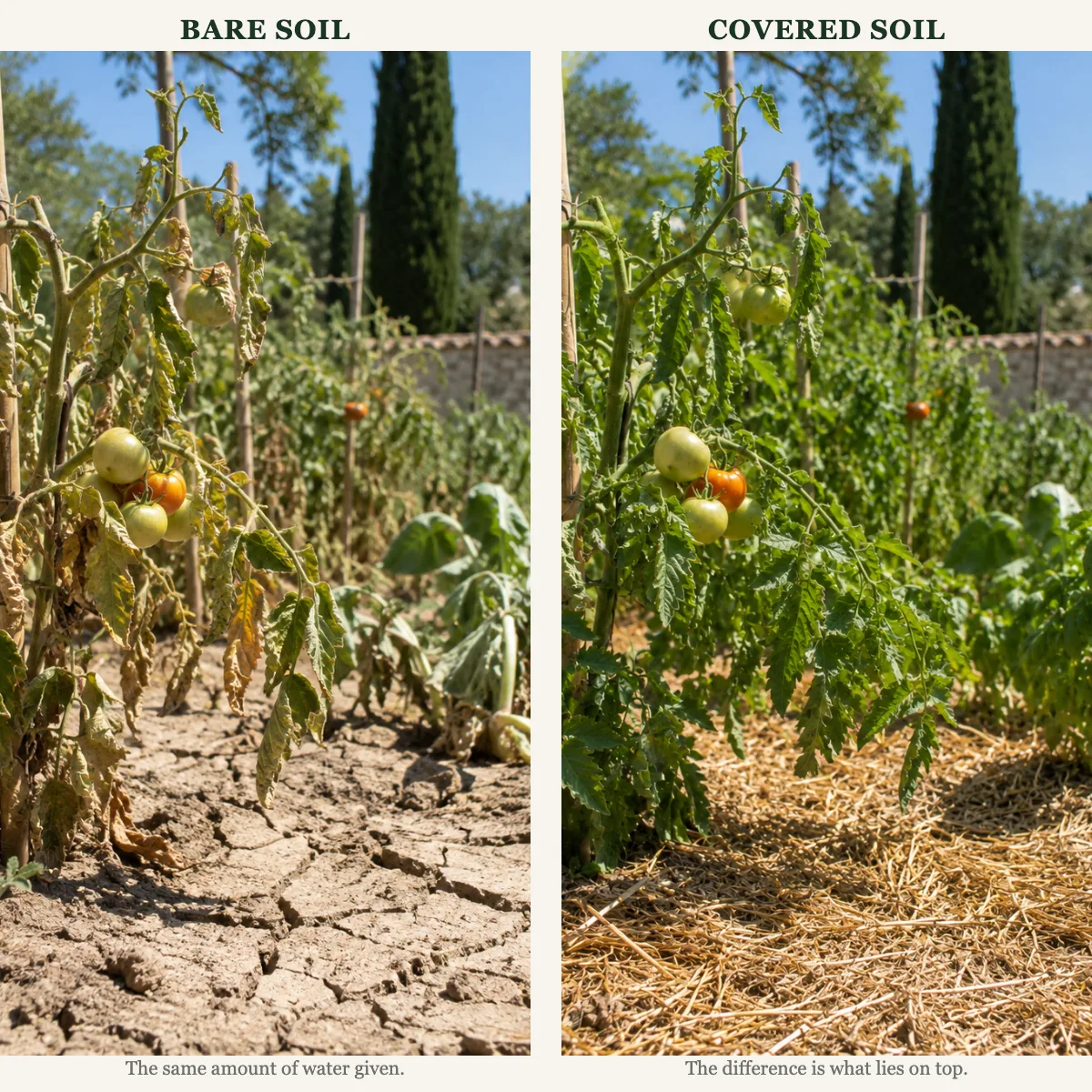
- Why bare soil loses its water in the sun AND turns away the water that falls on it, and the one job that solves both at once.
- Why watering a little every day builds a fragile plant, and what to do instead.
- The six tips you read everywhere on this subject that do not hold up, with the reason for each one.
From: Élise Marchand, for The Pot Method
Place: in front of cracked earth in August
Dear reader,
You have probably spent a summer chasing after the watering can. In the morning before leaving, in the evening on the way home, and that uncomfortable feeling of never doing enough, while some plants wilted in the middle of the day anyway.
And the following year, you start again, with the same tiredness and the same guilt whenever you go away for a few days. Nobody told you that the important part is not settled while it is hot, but well before, when the garden is still damp and you are not thinking about it.
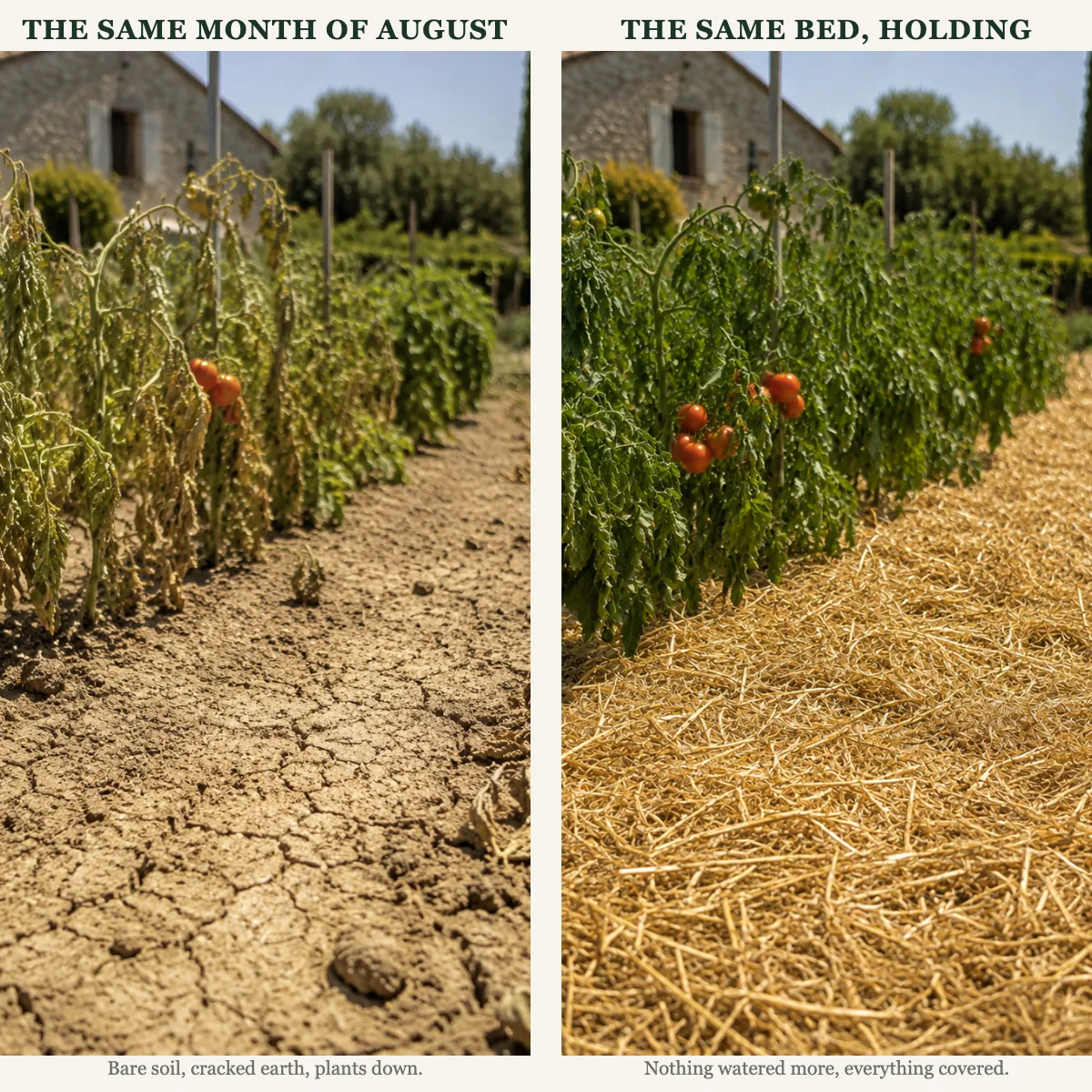
You can put up shade, mulch in a panic, water in the evening. These are emergency measures: they limit the damage, and they do not change the underlying situation.
The underlying situation is decided five months earlier, and it costs nothing.
And there is the question nobody dares ask: should you go on planting, if it only means watching what you put in the ground scorch? The answer lies in what you decide in spring, not in the number of watering cans you carry in August.
This book starts from there: what is prepared in March, what is planted with your eyes open, and what you stop doing because it only serves to give you a clear conscience.
Four levers, and three of them are free
What your soil can hold. A soil rich in organic matter holds considerably more water than bare, compacted soil, volume for volume. The same rain stays available in it far longer. It is the most powerful lever, and the slowest.
Whether it is covered or bare. Bare soil in full sun loses its water every day without anything growing on it. And here is the irony: heavy rain forms a crust on it, so it also turns away the water that falls. Covered soil does exactly the opposite.
How deep your roots go. A plant watered a little every day builds surface roots, and it will be the first to suffer. The same plant watered generously and less often sends roots down to find water lower, and holds for several days without you.
What you planted. Some plants come through a dry summer without flinching, others never will. It is the one decision that is made before you buy.
This book also says what does not work
This is the area of gardening where the most unverifiable tips circulate. Upturned bottles, water retaining gel, ollas, watering with cooking water, crystals: every spring brings its own list.
A whole section is devoted to them, and it says plainly what holds up and what does not, with the reason. One example: a mature tomato plant in full sun drinks one to two liters a day. A litre and a half bottle is therefore empty in a day, at best. The arithmetic settles the question on its own.
You will probably find one or two things in there that you already do, and that do nothing for you.
And the point every list forgets
No plant is drought resistant in its first year.
They become so once their roots are established, which takes a full season, sometimes two. In the first year, you water: there is no contradiction, you water them so that they never need it again.
It is the point that trips up the most people, and it appears in almost no list of "drought resistant plants". The book says so on every plant sheet, with the date from which each plant is genuinely self sufficient.
What you will not find in it
No water saving figure, no percentage. I have no honest measurement to give you on that, and the figures you read on this subject are almost always repeated without a source.
And no alarm either. This is a book about know how: a garden that holds through summer is above all a pleasant garden where you spend less time with a watering can in your hand.
At this point, you have two options
Summer is not won in August, it is decided in March.
The second option asks for one reading and one action tonight. The first costs you hours of watering every week, and a garden that scorches all the same, and the cruellest part is that you never even know you are getting it wrong.
Just imagine for a moment
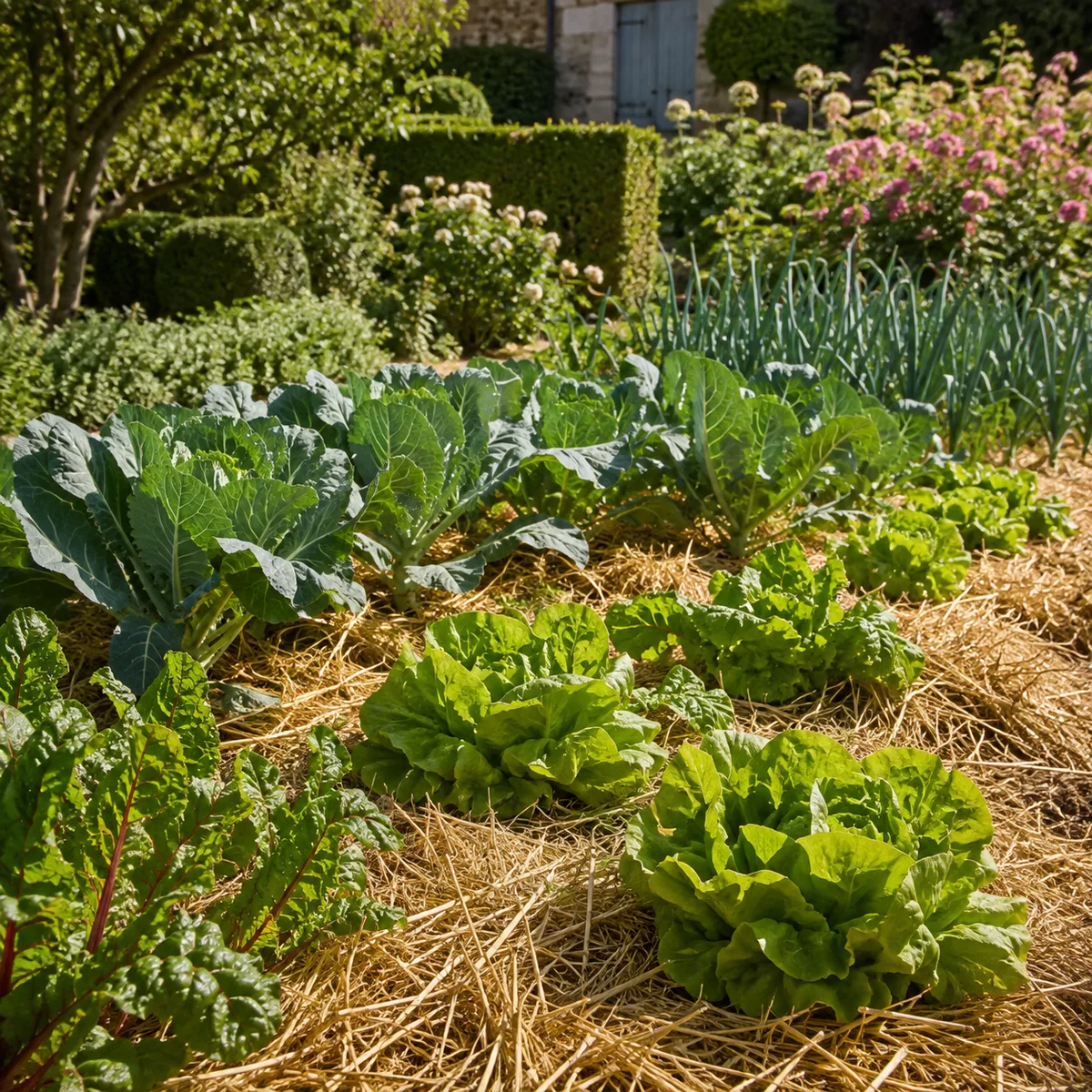
- Imagine an August when watering becomes the exception rather than the evening routine.
- Imagine a downpour that soaks in instead of running off hard baked soil.
- Imagine a bed that comes through the summer without you, because you planted it in September instead of May.
- Imagine stopping buying tips that do nothing, because you will know why they do nothing.
What you will be able to do when you close it
- Know in five minutes, with a spade, whether your soil holds water or lets it run.
- Mulch at the right depth, at the right moment and in the right place, and know the three cases where you should not.
- Water less often and more deeply, and send the roots down instead of holding them at the surface.
- Choose plants that will genuinely hold, and know from when they will be self sufficient.
- Plant in autumn rather than in spring, and gain a whole season of rooting.
- Recognise the tips that do nothing, and stop repeating them every year.
The appendices included in the book
Is this really for you?
And you?
You can close this page, and spend next summer with a watering can in your hand again. Or you can, this weekend, lift a block of soil with a spade and see whether it falls apart into crumbs or into plates. The book is there for everything else.
Make the list of what is decided in March tonight, before deciding anything at all. If you find a summer spent watering something that could have held on its own, you will know the problem was never your patience or your memory: it was that nobody had ever shown you where to look. The book is there for everything else, in order, without leaving you to choose between two opposing opinions.
"The Garden That Holds"
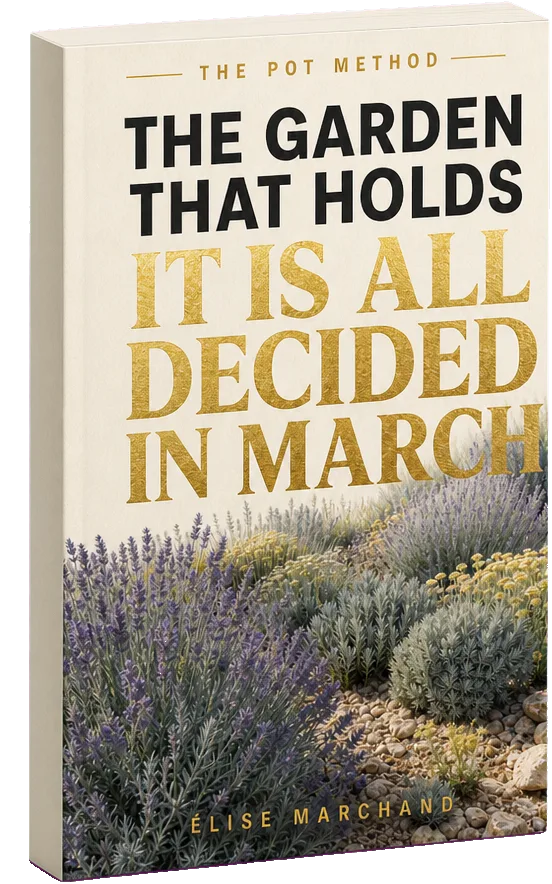
A digital book in PDF format, to read on your phone in the garden, on your computer, or printed if you prefer paper. It is built around a reversal: a heatwave is not dealt with in August, it is prepared for in March, and almost everything that matters is free.
It tells you what your soil can hold and how to increase it, why covering it is the most rewarding measure of all and where you must never put any, how to water differently, which plants genuinely hold and from when, and what does not work despite what you read everywhere.
What you will find inside, part by part
Start with part 1 and do the spade test. Five minutes, free, and it tells you exactly where you stand.
Soil that keeps water
You will know why your soil holds so little, and what to work on so that it keeps the water you give it.
- Why part of the water in a soil drains away, part stays locked up, and only one part is genuinely available.
- The three jobs organic matter does at the same time, and why it is the most powerful lever.
- The method, which is the same everywhere in this book: on the surface, regularly, never dug in.
- The spade test: structure, roots and smell, and what each one tells you about your water.
- What it gives you in the first year, the second and the third. Honestly, and with no invented percentage.
- What "holding water" means, in practice.
- Organic matter, and why it changes everything.
- The method, and it is the same one used throughout this book.
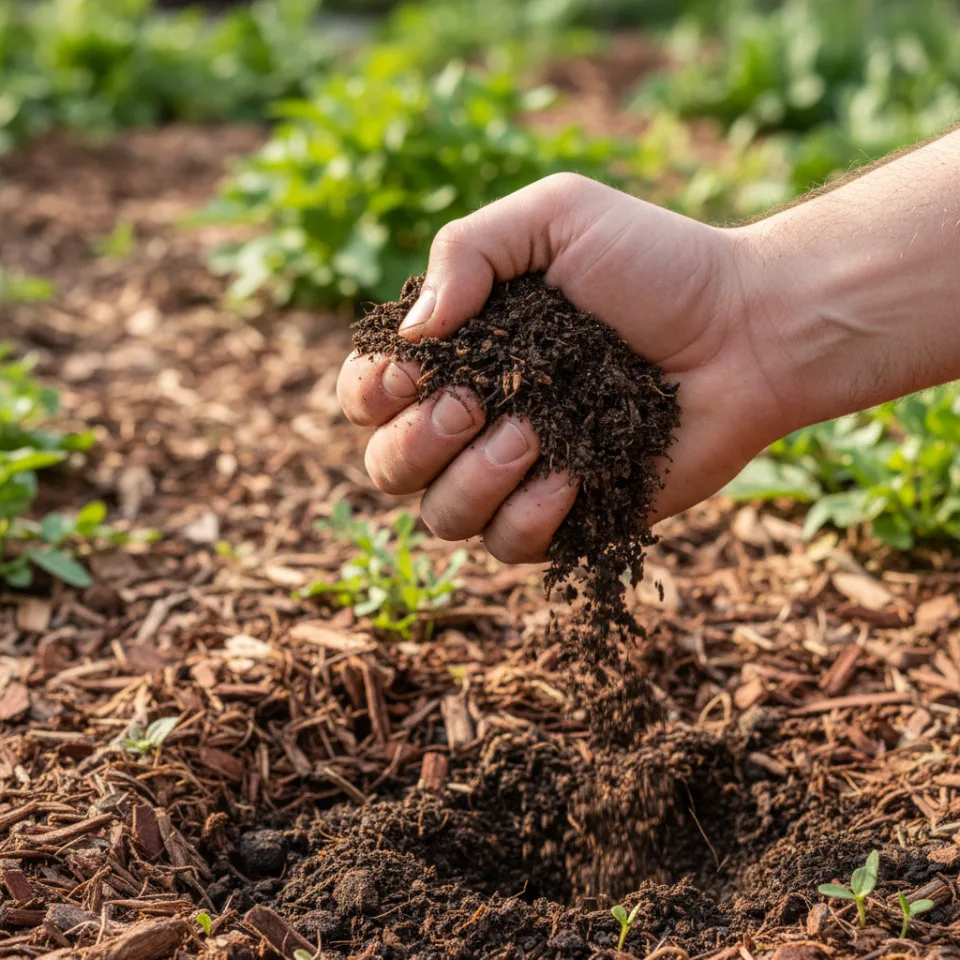
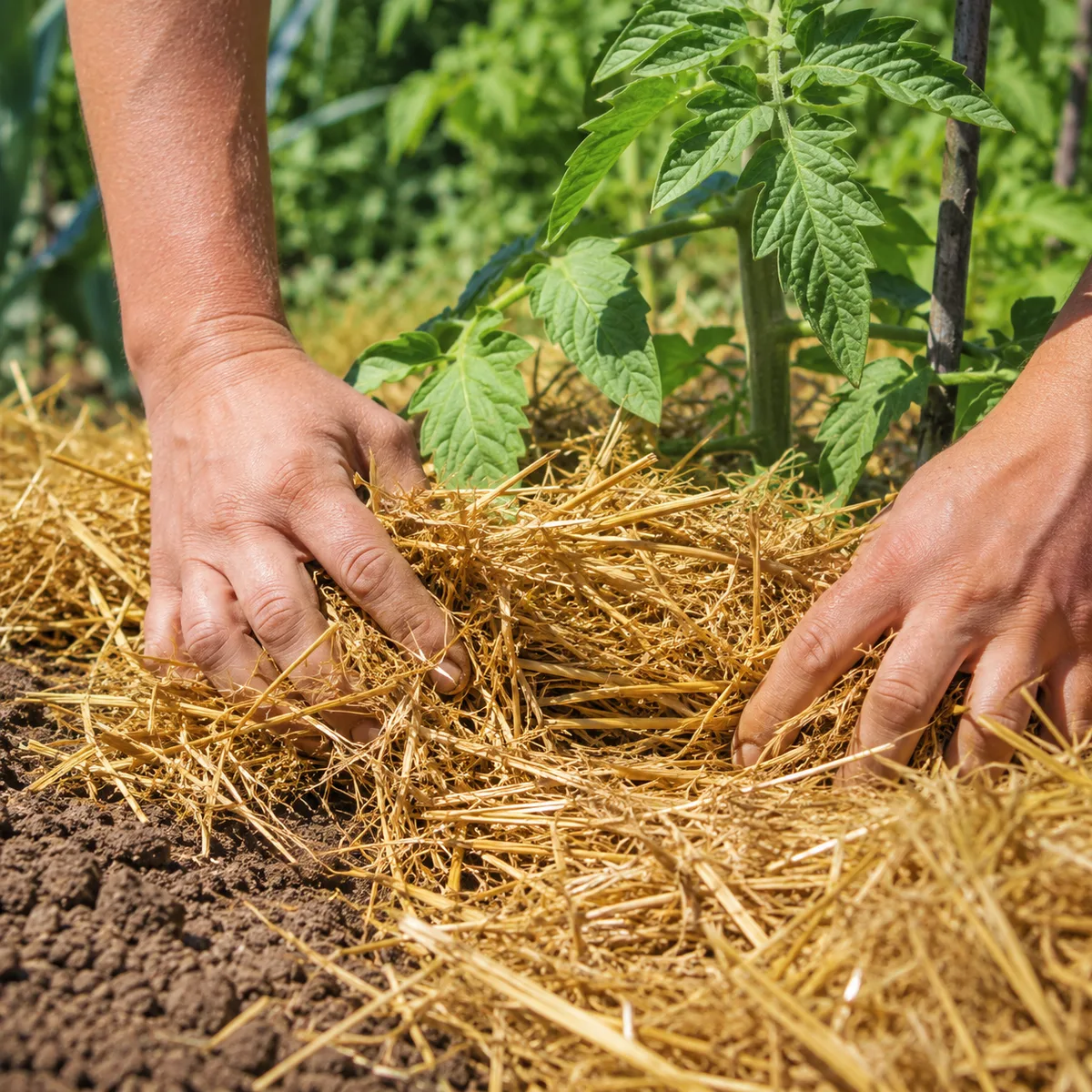
Covering the soil, the most rewarding measure
You will know what depth to lay down for each material, and the threshold above which mulch genuinely does something.
- The two effects of mulch on water, one of which almost nobody mentions.
- The depths that count, material by material, and the threshold below which you will have worked for nothing.
- The special case of mineral mulch, and the plants for which it is the right choice.
- The three limits of mulch, including this one: it does not make water, and laid on dry soil it keeps the dryness in.
- Covering with living plants, what it costs and what it gives back.
- What the sun takes from bare soil.
- The limits, which you need to know.
- The three places where you must not put any.
Watering differently
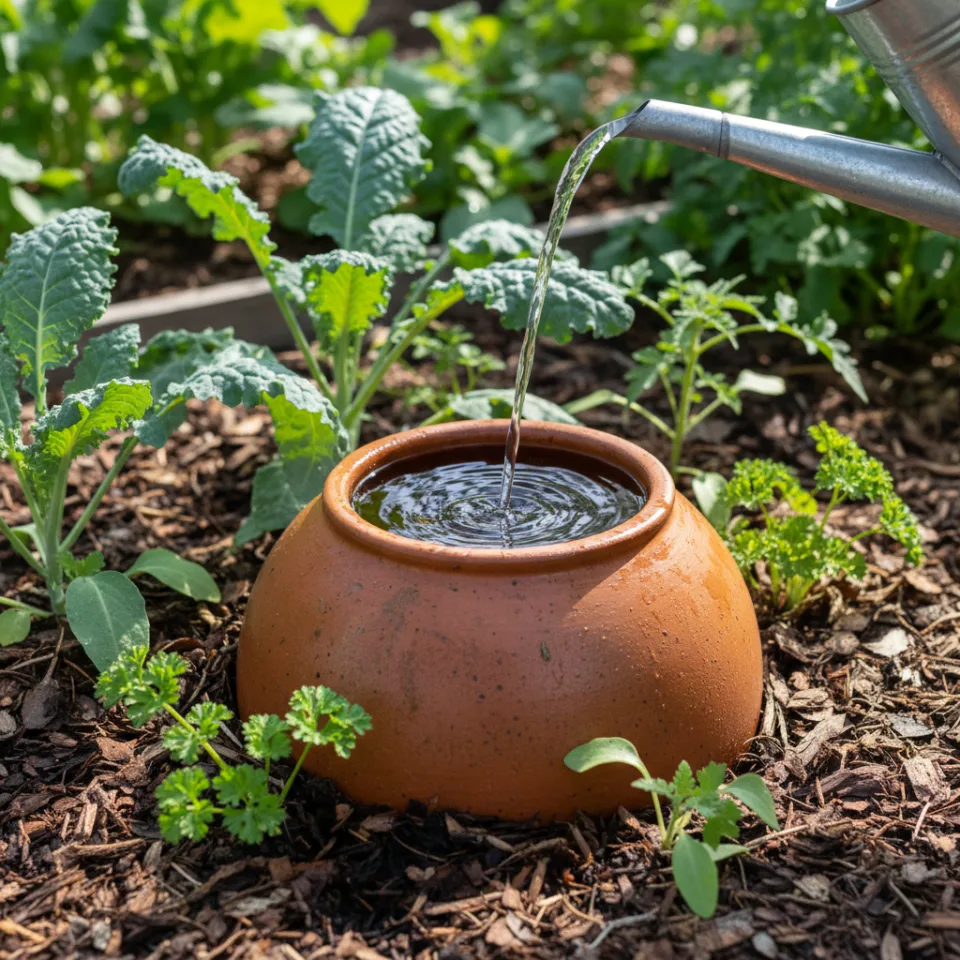
You will know how to water less often and get better results, and you will no longer be fooled by a dry surface.
- Less often and deeper: why the small daily watering builds a fragile plant.
- The five second test that replaces every calendar, and the two signals that lie to you.
- Midday wilting, which is not thirst, and the one case where you really should worry.
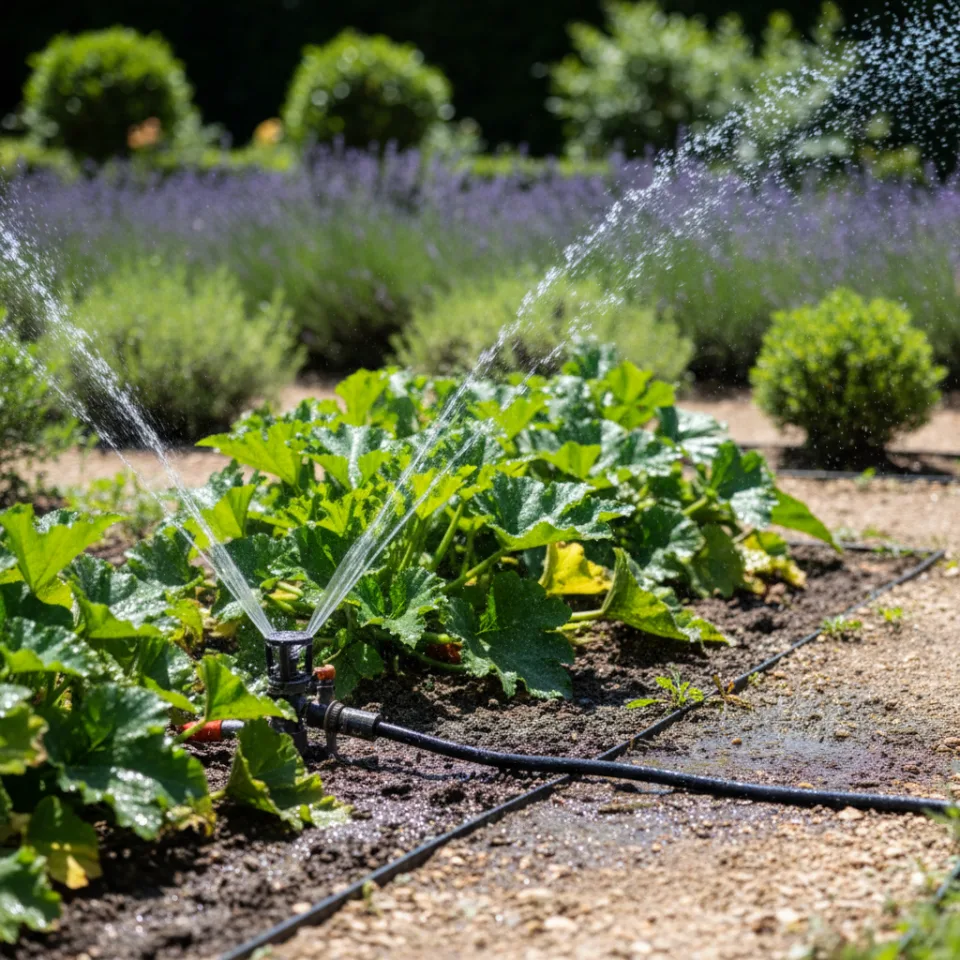
- What the four systems are actually worth, and the only one that makes a difference to a garden.
- Rainwater: its two real advantages, and what it is not.
- The rule that changes everything: less often, deeper.
- When to water, and how to know.
- The systems, and what they are worth.
What genuinely holds, and what does not
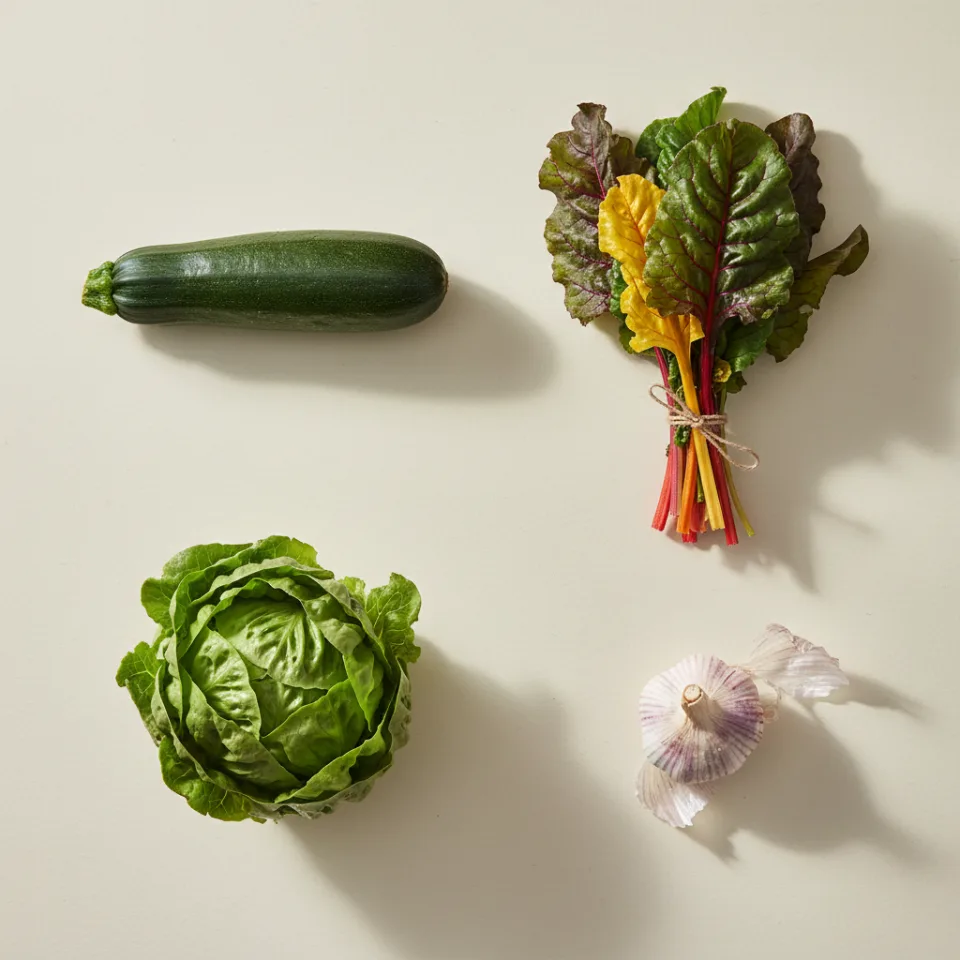
You will know which plants to count on to come through a dry summer, and from when they can manage without you.
- Twelve plants that come through a dry summer, each with the date from which it is TRULY self sufficient.
- Why lavender, rosemary and thyme die far more often of too much water than of drought.
- The five things that will never hold, whatever you do, and why it is better to stop fighting them.
- Why no plant in a pot is self sufficient for water, including the toughest ones.
- The five steps of planting, and why the first one is a DATE rather than a step.
- The six that ask for nothing, once established.
- The three that hold, with a minimum of attention.
- The three vegetables that cope best.
What does not work
You will know how to rule out the tips that cost time and money without changing anything, with the arithmetic to prove it.
- The upturned bottle, and the one line calculation that settles the question.
- Water retaining crystals: what they absorb, what they give back, and what they cost you in volume.
- Cooking water: when it does nothing, and when it does real harm.
- Watering at midday is said to scorch the leaves: the real reason is elsewhere, and the distinction that matters.
- Mulch is said to stop water getting through: what is true in that, and what is false.
- The upturned bottle stuck in at the base.
- Water retaining crystals and gels.
- Watering with cooking water.
What you actually have in your hands
24 pages
"The Garden That Holds" runs to 24 pages, with its photos and diagrams, plus the 15 page notebook if you add it. This is not a stretched out blog article: it is the whole book, in PDF, yours for life.
Everything can be checked before you even pay: you can see the full contents above, part by part, and each part matches a real chapter of the book.
What you receive today
That is everything in "The Garden That Holds", gathered into a single file, to keep open next to your garden while you work. Here is exactly what you receive:
- The book "The Garden That Holds", eleven figures and photosvalue $47
- The spade test: what your soil tells you about your waterincluded
- The "What does not work" section: six tips, with the reasonincluded
- The water calendar, month by month, on one pageincluded
- The index by problem, written in your own wordsincluded
- Price$47
This is the price of the book, with no countdown and no timer. You keep it, with the updates.
Digital book in PDF, sent by email: nothing is posted, nothing arrives at your door.
30-day guarantee, no conditions
Read the book. Do the spade test. Mulch one bed. If within 30 days you feel it brings you nothing, write to us at contact@thepotmethod.com and you are refunded in full.
No form, no explanation to give, no questions. And you keep the book: I would not know how to take it back from you anyway.
In other words: either this book changes something for you, or it costs you nothing. I prefer that simple rule to a long list of conditions in small print. The only risk left is closing this page and starting again tomorrow, looking for an answer in two articles that contradict each other.
P.S. If you are skimming this page, here is the summary. For $47, you receive "The Garden That Holds": the four levers that decide your August, what your soil can hold and how to increase it, why covering it is the most rewarding measure, how to water less often and more deeply, the twelve plants that genuinely hold with the date they become self sufficient, and six tips that do not work. If it is of no use to you, you are refunded within 30 days and you keep the book.
P.P.S. Do one thing this weekend, even if you do not order. On a day when the soil is damp without being soaked, push a spade in up to the hilt, lift out a whole block without breaking it, and put it down on a piece of cardboard. If it falls apart into small rounded crumbs, your soil holds water well. If it breaks into compact plates, water runs off it. Write it down, date it, and do the test again next year: it is the only honest measure of your progress, and you have just obtained it without paying anything.
The Pot Method publishes practical gardening guides. This book is about soil, watering and choosing plants, and nothing in it is medical or nutritional advice.