How to transform your soil in three steps, and stop buying feed every year, even if your soil is poor or compacted.
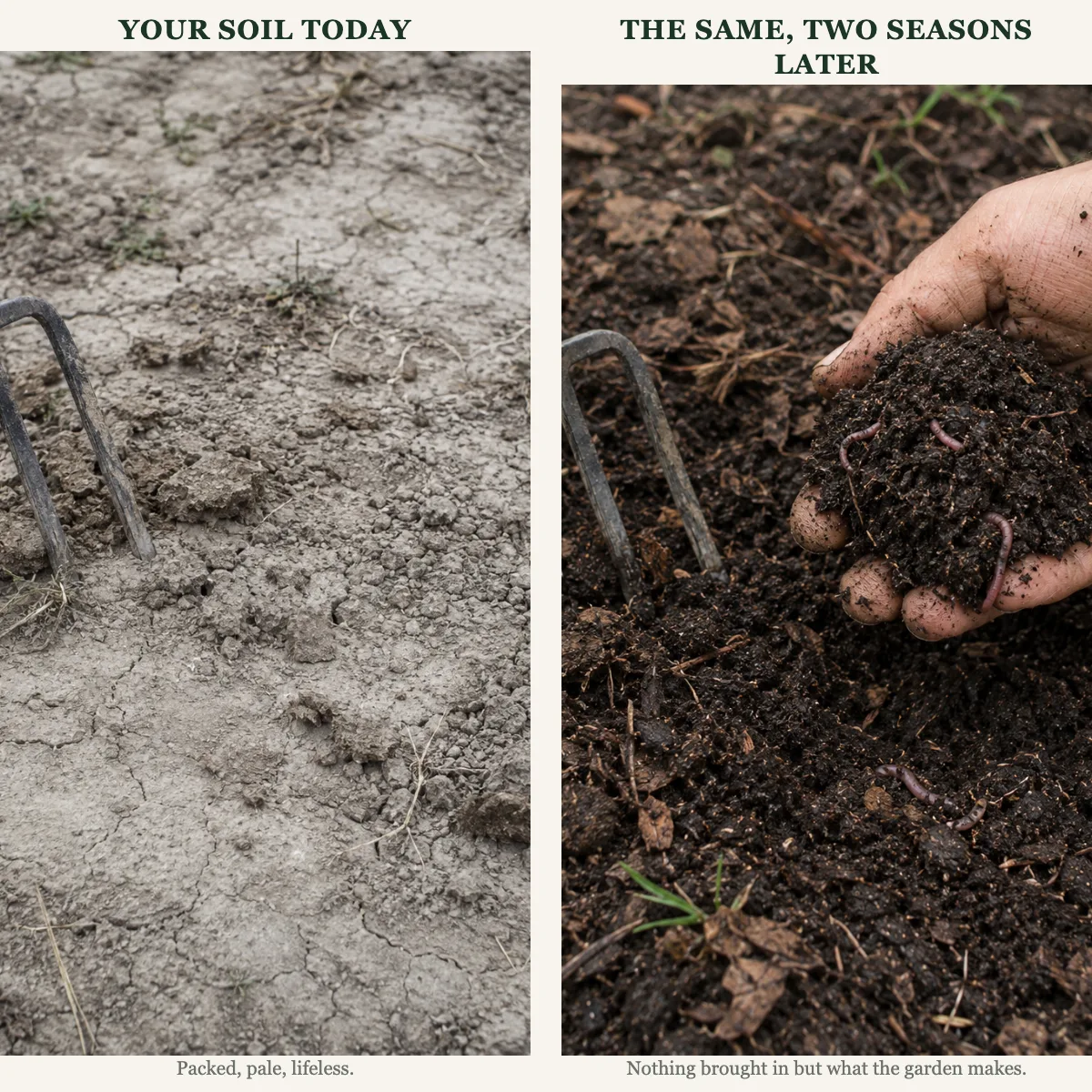
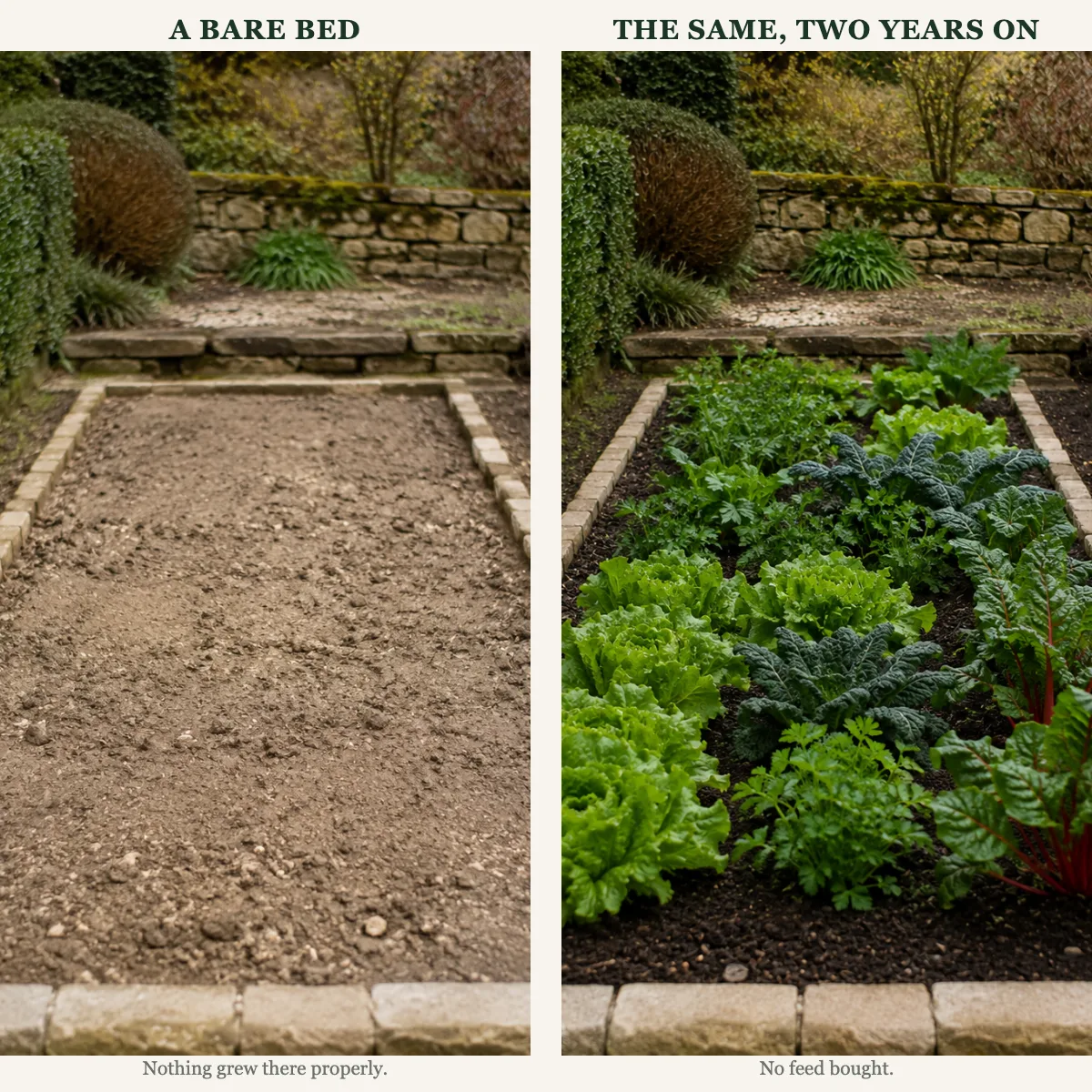
Because you do not feed a plant, you feed the soil that feeds it. See what is in a handful of soil, with no laboratory, then change it with what you already have.
The digital book "Soil First", to read tonight and to apply with your next bucket of peelings.
Keep reading if you have had enough of buying feed every year
Here is what you are going to understand on this page, and above all in the book that goes with it:
- How to read your soil in five minutes, with a jar, a handful and a spade, with no laboratory analysis.
- The mistake that gave mulch its bad name, and the one line that settles it for good.
- The only two ways to get compost wrong, how to tell them apart in three seconds, and what to do within the hour.
- Why digging every year undoes exactly what you are after, and what to replace it with in half the time.
From: Élise Marchand, for The Pot Method
Place: a block of soil laid on a piece of cardboard
Dear reader,
You have probably already bought a bag of feed telling yourself that this time it would be better. And you probably started again the following season, slightly annoyed at paying again for the same result.
It is not a matter of which product you use, or of green fingers. It is that the bag feeds the plant for a few weeks, and leaves the soil in exactly the state it found it. Until you have looked at that soil, the soil in your own garden, you put another coin in the machine every year.
A plant does not eat what you pour at its base. Through its roots it takes up elements dissolved in the water in the soil, made available to it by a population of bacteria, fungi and worms that break down organic matter continuously.
When you add feed, you give the plant a ready made meal, and you do not maintain the kitchen.
The following year, you have to start again. And the year after that as well. That is why some gardeners have been buying feed every year for twenty years, and others buy none at all.
What it changes, from the very first season
You water less. A soil rich in organic matter holds considerably more water than bare, compacted soil. The same rain stays available in it longer, and watering becomes the exception rather than the routine.
You weed less. Covered soil does not let light reach the seeds lying dormant at the surface. They do not come up. What you do not grow, you do not have to pull out.
You buy less. Compost, mulch and the materials they are made of already exist at your home, in quantity, and at the moment you throw them away. It is the one area of gardening where learning makes you money.
The only two ways to get compost wrong
It stinks, or nothing happens. There are no others, and both have the same explanation.
It stinks. A smell of ammonia or of drains, a heap that runs and packs into a solid mass. That is too much green, wet material: air no longer circulates, and decomposition carries on without oxygen. You open it up, you add plenty of brown, you mix. The smell goes within two or three days.
Nothing happens. A heap that has looked the same for months, dry, with pieces still recognisable. It is the opposite: too much carbon, or quite simply too dry. You water it properly, you add green, you cover it.
Once you have understood that one sentence, you will never need to read anything about compost again. A whole section of the book is devoted to it, and there is no product to buy.
What this book is not
The subject of living soil drags behind it a campaigning vocabulary that puts off most beginners, and promises that have never been measured.
You will not find "agrosystem" here, nor "biodynamics", nor the word "self sufficiency". You will find what is in a handful of soil, how to see it without a laboratory, and three things that change it. You will not find a figure promised for your yield either: I have no measured one to give you. What I can tell you is what shows up under the spade, and it does show up.
The most common reflex is to feed the plants. One feed in spring, another in summer, and the feeling of starting from scratch every year.
The change comes from something very simple: dig a hole and look at what is in it. What you see there, or rather what you do not see, explains a large part of the disappointments in a vegetable garden. The book starts there: seeing your soil, then changing it with what you already have to hand.
At this point, you have two options
You do not feed a plant, you feed the soil that feeds it.
The second option asks for one reading and one action tonight. The first costs you the price of a bag of feed every year, for the same result, and the cruellest part is that you never even know you are getting it wrong.
Just imagine for a moment
- Imagine never buying another bag of feed, because your garden already produces everything it needs.
- Imagine a compost heap that smells of woodland floor rather than of drains, because you know what it is missing just by looking at it.
- Imagine soil that takes in the rain instead of letting it run off, and a summer when watering becomes the exception rather than the routine.
- Imagine no longer digging, and seeing the soil improve all the same, year after year.
What you will be able to do when you close it
- Read your soil in five minutes, and know whether it is sandy, clay or balanced, without paying anything.
- Mulch at the right depth and in the right place, without ever causing the temporary nitrogen depletion that turns a vegetable garden yellow.
- Look at a compost heap and know in three seconds what it is missing, and what to do within the hour.
- Stop digging, and know what to do instead, for far less time spent.
- Take stock of what already exists at your home, and stop buying the bagged equivalent.
- Know what to do each month, including in September, the most useful month of the year for soil.
The appendices included in the book
Is this really for you?
And you?
You can close this page, and buy the same bag of feed again next year for the same result. Or you can, this weekend, lift a block of soil with a spade and look at it. The book is there for everything else.
Do the soil in your hand test tonight, before deciding anything at all. If you find soil that is fed from above without ever being looked at, you will know the problem was never your patience or your memory: it was that nobody had ever shown you where to look. The book is there for everything else, in order, without leaving you to choose between two opposing opinions.
"Soil First"
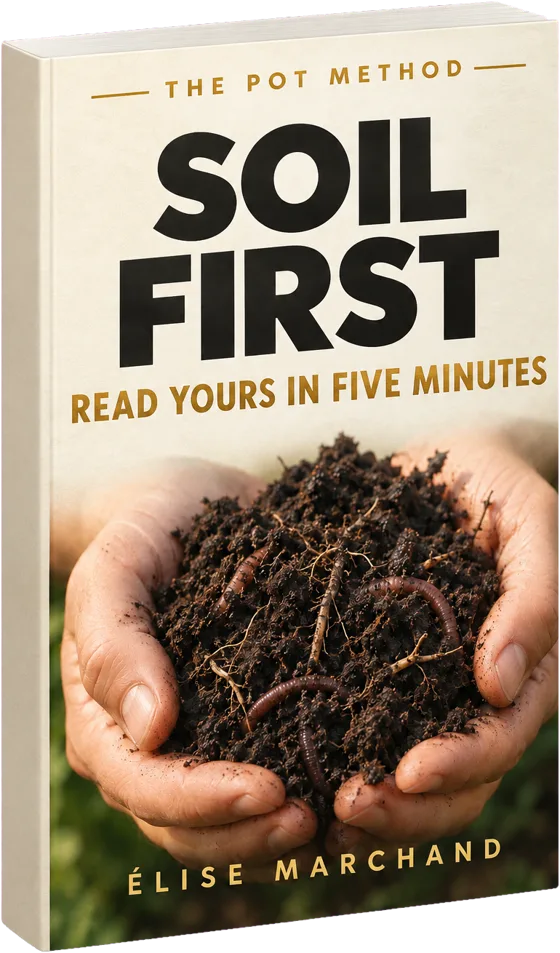
A digital book in PDF format, to read on your phone in the garden, on your computer, or printed if you prefer paper. It is built around one simple idea: soil is repaired above all by what you stop doing to it. The part that asks for the least work is the one that changes the most.
It is written for someone starting out, in the words you use. You will not read "substrate" in it: you will read "the soil". And when an instruction is given, it can be applied exactly as written: two parts brown to one part green, three centimeters (about 1 in) of dried grass clippings, a clear circle five centimeters (about 1½ in) wide around each stem.
What you will find inside, part by part
Start with part 1 and do the three tests. Five minutes of work each, and two days of waiting for the jar alone. They are free, and they tell you what you are working with. Everything else hangs on them.
Reading your soil in five minutes
You will know what your soil is made of, with two free tests, and you will choose your plants accordingly.
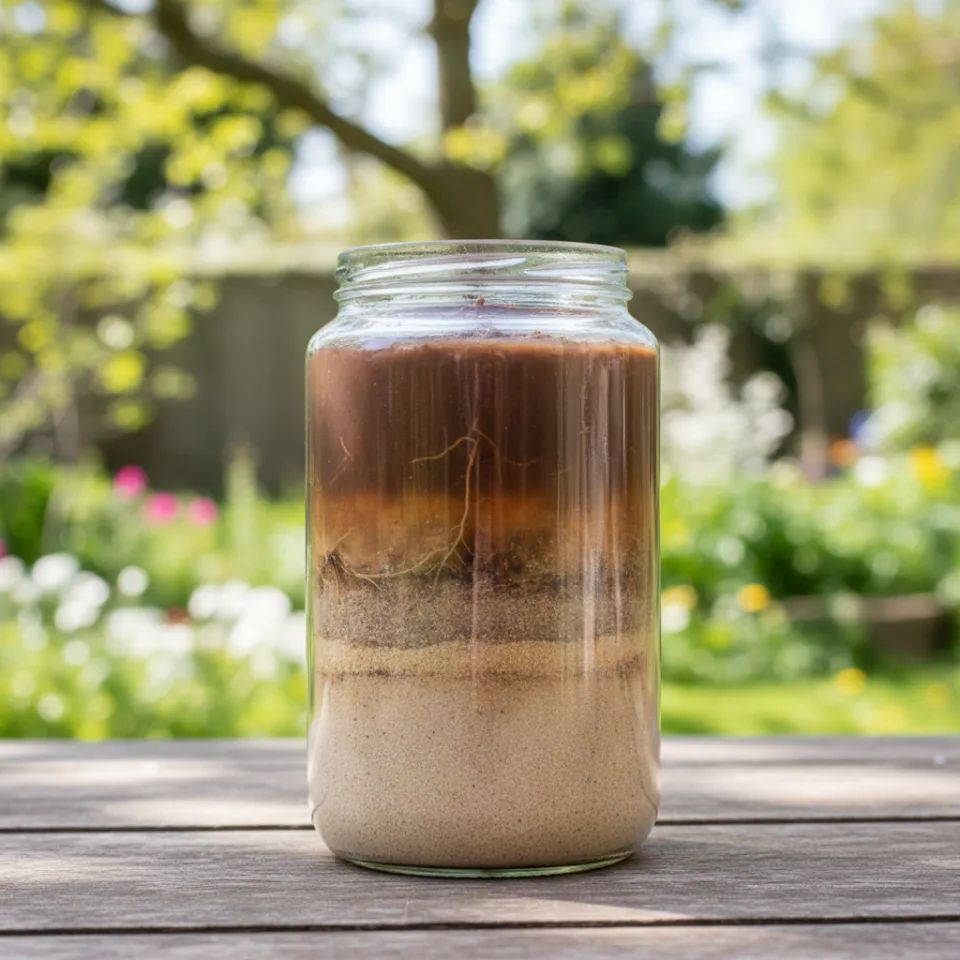
- The jar test: one third soil, water, a minute of shaking, and two days later you know what your soil is made of.
- The sausage test, in thirty seconds, crouched in the garden. Do it in several places: a plot does not have the same soil from one end to the other.
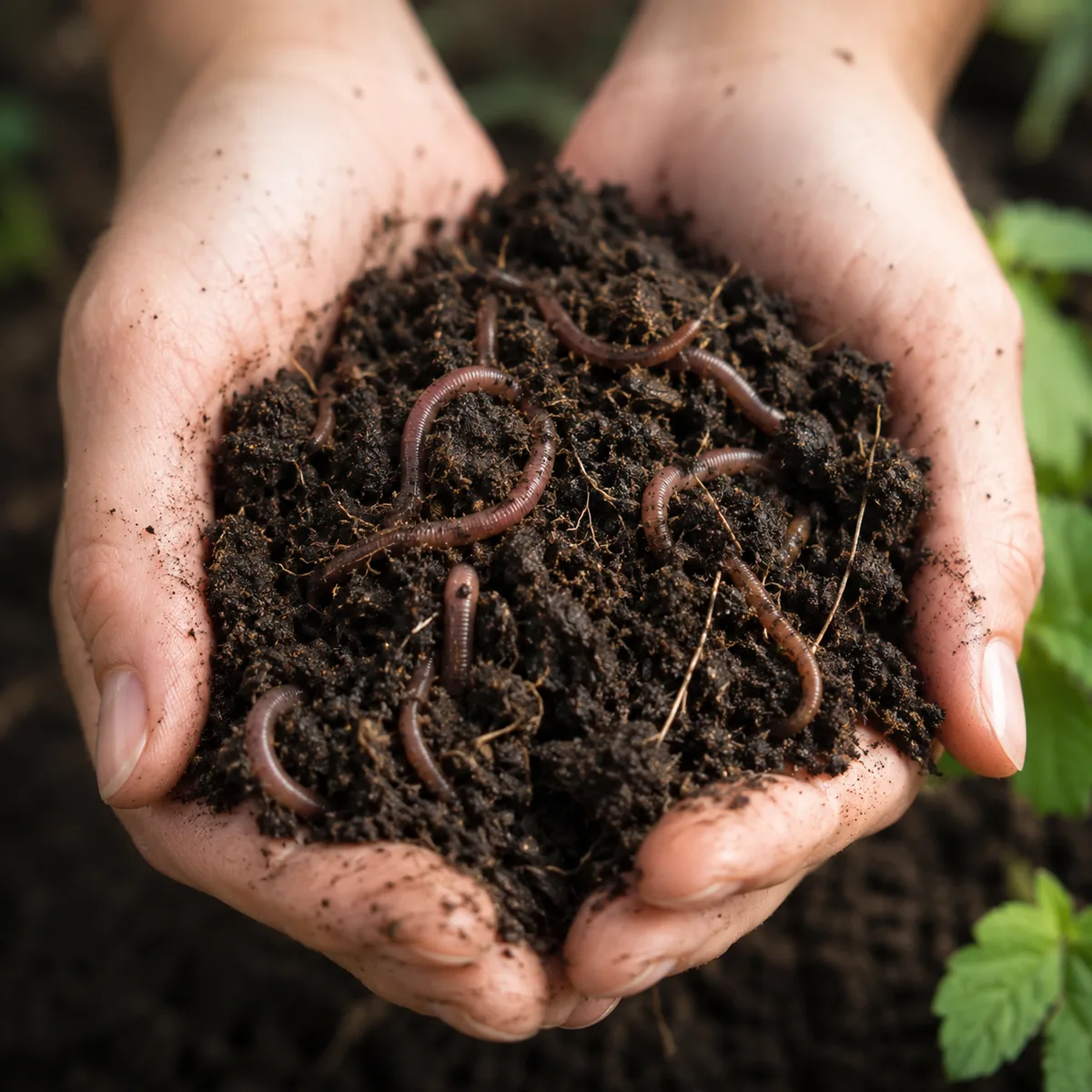
- The spade test, the only one that speaks about life in the soil: the smell, the worms, the roots and the structure, in that order.
- Why the answer is the SAME for sandy soil and for clay soil, and why you do not "correct" a soil by buying sand.
- The only two cases where a laboratory analysis makes sense, and why fertility is not what you are looking for in it.
- The jar test, or what your soil is made of.
- The sausage test, out in the garden.
- What you will not know, and why it does not matter.
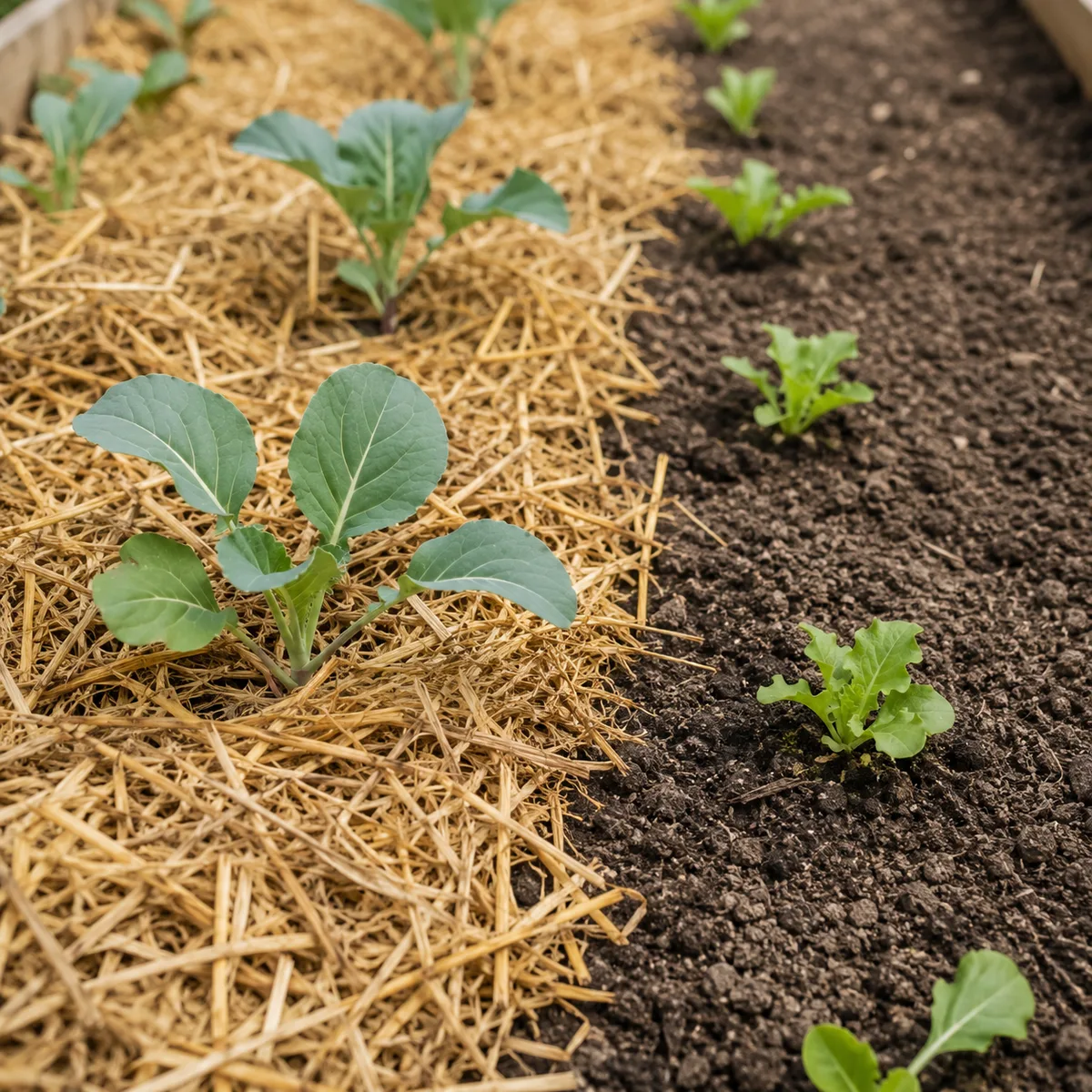
Mulch, misunderstood by everyone
You will know how to mulch without causing the effect that gave it its bad name, and what it gains you at the same time.
- The four things it does at the same time, and the one you never see.
- Temporary nitrogen depletion: the mistake that gave mulch its bad name, and the one line that settles it.
- The real depths, material by material. Below three centimeters, you have done the work for nothing.
- The three places where you must NOT put any, and what happens when you do it anyway.
- The slug complaint: what is well founded, what is not, and why the third year is no longer a problem.
- What mulch really does.
- The mistake that gives mulch its bad name.
- What depth, and where not to put any.
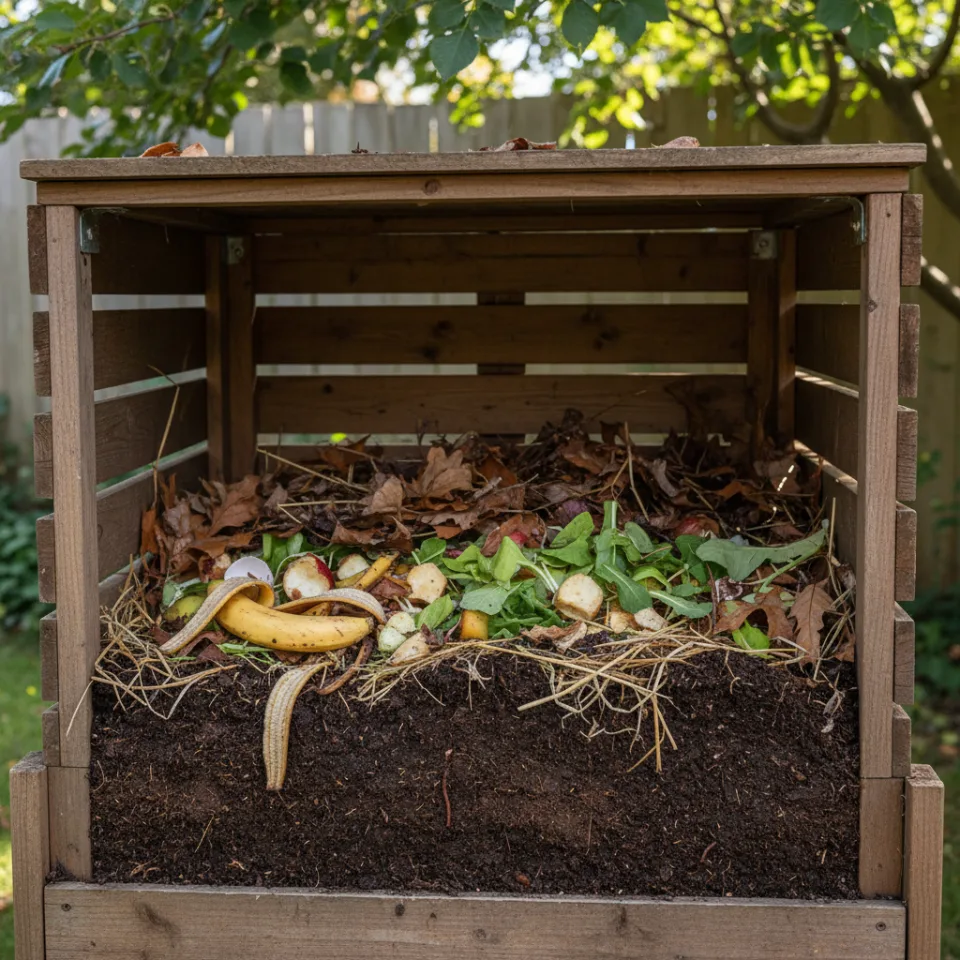
Compost that works
You will know how to balance your compost so that it heats up instead of smelling, and how to rescue a bin that has already gone wrong.
- Green and brown: the only thing to remember, and the ratio that settles everything.
- It stinks: what you do within the hour, and the underlying cause you deal with once a year, in an hour, for free.
- Nothing is happening: the sponge test, which replaces every instrument.
- What does not belong in a household compost, with the REASON for each exclusion: an exclusion without a reason is never remembered.
- How to know it is ready, and why compost that is barely mature is not wasted at all.
- Green and brown, the only thing to remember.
- It stinks: you have too much green.
- Nothing is happening: you have too much brown, or not enough water.
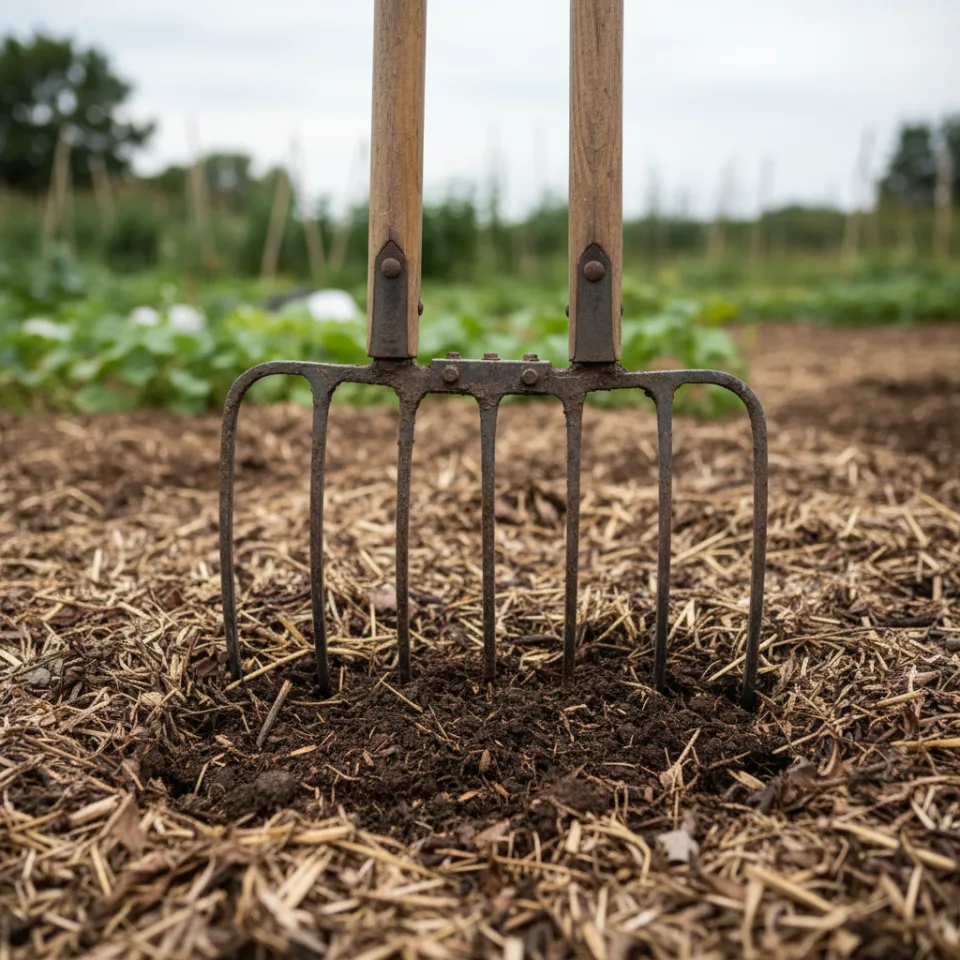
Stop turning the soil over
You will know what you lose by digging, and what quicker jobs to replace it with.
- What turning the soil over really does, for better and for worse, and what it cuts through without you seeing it.
- The three jobs that replace it, all quicker than digging.
- The three cases where you should open the soil up anyway, once, and then never again.
- What you will see in the first year, the second and the third. Honestly, including the unpleasant year.
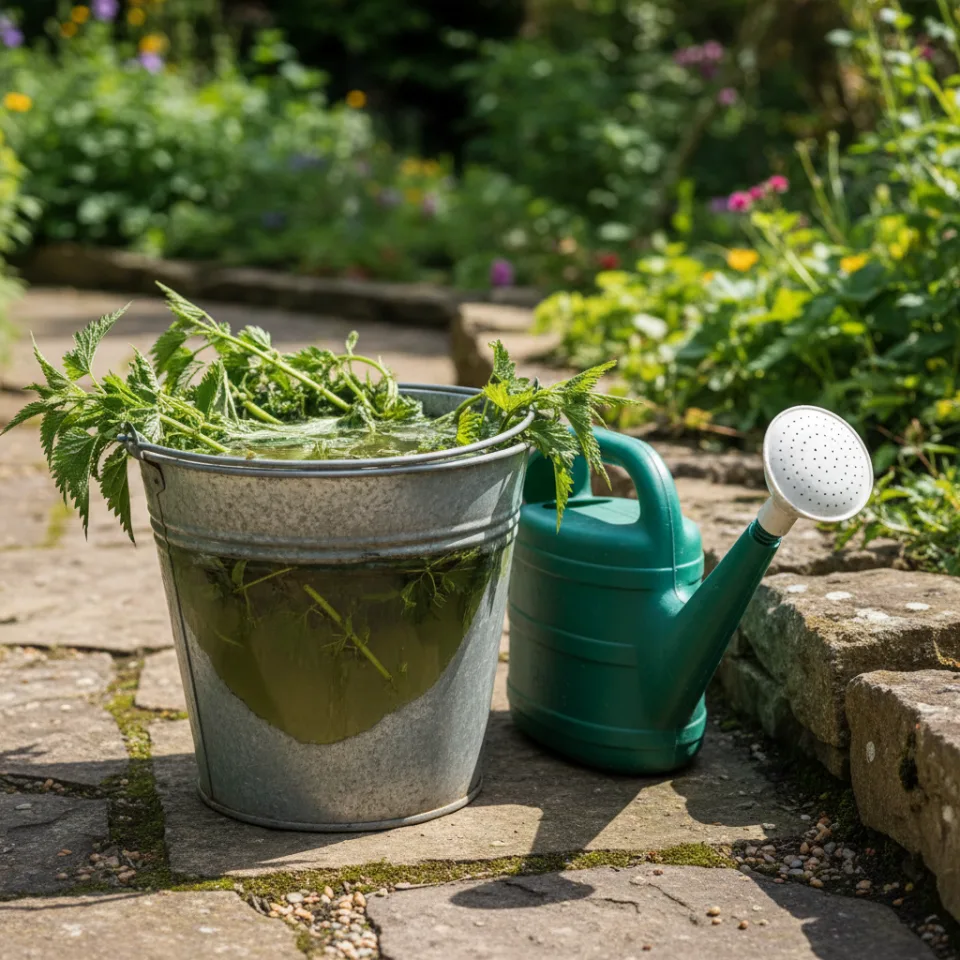
Feeding without buying
You will know how to feed your soil with what goes to the tip today, for nothing.
- The full inventory of what already exists at your home, and that you currently take to the tip.
- Grass clippings, the most plentiful material and the most badly used: what not to do, and the solution that costs nothing at all.
- Fallen leaves, the most underrated material: as mulch, as a store of brown, and as seed compost.
- Nettle and comfrey feeds: what they are honestly worth, what they are not, and the real precautions to take.
- What is left to buy, said plainly. It is a very short list.
What you actually have in your hands
26 pages
"Soil First" runs to 26 pages, with its photos and diagrams, plus the 15 page notebook if you add it. This is not a stretched out blog article: it is the whole book, in PDF, yours for life.
Everything can be checked before you even pay: you can see the full contents above, part by part, and each part matches a real chapter of the book.
What you receive today
That is everything in "Soil First", gathered into a single file, to keep open next to your soil while you work. Here is exactly what you receive:
- The book "Soil First", seventeen figures and photosvalue $47
- The three field tests: the jar, the sausage and the spadeincluded
- The "Compost that works" section: it stinks, it has stalled, two answersincluded
- The green and brown table, to pin up beside the compost binincluded
- The index by problem, written in your own wordsincluded
- Price$47
This is the price of the book, with no countdown and no timer. You keep it, with the updates.
Digital book in PDF, sent by email: nothing is posted, nothing arrives at your door.
30-day guarantee, no conditions
Read the book. Do the three tests. Look at your compost. If within 30 days you feel it brings you nothing, write to us at contact@thepotmethod.com and you are refunded in full.
No form, no explanation to give, no questions. And you keep the book: I would not know how to take it back from you anyway.
In other words: either this book changes something for you, or it costs you nothing. I prefer that simple rule to a long list of conditions in small print. The only risk left is closing this page and starting again tomorrow, looking for an answer in two articles that contradict each other.
P.S. If you are skimming this page, here is the summary. For $47, you receive "Soil First": the three tests that read your soil in five minutes, what mulch really does and the mistake that gave it its bad name, the compost that stinks and the one that has stalled with their two answers, why you should stop turning the soil over, and the inventory of what you throw away that would feed your soil. If it is of no use to you, you are refunded within 30 days and you keep the book.
P.P.S. Do one thing this weekend, even if you do not order. On a day when the soil is damp without being soaked, push a spade in up to the hilt, lift out a whole block without breaking it, and put it down on a piece of cardboard. Smell it, count the worms, see whether the block falls apart into crumbs or into plates. Write it down and date it. That is your starting point, and you have just got it without paying anything.
The Pot Method publishes practical gardening guides. This book is about soil and organic matter, and nothing in it is medical or nutritional advice.