How to recognize and put a stop to blossom end rot, blight and needless pruning, even if you have already lost a whole crop.
Because out of three problems that ruin tomatoes, two are not diseases. So they are treated in the wrong place, with the wrong products, at the wrong time.
The digital book "Blossom End Rot, Blight, Suckers", to read tonight and to apply tomorrow morning in the vegetable garden.
Keep reading if you have already lost a crop without understanding why
Here is what you are going to understand on this page, and above all in the book that goes with it:
- Why blossom end rot is not a disease, why your soil almost never lacks calcium, and why the reflex of watering more makes it worse.
- The question to ask BEFORE touching the suckers, and that many gardeners never check.
- The three conditions blight needs at the same time, and the two you have complete control over.
- How to tell in one second blossom end rot from sun scald, and why the answer is not at all the same.
From: Élise Marchand, for The Pot Method
Place: in front of a tomato plant in July
Dear reader,
You put time into it, plants you bought, water, attention. And you watch a crop fall apart in a few days, without understanding which of your own actions is to blame.
The hardest part is the silence in the answers: you are told about calcium, about Bordeaux mixture, about pruning or absolutely not pruning, and you have to decide on your own, in the middle of the season, with plants that will not wait. This book decides for you, problem by problem, saying each time what is established and what is not.
The tomato is, by a long way, the plant people ask for the most help with. It generates far more questions than the rose or the strawberry, and it even has forums of its own, which no other vegetable garden plant has.
And when you read those questions, three subjects come up ahead of all the others: the end of the tomato going black, the brown spots that take over the plant in a few days, and that question which comes back every summer without ever getting the same answer twice.
Sorting it out, in one page
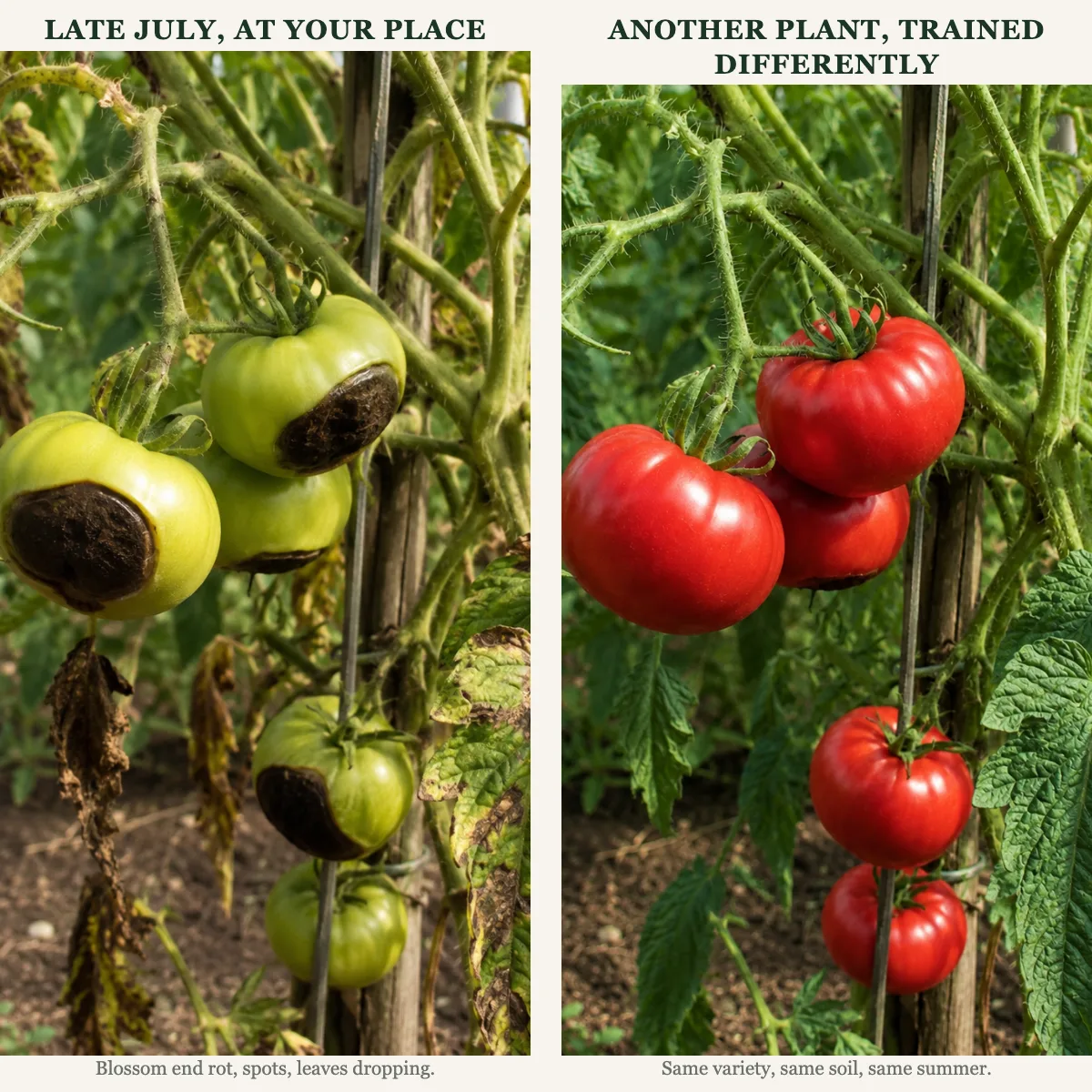
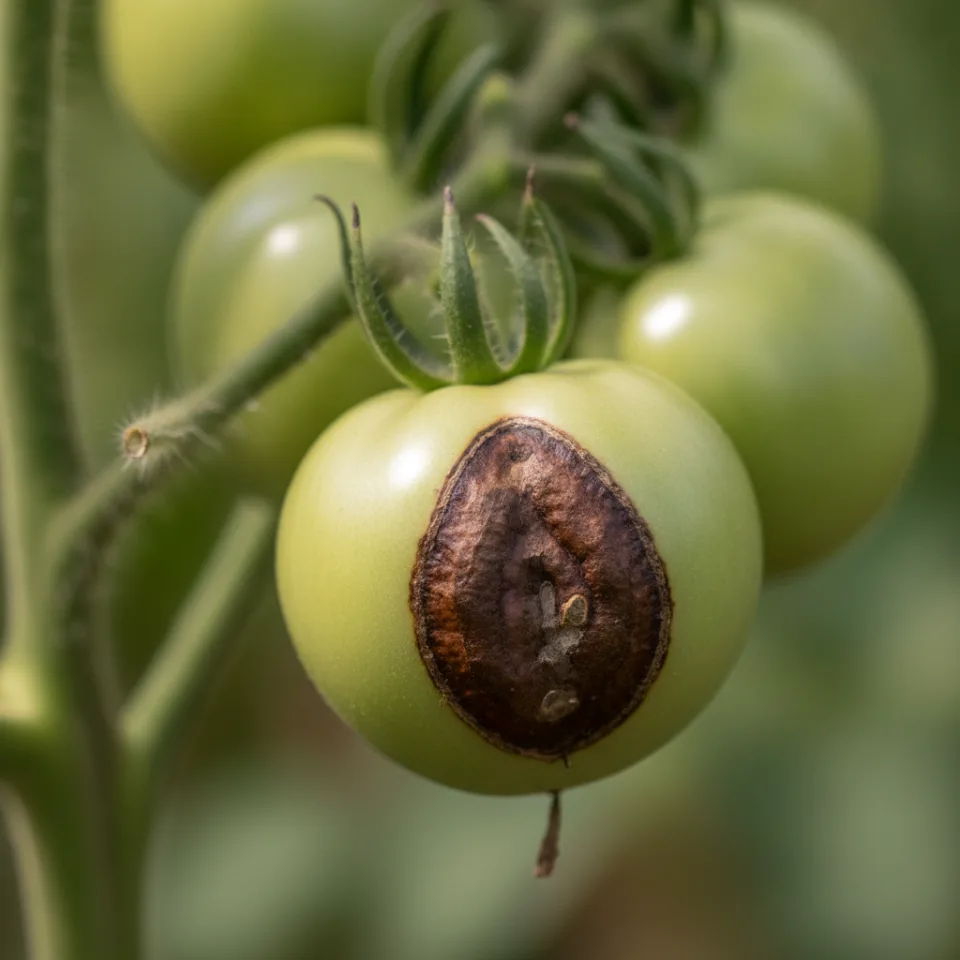
Blossom end rot is not a disease. No fungus, no insect, nothing you catch. It is a problem with the supply of calcium, and in almost every case that calcium is present in the soil: it is the water that has not been steady, and calcium only moves with water. So there is nothing to spray, and the reflex of suddenly watering more often makes the situation worse.
Suckers are not a disease either. They are perfectly normal stems, which the plant makes in the crook of its leaves. Removing them or leaving them is a training decision, and it depends on one thing alone that many gardeners never check: the type of your plant.
Blight, on the other hand, really is a disease. And it is the only one of the three.
It is a fungus, it spreads in damp weather, and it can take a plant in three to five days. But the important part is settled before it arrives, at planting and through the way you water. Once it is established, the options are limited, and it is better to know that now than to find out in July.
This book uses your words
This is where the gap between the gardener's words and the manual's words is widest. The amateur gardener writes "black bottom" far more often than the name in the manual. He writes "the end of my tomato is going black".
He is not looking for the technical term, and that is exactly why he does not find the answer: it is written with a word he has never heard. In this book, the word from the manual appears once, in brackets, because you may come across it elsewhere. The rest of the time, it is written the way you speak.
And the most asked question in the vegetable garden
"Should you remove the suckers?" has been getting contradictory answers for as long as anyone can remember. It is the question that draws a crowd every single time, and the answers still contradict each other.
The reason for the contradictions is simple. An indeterminate plant climbs endlessly, and pruning is then a real choice, with two options that both stand up. A determinate plant stops on its own at a terminal cluster, and every sucker removed is a share of the crop that disappears.
That is the main reason why some gardeners "prune properly" and harvest little: they pruned a determinate plant. And it can be checked in ten seconds, by looking at the top of the plant in July.
At this point, you have two options
Out of the three tomato problems, two are not diseases.
The second option asks for one reading and one action tonight. The first costs you a whole crop, and treatments applied for nothing, and the cruellest part is that you never even know you are getting it wrong.
Just imagine for a moment
- Imagine seeing a black spot on the end of a tomato and knowing immediately that there is nothing to treat, and what to do instead.
- Imagine knowing in ten seconds whether your plant should be pruned or not, and never again reading three contradictory opinions on the subject.
- Imagine spotting the first blight marks three days before it is too late, and knowing exactly what to cut.
- Imagine stopping losing the green fruit of September, because you will know when to stop the plant and when to pick.
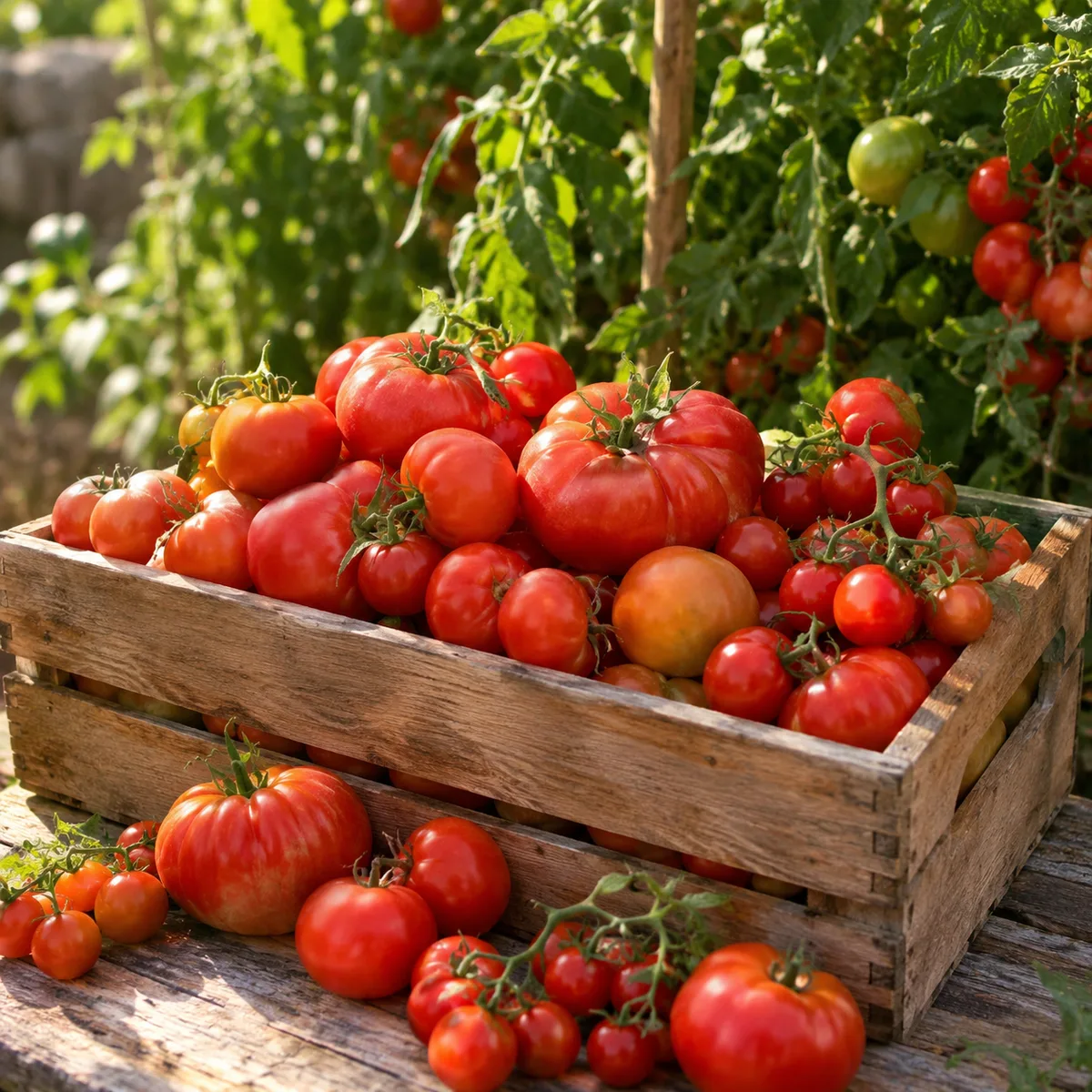
What you will be able to do when you close it
- Recognise blossom end rot in one second, and know that there is nothing to treat.
- Know in ten seconds whether your plant should be pruned or not, and stop reading contradictory opinions.
- Spot blight before it is too late, and know exactly what to cut and how far.
- Tell five symptoms that look alike and that call for completely different answers.
- Take in May the five decisions that remove most of the problems of the next four months.
- Save the September crop by knowing when to stop the plant and when to pick.
The appendices included in the book
Is this really for you?
And you?
You can close this page, and next year do exactly what you did this year. Or you can, tonight, look at the top of your plant and finally know whether it should be pruned. The book is there for everything else.
Do the diagnosis on your first three plants tonight, before deciding anything at all. If you find a treatment applied against a disease that was not one, you will know the problem was never your patience or your memory: it was that nobody had ever shown you where to look. The book is there for everything else, in order, without leaving you to choose between two opposing opinions.
"Blossom End Rot, Blight, Suckers"
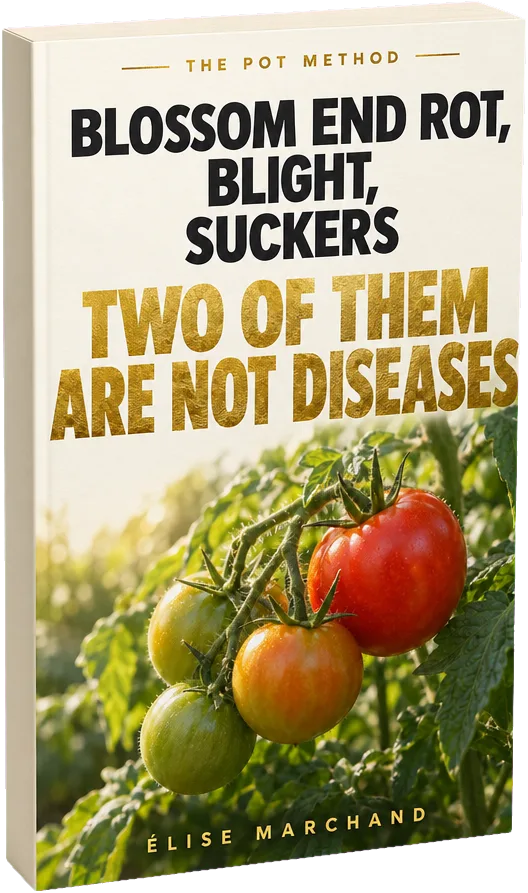
A digital book in PDF format, to read on your phone in front of the plant, on your computer, or printed if you prefer paper. It is built around a sorting: two of these three problems are not diseases, and treating them as if they were is what loses you a season.
For each one, it tells you exactly what you are seeing, the real cause, what to do and in what order, what you must not do, how not to confuse it with something else, and above all: what can be put right and what cannot. It is less pleasant to read than "here is the solution", and it is what will save you a season.
What you will find inside, part by part
Start with the sorting in part 0. It takes two minutes and it changes what you will do with everything else.
Blossom end rot, which is not a disease
You will know how to recognize what is not a disease, and how to act on the real cause instead of treating for nothing.
- What you are seeing exactly, and the one detail that proves on its own that it is not a disease.
- Why it is almost never a lack of calcium in the soil, but a problem of transport.
- The four situations that set it off, in order of frequency.
- The four things you must not do, three of which are what most people do.
- What can be put right, what cannot, and the sign that proves it has started again.
- What you are seeing, exactly.
- The real cause, and why it is not a lack of calcium in the soil.
- What you must not do.
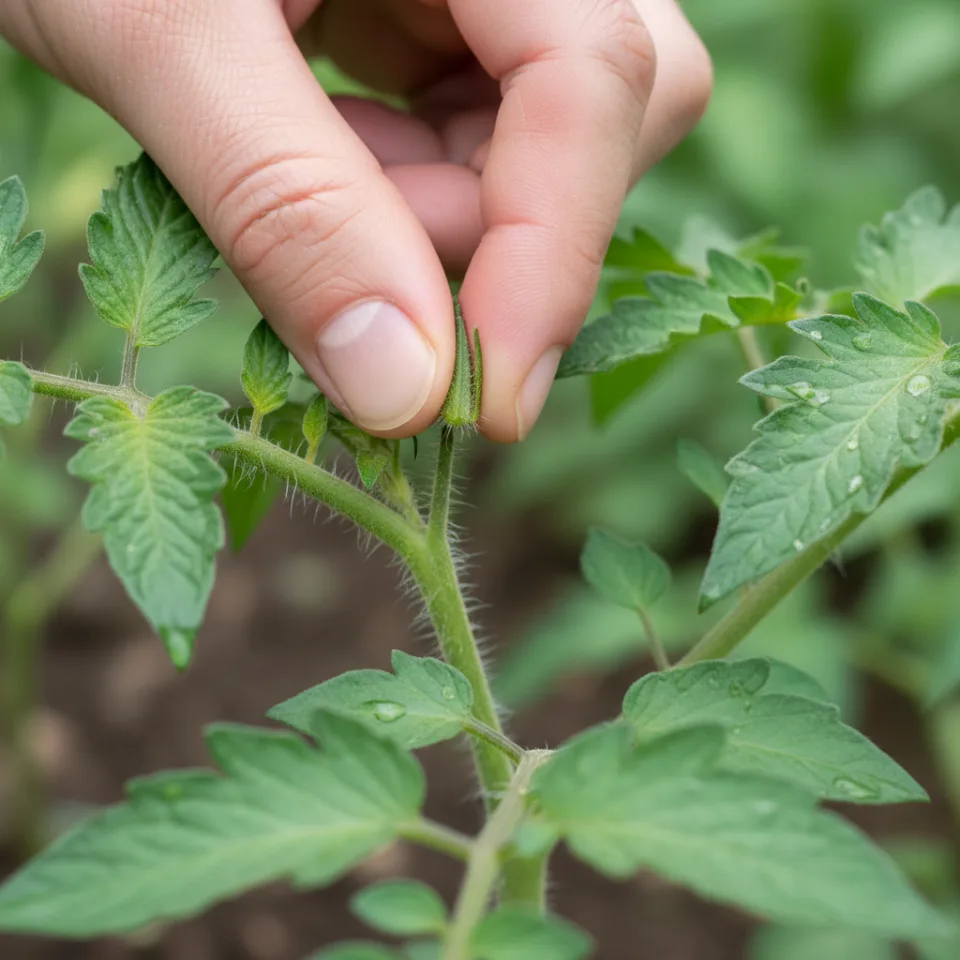
Suckers, and the real question
You will know whether your plant should be pruned or not, in ten seconds and without a label, before cutting anything.
- What a sucker is exactly, and the two things that look like one and must never be cut.
- The question to ask BEFORE, and how to answer it in ten seconds without a label.
- The answer for a determinate plant, the answer for an indeterminate one, and why both ways of training stand up.
- Exactly what to do, at what stage, with what, and in what weather.
- Removing the lower leaves, stopping the plant, and the pruning you must never do in the middle of summer.
- What a sucker is, exactly.
- The question to ask first.
- The answer, at last.
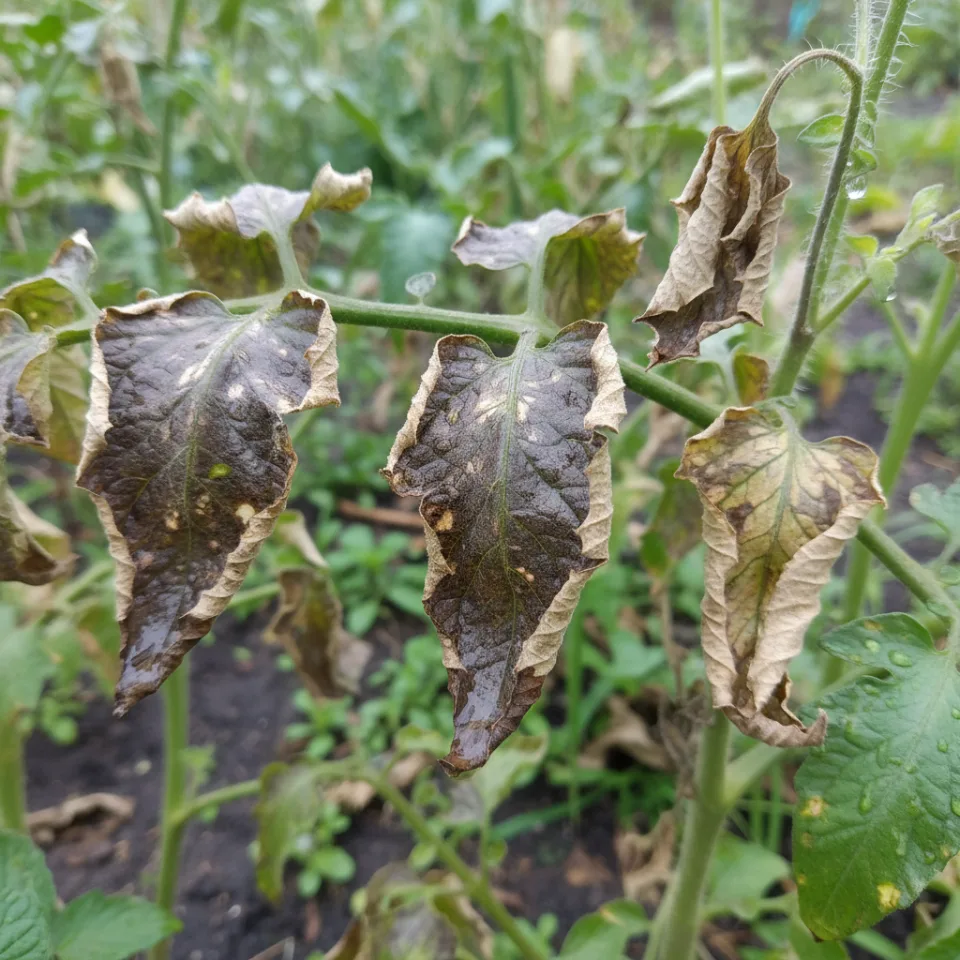
Blight, before it arrives
You will know how to take in May the decisions that settle your July, instead of treating too late.
- The three conditions it needs at the same time, and the two you have complete control over.
- The five May decisions that settle your July.
- The four watering rules, two of which also work against blossom end rot.
- What still works once it is there, if you act very early. And what does not.
- What a copper treatment does and does not do, said plainly, so that the decision is yours.
- What you see, and how fast.
- What is settled at planting.
- What is settled by watering.
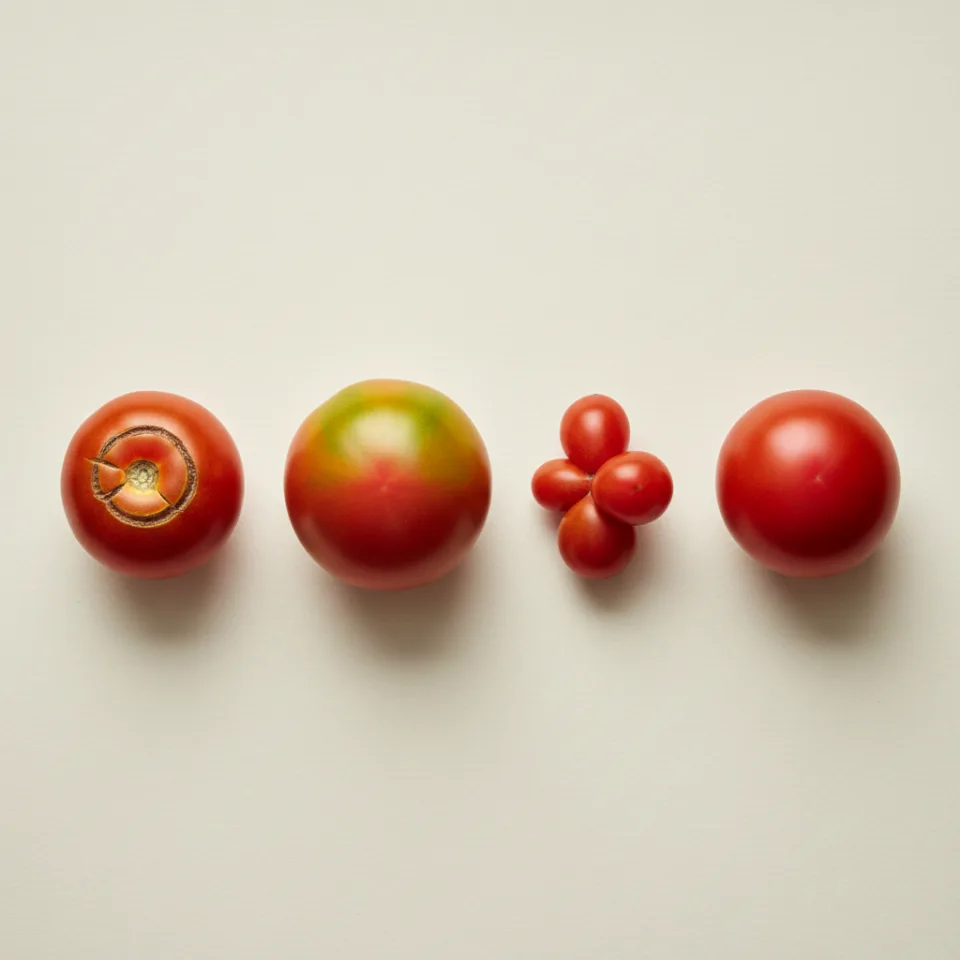
The other tomato mishaps
You will know how to link each mishap to its cause, from split fruit to dropping flowers, and which ones you can prevent.
- Split fruit: the same cause as blossom end rot, in another form.
- Flowers that drop without setting: three causes, which the weather tells apart.
- Leaves curled into a gutter: when it is nothing, and the one case where you should look more closely.
- The mark on the side of the fruit that is taken for blossom end rot, and that is sun scald.
- The white furry coating that is not blight, and the finger test that separates them.
- Flowers dropping without setting fruit.
- A hard brown mark on the side of the fruit.
- A white furry coating on the leaves.
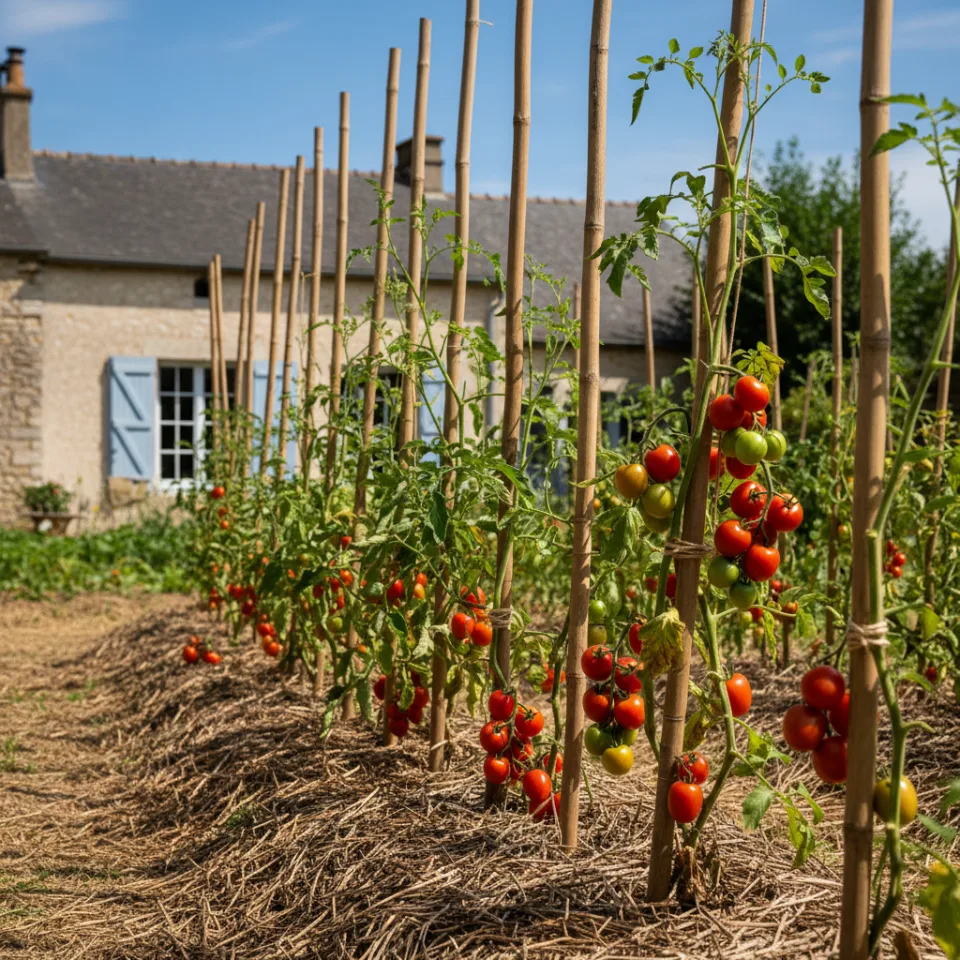
The full training, from May to October
You will know how to train a plant from planting day to the last picking, without having to go back over it every week.
- The five steps at planting, three of which work against several problems at once.
- June: the training takes shape, and what you decide now so you do not have to come back to it.
- July and August: what to watch, how often, and exactly where to look.
- Stopping the plant, its date for your region, and what happens if you do not do it.
- The rescue picking, and what speeds up ripening indoors.
- May: planting decides everything.
- July and August: the critical period.
- Late August and September: stopping the plant and picking.
What you actually have in your hands
24 pages
"Blossom End Rot, Blight, Suckers" runs to 24 pages, with its photos and diagrams, plus the 15 page notebook if you add it. This is not a stretched out blog article: it is the whole book, in PDF, yours for life.
Everything can be checked before you even pay: you can see the full contents above, part by part, and each part matches a real chapter of the book.
What you receive today
That is everything in "Blossom End Rot, Blight, Suckers", gathered into a single file, to keep open next to your tomatoes while you work. Here is exactly what you receive:
- The book "Blossom End Rot, Blight, Suckers", eleven figures and photosvalue $47
- The sorting: two of the three problems are not diseasesincluded
- The "Blight, before it arrives" section: the five May decisionsincluded
- The calendar from May to October, on one pageincluded
- The index by problem, written in your own wordsincluded
- Price$47
This is the price of the book, with no countdown and no timer. You keep it, with the updates.
Digital book in PDF, sent by email: nothing is posted, nothing arrives at your door.
30-day guarantee, no conditions
Read the book. Do the sorting. Look at the top of your plant. If within 30 days you feel it brings you nothing, write to us at contact@thepotmethod.com and you are refunded in full.
No form, no explanation to give, no questions. And you keep the book: I would not know how to take it back from you anyway.
In other words: either this book changes something for you, or it costs you nothing. I prefer that simple rule to a long list of conditions in small print. The only risk left is closing this page and starting again tomorrow, looking for an answer in two articles that contradict each other.
P.S. If you are skimming this page, here is the summary. For $47, you receive "Blossom End Rot, Blight, Suckers": why two of these three problems are not diseases, the question to ask before pruning, the three conditions blight needs, five symptoms that look alike and do not call for the same answer, and the full training from May to October. If it is of no use to you, you are refunded within 30 days and you keep the book.
P.P.S. Do one thing tonight, even if you do not order. Look at the top of your tomato plant. If it ends in a cluster of flowers and the stem does not carry on beyond it, do not prune it: every sucker removed would be a share of the crop lost. If the top is a leafy shoot that is still climbing, pruning is a decision, and both choices stand up. You have just answered the most asked question in the vegetable garden, without paying anything.
The Pot Method publishes practical gardening guides. This book is about growing and training tomatoes, and nothing in it is medical or nutritional advice.